How to Dice an Onion
Dicing an onion means cutting it into small, uniform cubes between 1/4 and 1/2 inch. The technique uses the onion's natural layers to create even pieces that cook at the same rate.
Why it matters
Diced onions cook evenly in 5-7 minutes instead of the 15 minutes unevenly cut pieces need. Small cubes release flavor faster into oil or butter. They disappear into sauces and soups better than chunks. Uniform pieces mean no burnt edges while centers stay raw.
What you need
Steps
Cut the onion in half from root to tip, straight through both ends. Peel off papery skin. Leave root end intact on each half. The root holds layers together while you cut.
Place one half flat-side down on cutting board. Make 5-6 horizontal cuts parallel to board, spacing them 1/4 inch apart. Stop each cut 1/2 inch before the root. You'll feel resistance when knife hits the dense root area.
Hold onion together with fingertips curled under. Make vertical cuts from top to bottom, 1/4 inch apart. Cut straight down through layers. Again, stop 1/2 inch from root. The onion stays connected at the base.
Turn onion 90 degrees. Slice crosswise every 1/4 inch, starting at the tip end. Watch cubes fall away as you cut. Stop when you reach the root end and can't safely grip the onion anymore.
Check your dice size. Pieces should look like tiny squares, all roughly 1/4 inch. Scrape into bowl. Repeat with second half. A medium onion yields about 1 cup diced.
Common Mistakes
Removing the root end first
What happens: Onion layers slide apart and won't stay aligned for even cuts
Fix: Keep root attached until the very last cut
Using a dull knife
What happens: Crushing onion cells releases more tear-causing compounds and creates mushy, uneven pieces
Fix: Sharpen knife until it glides through onion with no pressure
Making cuts too far apart
What happens: Large chunks that cook unevenly, with burnt edges and raw centers
Fix: Keep all cuts 1/4 inch apart for standard dice, 1/8 inch for fine dice
Cutting all the way through the root
What happens: Onion falls apart mid-dice, creating strips instead of cubes
Fix: Always stop cuts 1/2 inch before reaching the root end
Troubleshooting
Eyes watering uncontrollably while cutting
Then: Chill onion in freezer for 10 minutes before cutting, or light a candle near cutting board to burn off irritating compounds
Dice comes out different sizes
Then: Count your cuts to ensure spacing stays consistent. Make 5-6 horizontal and 5-6 vertical cuts for 1/4 inch dice
Onion slips on cutting board
Then: Place damp paper towel under cutting board to anchor it, and ensure onion's flat side sits flush against board
Related Techniques
FAQ
How small should onion dice be?
Standard dice measures 1/4 inch cubes. Fine dice goes down to 1/8 inch. Large dice reaches 1/2 inch. Most recipes work best with 1/4 inch dice, which cooks through in 5-7 minutes over medium heat. Smaller dice disappears into sauces after 3-4 minutes of cooking.
Can I dice onions ahead of time?
Diced onions keep 3-4 days in an airtight container in the refrigerator. They lose some bite but work fine for cooking. Freeze diced onions up to 3 months in zip-top bags. Frozen onions release more water when cooked, so add them directly to hot oil without thawing first. One medium onion equals about 1 cup diced.
Why do different onions make me cry more?
Yellow onions release the most tear-inducing sulfur compounds, about 2-3 times more than sweet onions. White onions fall in the middle. Red onions vary widely. Older onions stored over 30 days produce more irritants. Fresh onions straight from the garden barely make you tear up at all.
What's the best knife for dicing onions?
An 8-inch chef's knife works best. The blade needs at least 7 inches to cut through a whole onion half in one stroke. Santoku knives work too, but their flatter edge requires more cuts. Keep the blade sharp enough to slice through printer paper without tearing. A sharp knife crushes 50% fewer cells than a dull one.
Recipes Using This Technique
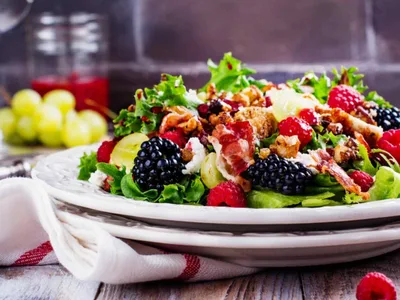
Grilled Chicken Summer Berry Salad with Raspberry Dressing
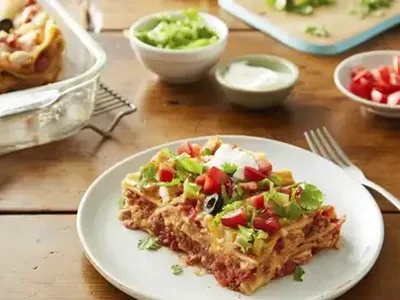
Overnight Taco Chicken Lasagna with Refried Bean Layers
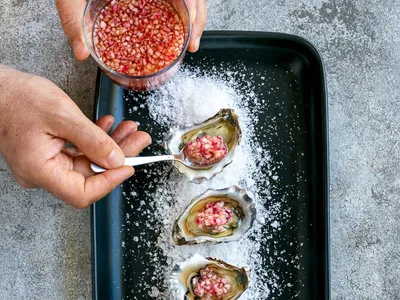
Oyster Mignonette with Red Wine Vinegar
Pasta with Walnut Meat and Avocado
Vegan Red Beet Curry with Coconut Milk