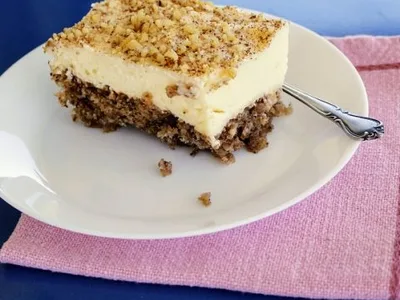
How to Make Meringue
Meringue is beaten egg whites with sugar that forms stiff, glossy peaks. The sugar dissolves into the whites, creating a stable foam that holds its shape when piped or spread.
Why it matters
Meringue creates volume without flour or leavening agents. You get crispy shells that shatter in your mouth or soft billowy toppings that brown under a torch. Raw egg whites increase 8 times in volume when beaten properly. No other technique gives you this combination of structure and lightness.
What you need
Steps
Wipe your bowl and whisk with white vinegar on a paper towel. Any trace of fat kills meringue. Start with room temperature egg whites that have sat out for 30 minutes. Cold whites take twice as long to whip.
Add egg whites to the bowl with 1/4 teaspoon cream of tartar per 4 whites. Beat on medium speed for 60 seconds until the whites look like loose foam with bubbles the size of soap suds.
Increase to medium-high speed. Add sugar 1 tablespoon at a time, waiting 15 seconds between additions. For 4 egg whites, use 1 cup superfine sugar. The mixture turns from foamy to creamy white as sugar dissolves.
Continue beating for 4-6 minutes total. Stop when you lift the whisk and peaks stand straight up without drooping. Rub a bit between your fingers. It should feel completely smooth with no grit from undissolved sugar.
Test stability by turning the bowl upside down. The meringue should not move. If it slides, beat 30 seconds more. The surface looks like shiny white satin with visible swirl marks from the whisk.
Use immediately or within 5 minutes. Pipe through a pastry bag for cookies or spread with an offset spatula for pie topping. Meringue deflates after 10 minutes as the foam structure breaks down.
Common Mistakes
Using a plastic bowl
What happens: Plastic holds onto grease that prevents whites from whipping
Fix: Always use glass or stainless steel bowls cleaned with vinegar
Adding sugar too fast
What happens: Meringue stays soupy and never reaches stiff peaks
Fix: Add sugar 1 tablespoon at a time over 2-3 minutes minimum
Overbeating past stiff peaks
What happens: Meringue becomes grainy and starts to separate
Fix: Stop the second peaks stand straight without bending
Making meringue on humid days
What happens: Sugar absorbs moisture and meringue weeps or stays sticky
Fix: Wait for humidity below 50% or make Swiss meringue instead
Troubleshooting
if meringue weeps clear liquid after piping
Then: Add 1 tablespoon cornstarch per cup of sugar to absorb excess moisture
if peaks won't form after 8 minutes of beating
Then: Start over with new whites since fat contamination cannot be fixed
Related Techniques
FAQ
Can I make meringue ahead of time?
French meringue lasts 5 minutes before deflating. Swiss and Italian versions hold for 2 hours at room temperature or 24 hours refrigerated. The stabilized proteins from heating maintain structure longer. Store in an airtight container and re-whip for 30 seconds before using.
Why does my meringue turn brown in the oven?
Sugar caramelizes above 320F, turning meringue golden to dark brown. Bake at 200-225F for white meringue. The low temperature dries it out over 60-90 minutes without browning. For deliberate browning, use a kitchen torch for 10-15 seconds per section.
How many egg whites do I need for a 9-inch pie?
A 9-inch pie needs 3-4 egg whites with 3/4 cup sugar for a 2-inch tall topping. This makes about 4 cups of meringue. Each egg white yields roughly 1 cup when beaten with its share of sugar. Double this for a dramatic 4-inch tall presentation.
What's the difference between soft and hard meringue?
Soft meringue uses 2 tablespoons sugar per egg white, creating peaks that gently bend over. Hard meringue needs 4 tablespoons sugar per white for crisp shells. The extra sugar ratio determines final texture after baking. Soft bakes at 350F for 15 minutes while hard needs 200F for 90 minutes.
Recipes Using This Technique
Best-Ever Waffles with Mixed-Berry Sauce
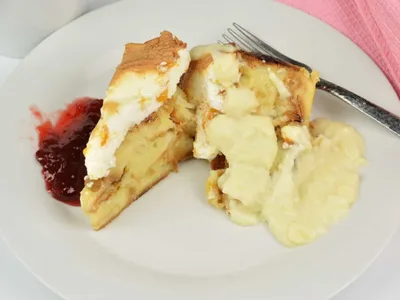
Baked Bread Pudding with Cinnamon and Meringue
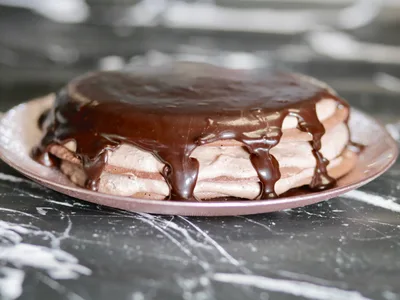
Layered Meringue Ice Cream Cake with Coffee Almond Filling
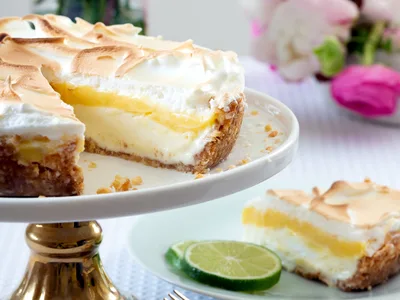
Lime Ice Cream Pie with Toasted Coconut Meringue
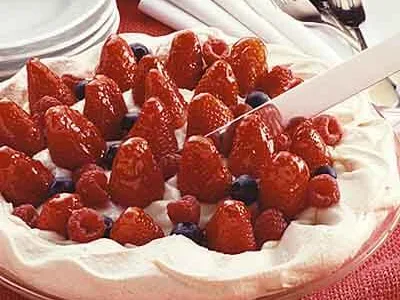
Mixed Berry Meringue Pie with Orange Cream