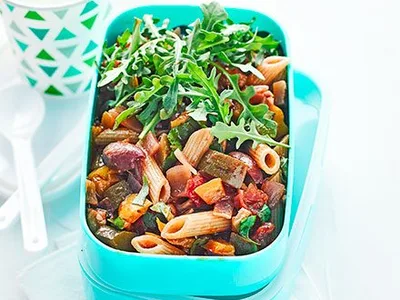
All About Kalamata Olives
Kalamata olives are deep purple Greek olives with meaty flesh and a fruity, wine-like bite. They bring salt, tang, and umami depth to salads, pastas, and sheet pan dinners. Unlike green olives that taste grassy, Kalamatas have a complex flavor that sits between briny and sweet. Most are cured in red wine vinegar for 4-6 months before packing.
How to Select
Choose olives that look plump and glossy, not wrinkled or dry. The best ones feel firm when you press them. Check the brine in jarred olives. It should be clear, not cloudy. Pitted versions save prep time but whole olives with pits keep their shape better during cooking.
How to Store
Keep unopened jars in your pantry for up to 2 years. Once opened, refrigerate in their original brine and use within 6 months. Transfer olives from cans to glass jars with their liquid. For bulk olives from the deli counter, store in brine made from 1 tablespoon salt per cup of water. They last 3-4 weeks refrigerated.
How to Prep
To pit whole olives, press each one with the flat side of a knife until it cracks, then pull out the pit. For salads, slice them into rings 1/4 inch thick. Halve them lengthwise for pasta dishes where you want bigger pieces. Chop fine for tapenade or pizza toppings. Pat dry with paper towels before adding to hot oil to prevent splattering.
Flavor Pairings
Kalamatas love acidic ingredients like lemon juice, red wine vinegar, and tomatoes. Feta cheese is their classic Greek partner. Fresh herbs like oregano and basil brighten their deep flavor. They balance rich ingredients like olive oil and roasted red peppers. Garlic and red onion add sharpness that complements their brine.
Cooking Tips
Add Kalamatas in the last 5 minutes of cooking to preserve their texture and prevent bitterness.
Use 1/2 cup olives per pound of pasta for the right balance of salt and flavor.
Roast whole olives at 400°F for 15 minutes to concentrate their flavor for appetizer platters.
Reduce other salt by 50% in recipes with olives since each one contains about 40mg sodium.
Need a substitute? See our Best Substitutes for Kalamata Olives guide with tested ratios.
FAQ
Can I substitute Kalamata olives with other types?
Black olives work but taste milder and less fruity. Niçoise olives match the size but cost 2-3 times more. Green olives like Castelvetrano have a buttery flavor that changes the dish completely. For the closest match, use oil-cured black olives and add 1 teaspoon red wine vinegar per 1/2 cup to mimic Kalamata's tang. The texture differs since oil-cured olives are wrinkled and drier.
Why do some Kalamata olives taste more bitter than others?
Bitterness depends on curing time and method. Traditional Greek producers cure for 6-8 months in red wine vinegar brine. Cheaper versions use lye processing that takes only 2 weeks but leaves a chemical aftertaste. Check labels for "naturally cured" or "traditionally cured." Olives packed in oil taste milder than those in brine. If yours taste too bitter, soak in fresh water for 30 minutes before using.
How many Kalamata olives equal one serving?
A standard serving is 5-7 large olives or about 15 grams, which contains 35-45 calories and 150-200mg sodium. Most recipes call for 1/4 to 1/2 cup per person. One cup of pitted Kalamatas weighs 140 grams and contains about 35 olives. For party platters, plan on 5 olives per guest as part of an antipasto spread.
Recipes with Kalamata Olives
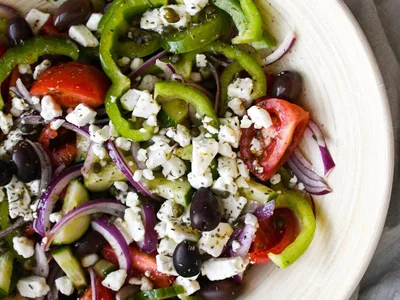
Classic Greek Village Salad (Horiatiki)

Crispy Phyllo Flatbread with Pesto, Feta, and Olives
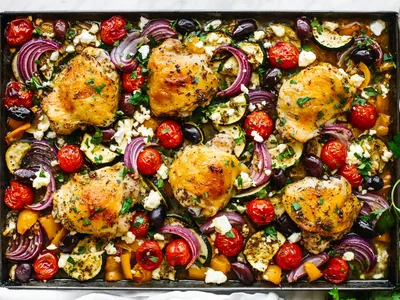
Greek Sheet Pan Chicken Thighs with Mediterranean Vegetables
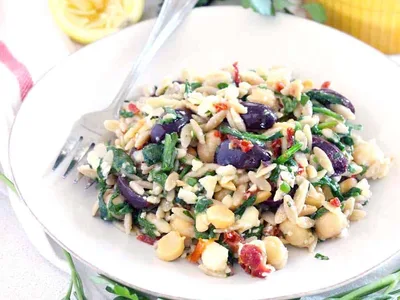
Mediterranean Chickpea Orzo Salad with Feta
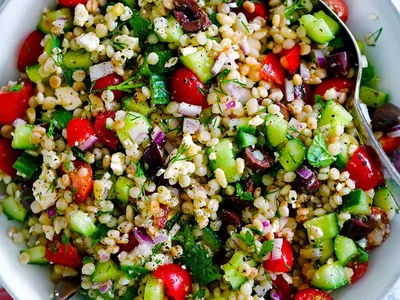
Mediterranean Israeli Pearl Couscous Salad with Feta and Herbs