All About Sumac
Sumac is a dried, ground spice made from the berries of wild sumac bushes. It delivers a tart, lemony punch without adding liquid to your dish. Middle Eastern and Mediterranean cooks reach for sumac when they want acidity and a burgundy pop of color. Think of it as powdered lemon zest with more complexity and a fruity edge that works in everything from shawarma to simple roasted vegetables.
How to Select
Good sumac should be deep burgundy to purple-red, not brown or faded orange. Open the container and smell for a bright, tangy aroma. Avoid sumac that smells musty or has no scent at all. The texture should be coarse like coarse salt, not fine powder. Turkish and Lebanese brands typically offer the best quality.
How to Store
Keep sumac in an airtight container away from light and heat. A cool pantry shelf works better than above your stove. Properly stored sumac stays potent for 12 to 18 months. The color fades first, then the flavor. Write the purchase date on your container. Once sumac turns brownish or loses its tart smell, replace it. Freezing extends shelf life to 2 years but isn't necessary for most home cooks.
How to Prep
Sumac needs no preparation beyond measuring. Sprinkle it directly onto finished dishes or mix it into marinades and dressings. For maximum impact, add sumac at the end of cooking or as a garnish. Heat dulls its brightness. When making spice blends like za'atar, combine 2 parts dried thyme with 1 part sumac and 1 part sesame seeds. Toast the sesame seeds first, then mix everything together.
Flavor Pairings
Sumac loves olive oil, creating a simple finishing touch for grilled meats and roasted vegetables. It balances rich ingredients like lamb and tahini with its acidity. Onions become special when tossed with sumac, salt, and a 3:1 ratio of olive oil to lemon juice. The spice plays well with cumin, black pepper, and garlic in Middle Eastern spice rubs.
Cooking Tips
Mix 1 tablespoon sumac with 3 tablespoons olive oil for an instant marinade that needs just 20 minutes.
Add sumac during the last 2 minutes of cooking or use it raw to preserve its bright flavor and color.
For sumac onions, slice 2 large onions thin, massage with 1 teaspoon salt and 2 teaspoons sumac, let sit 30 minutes.
Replace half the lemon juice in any Mediterranean salad dressing with sumac at a 1:1 ratio by volume.
FAQ
Can I substitute lemon juice for sumac?
Not directly. Lemon juice adds liquid and a sharper acidity. For every teaspoon of sumac, you'd need about 1/2 teaspoon lemon zest plus a pinch of salt to approximate the flavor. The color and texture will be completely different. Sumac works better in dry rubs and as a garnish where lemon juice would make things soggy.
Is sumac related to poison sumac?
No. sumac comes from Rhus coriaria, completely different from the poisonous variety. The edible sumac grows wild across the Mediterranean and Middle East. Poison sumac is a North American wetland plant with white berries. sumac has clusters of red berries that get dried and ground. They're as related as tomatoes and deadly nightshade.
Why does my sumac taste salty?
Some commercial sumac contains up to 30% salt as a preservative and anti-caking agent. Check the ingredients list. Pure sumac should list only sumac. If yours is salted, reduce other salt in your recipe by about 1/4 teaspoon per tablespoon of sumac used. Turkish and Lebanese brands rarely add salt. Iranian sumac more commonly includes it.
How much sumac equals one lemon?
One medium lemon provides about 3 tablespoons juice and 1 tablespoon zest. To match that acidity level, you'd use 2 to 3 teaspoons of sumac, though the flavors differ significantly. Sumac brings fruitiness and color that lemon cannot. Start with 1 teaspoon sumac per lemon called for, then adjust. Remember sumac won't add the moisture that lemon juice provides.
Recipes with Sumac
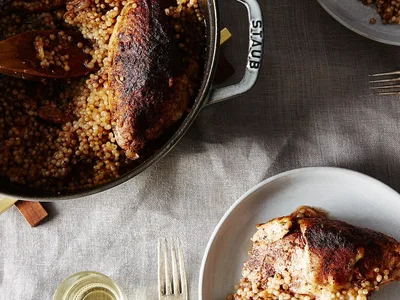
Braised Chicken with Caramelized Sumac Onions and Israeli Couscous

Ground Beef Jerky with Persian Spices and Sumac

Lebanese Lamb Arayes with Habanero Tahini

Shawarma Chickpea Lettuce Wraps with Israeli Salad

Spiced Cod in Tomato Shakshuka with Fresh Herbs