All About Œuf
Eggs form the backbone of French cooking. They bind batters, create custards, and turn simple flour into pastries. A fresh egg weighs about 50 grams. The whites provide structure through proteins that coagulate at 140°F. The yolks add fat and lecithin, creating smooth sauces and tender cakes. Room temperature eggs beat to greater volume than cold ones.
How to Select
Press gently on the shell. It should feel smooth without cracks. Hold the egg to light. The yolk should appear centered with no dark spots. Fresh eggs sink in water. Older eggs float. The white of a 3-day-old egg spreads thin when cracked. A fresh white stays compact around the yolk.
How to Store
Keep eggs pointed-end down in their carton on a refrigerator shelf, not the door. They last 3-5 weeks past the pack date at 40°F. Raw whites keep 4 days in a sealed container. Raw yolks last 2 days covered with water. Hard-boiled eggs stay good for 1 week. Never wash eggs before storing. The protective coating keeps bacteria out.
How to Prep
Separate eggs over a bowl when cold. The yolk holds together better. Let them reach room temperature for 30 minutes before beating. Whites whip best in a copper or steel bowl. Add 1/8 teaspoon cream of tartar per white for stability. Beat yolks with sugar for 3 minutes until pale yellow. Strain beaten eggs through mesh to remove chalazae for smooth custards.
Flavor Pairings
Salt enhances egg flavor at just 1/4 teaspoon per egg. Butter enriches scrambled eggs at 1 tablespoon per 3 eggs. Cream creates silky texture in quiches. Flour turns eggs into cakes and pastries. Sugar sweetens custards and meringues. Black pepper adds warmth without overpowering the delicate egg taste.
Cooking Tips
Cook scrambled eggs over medium-low heat at 250°F, stirring every 20 seconds for creamy curds.
Poach eggs in water with 1 tablespoon vinegar per quart at 180°F for 3-4 minutes.
Bake custards in a water bath at 325°F until they wobble slightly when shaken, about 35 minutes.
Beat egg whites to soft peaks in 2 minutes, stiff peaks in 4 minutes at high speed.
Varieties
FAQ
How can I tell if an egg is still good?
Float test works best. Fill a bowl with cold water 4 inches deep. Fresh eggs sink and lay flat. Week-old eggs stand on one end. Eggs over 3 weeks float. The air cell inside grows 1/8 inch per week as moisture evaporates through the shell. A floating egg might still be safe but tastes stale. Crack suspicious eggs into a separate bowl first.
What's the white stringy part in eggs?
Those rope-like strands are chalazae. They anchor the yolk in the center of the egg. Fresh eggs have prominent chalazae about 1/4 inch long. They're pure protein, completely safe to eat. Strain them out for smooth custards. They dissolve when cooked. Older eggs have thinner chalazae as the proteins break down over 2-3 weeks.
Why won't my egg whites whip?
Fat kills foam. Even 0.1% yolk in whites prevents proper whipping. Plastic bowls hold grease films. Use glass or metal wiped with vinegar. Whites at 70°F whip 30% faster than cold ones. Add 1/8 teaspoon cream of tartar per white for stability. Old whites actually whip better than fresh. They're thinner after proteins relax over 5-7 days. Beat at high speed for 4 minutes to reach stiff peaks.
How much egg equals one whole egg in recipes?
One large egg equals 3 tablespoons beaten, or 50 grams. The white measures 2 tablespoons or 30 grams. The yolk measures 1 tablespoon or 20 grams. Two egg whites replace one whole egg for less fat. Add 1 teaspoon oil to match the yolk's richness. For baking, 1/4 cup liquid egg product equals one egg.
Recipes with Œuf
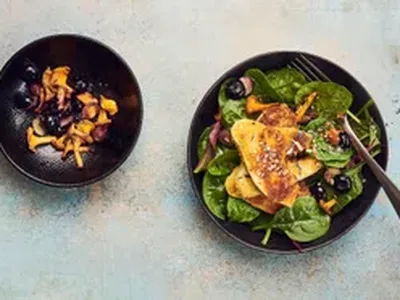
Breaded Pattypan Squash with Chanterelle Salad
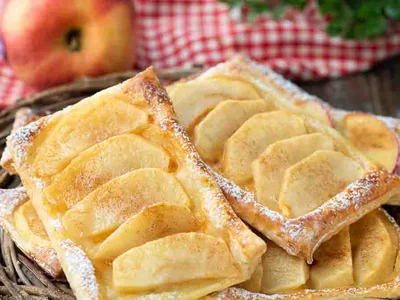
Apple Jam Puff Pastry Tarts, 20 Minutes
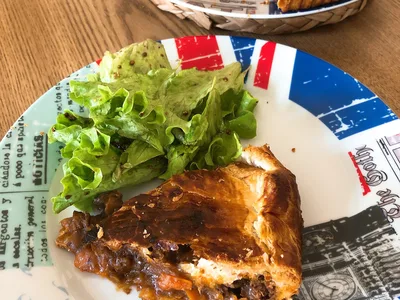
French Beef Meat Pie with Puff Pastry
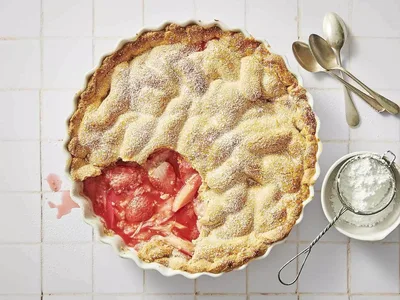
Gluten-Free Rhubarb and Strawberry Pie
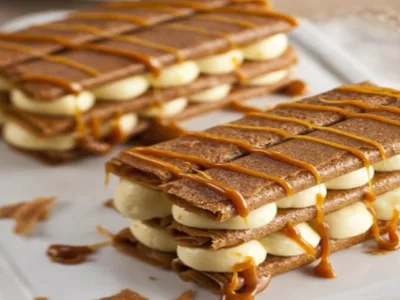
Vanilla Pastry Cream Millefeuille with Caramel Sauce