All About Whole Milk
Whole milk contains 3.25% fat and forms the backbone of countless recipes from custards to bread doughs. That fat content gives body to sauces, helps cakes stay tender, and creates silky scrambled eggs. Unlike lower-fat milks, whole milk won't break when heated to 180°F or mixed with acidic ingredients like lemon juice.
How to Select
Check the sell-by date and pick bottles from the back of the dairy case where temperatures stay coldest at 38°F. Give the jug a gentle shake. Fresh milk moves smoothly without chunks or separation. Avoid bottles with bulging sides or any sour smell near the cap.
How to Store
Keep milk on a refrigerator shelf at 37-40°F, not in the door where temperatures fluctuate. Store in its original container or transfer to glass. Fresh milk lasts 5-7 days past the sell-by date when properly refrigerated. Once opened, use within 4-6 days. Freeze milk for up to 3 months in plastic containers with 1 inch headspace for expansion.
How to Prep
For baking, bring milk to room temperature by leaving it out 30-45 minutes or microwaving in 10-second bursts. Warm milk to 110°F for bread doughs by heating gently until a drop on your wrist feels neutral. For custards and puddings, scald milk to 180°F until tiny bubbles form around the edges but before it boils.
Flavor Pairings
Milk's neutral sweetness enhances vanilla, cinnamon, and nutmeg in desserts. It mellows sharp cheeses like aged cheddar in gratins. The proteins in milk bind with eggs for stable custards and help butter emulsify into smooth sauces. Acidic ingredients like lemon juice or vinegar will curdle cold milk but blend smoothly when the milk is heated first.
Cooking Tips
Heat milk to 140°F before adding to roux for lump-free béchamel sauce in under 5 minutes.
Add 1 tablespoon milk per egg when scrambling for creamier texture. Cook over medium-low heat.
Substitute milk for water in bread recipes using a 1:1 ratio for softer crumb and golden crust.
Prevent scorching by stirring milk every 30 seconds when heating above 160°F.
Need a substitute? See our Best Substitutes for Whole Milk guide with tested ratios.
FAQ
Can I substitute whole milk in recipes calling for other milk types?
Replace 2% milk with whole milk using the same amount. For buttermilk, add 1 tablespoon lemon juice or vinegar per cup of whole milk and let stand 5 minutes. When substituting for heavy cream, use 3/4 cup whole milk plus 1/4 cup melted butter. The extra fat in whole milk makes cakes moister but can make some custards too thin.
Why does my milk curdle when I add it to hot coffee or soup?
Temperature shock and acidity cause curdling. Coffee's pH of 4.85-5.10 makes cold milk proteins clump together. Warm milk to at least 140°F before adding to hot liquids. For tomato soup, stir in 1/4 teaspoon baking soda per cup before adding milk. This raises the pH above 6.0 and prevents curdling.
How can I tell if milk has gone bad?
Spoiled milk develops a yellow tinge and sour smell detectable from 6 inches away. Pour a small amount. Bad milk looks chunky or has a thick consistency instead of flowing smoothly. Fresh milk tastes slightly sweet. Sour milk has an acidic bite. Most milk stays good 5-7 days past its sell-by date at 40°F.
What's the difference between scalded and boiled milk?
Scalded milk reaches 180°F with tiny bubbles forming around the pan's edges. A skin forms on top after 2-3 minutes. Boiled milk hits 212°F with large rolling bubbles throughout. Scalding denatures proteins for smoother custards. Boiling breaks down proteins too much and creates grainy textures. Use a thermometer for accuracy.
Recipes with Whole Milk
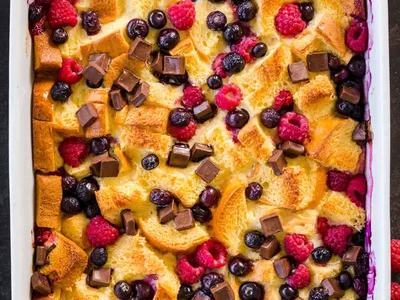
Brioche Chocolate Berry Bread Pudding Recipe
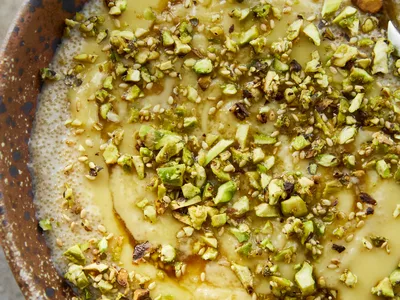
Creamy Amaranth Porridge with Meyer Lemon Maple Curd

Crispy Oven Yorkshire Puddings with Olive Oil

Individual Key Lime Souffles with Fresh Mint

Pozharsky Chicken Beef Croquettes with Fresh Dill