Vegan Bread and Butter Zucchini Pickles
- Prep
- 20 min
- Cook
- 40 min
- Yield
- 2 servings
- Level
- medium
- Cuisine
- Condiments
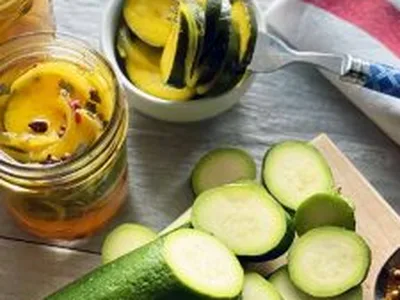
Crisp, tangy-sweet zucchini pickles with warm spice notes from mustard seeds, celery seeds, turmeric, and optional allspice and cloves. The two-vinegar blend balances acidity with subtle apple cider sweetness, while a salt brine draws moisture from the vegetables before pickling for ideal crunch. Perfect for summer entertaining, potlucks, or gift-giving. This version uses a straightforward water bath canning method, making it accessible for home preservers seeking shelf-stable results without fermentation.
No ratings yet — be the first
Ingredients
- 1 pound zucchini, trimmed and sliced into 1/2-inch chips
- 1 small sweet onion, very thinly sliced into half-moons
- ¼ cup plus 1 tablespoon coarse sea salt or kosher salt, divided
- 1 ½ cups white distilled vinegarrice vinegar1:1neutral
milder tang
- 1 cup apple cider vinegar
- ½ cup granulated sugar
- 3 tablespoons packed light brown sugar
- 2 teaspoons mustard seeds
- ½ teaspoon celery seedsdill seeds0.5:1neutral
replaces herbaceous note
- ½ teaspoon ground turmericturmeric powder1:1neutral
same ingredient
- 2 whole allspice berries(optional)
- 2 whole cloves(optional)
Method
7 steps- 1
Rinse zucchini, trim and discard ends, then slice into 1/2-inch-thick chips using a sharp knife or mandoline.
- 2
Combine zucchini and onions in a large bowl. Sprinkle with 1 tablespoon salt and toss. Cover with ice, pour water to 1 inch above vegetables, and soak for 2 hours.
- 3
Sterilize canning jars by submerging them right side up in a large pot of water (1 inch above jar tops). Bring to a boil and boil for 10 minutes. Leave jars in the hot water.
- 4
In a medium saucepot over medium heat, combine both vinegars. Whisk in remaining salt and both sugars until dissolved, about 5 minutes. Bring to a boil, then remove from heat.
- 5
Drain zucchini and onions thoroughly. Divide evenly between sterilized jars. Distribute mustard seeds, celery seeds, turmeric, allspice berries, and cloves among jars. Pour brine into each jar, leaving 1/2 inch headspace.
- 6
Return the large pot of water to a boil. Tightly screw on lids and process jars in the boiling water bath for 10 minutes. Remove jars and allow to cool completely.
- 7
Verify lids have sealed (center should not flex when pressed). Store in a cool, dry place.
Tips
The 2-hour salt and ice soak draws excess moisture from zucchini, preventing mushy pickles and ensuring crisp texture after processing.
Distribute spices evenly across jars for consistent flavor in every bite. Whole spices soften during storage, intensifying flavor over time.
Verify lid seals after cooling by pressing the center; it should not flex. Unsealed jars should be refrigerated and consumed within 1 month.
Good to Know
Unopened jars store in a cool, dry pantry for up to 1 year. Once opened, refrigerate and consume within about 1 month for best quality.
Entire recipe is designed for advance preparation and shelf storage. Prepare up to 1 year in advance.
Serve cold as a condiment alongside sandwiches, burgers, pulled pork, or charcuterie boards. Also excellent with cheese platters or alongside Asian-inspired dishes.
Common Mistakes
Use iodized salt to avoid cloudiness in brine and unpredictable fermentation.
Skip the 2-hour salt soak to avoid soft, mushy pickles after processing.
Leave more or less than 1/2 inch headspace to risk improper sealing or brine spillage during processing.
Fail to verify jar seals after cooling to avoid storing potentially unsafe food.
Substitutions
same ingredient
replaces herbaceous note
FAQ
Can I use a mandoline instead of a knife to slice zucchini?
Yes, a mandoline creates more uniform 1/2-inch slices and speeds preparation. Use caution with your fingers and employ the guard to prevent injury.
What if my jar lids don't pop or seal after processing?
Unsealed jars must be refrigerated immediately and consumed within 1 month. They are not shelf-stable. Reprocess with new lids if attempting again.
How long do pickles taste best, and can I freeze them?
Unopened jars peak within 2-3 weeks of cooling as flavors meld, remaining excellent up to 1 year. Freezing is not recommended; thawing causes texture loss.