Brined Oven Roast Chicken with Rotisserie Seasoning
- Prep
- 30 min
- Cook
- 1 hr
- Yield
- 5 servings
- Level
- medium
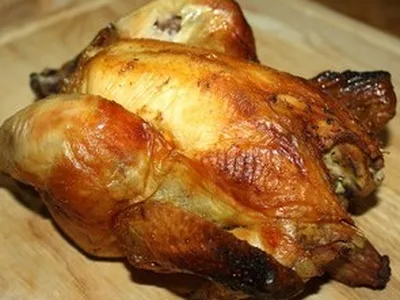
A succulent whole roasted chicken through brining and rotisserie-style technique. Salt and sugar brine penetrates the meat for 1-24 hours, ensuring deep seasoning and moisture retention. Butter tunneled under the breast skin keeps white meat tender while the bird rotates through three positions—first wing-side up, then opposite wing, finally breast up—for even browning and crispy skin. McCormick Rotisserie Chicken seasoning adds savory complexity. The result is meat so juicy it falls from the bone, with crackling, golden skin and bright citrus notes from cavity-roasted lemon. Perfect for weeknight dinners or Sunday gatherings. This method transforms ordinary roasted chicken into restaurant-quality poultry without special equipment, yielding impressive results through technique rather than complexity.
No ratings yet — be the first
Ingredients
- 4 pounds whole roasting chicken, patted dry
- 3 quarts water, cold
- ½ cup salt, granulated
- ½ cup granulated sugar, granulated
- 2 tablespoons oil, neutral
- 4 tablespoons unsalted butter, softened
- chicken seasoning, McCormick Rotisserie Chickenhomemade poultry blendsamespice
use 2-3 tablespoons total
- 1 whole lemon, halved
Method
12 steps- 1
Dissolve salt and sugar in water to create brine, then submerge whole chicken and refrigerate for at least 1 hour or up to 24 hours.
- 2
Place V-rack in roasting pan and spray with non-stick spray. Preheat oven to 400 F.
- 3
Remove chicken from brine and pat completely dry with paper towels.
- 4
Cut butter into small pieces and tunnel under breast skin, pushing butter underneath.
- 5
Rub oil all over skin and sprinkle lightly with seasoning on all sides.
- 6
Place lemon halves in cavity and set chicken on its side with one wing facing up on the rack.
- 7
Roast for 15 minutes.
- 8
Remove pan and flip chicken so opposite wing faces up using paper towel wads.
- 9
Roast for another 15 minutes.
- 10
Remove pan and flip chicken breast-side up using paper towel wads.
- 11
Roast for 30-45 minutes or more until leg moves easily and thigh reaches at least 180 F when checked with thermometer deep in the meat.
- 12
Remove from oven and let rest for at least 30 minutes before carving.
Tips
Pat chicken completely dry after brining before roasting. Moisture on skin prevents browning and crisping. Use paper towels thoroughly, then let air dry 10 minutes if time allows for maximum crispness.
The three-position rotation technique ensures even cooking and coloring. Each wing side receives direct heat, then the breast finishes in gentler heat, preventing overcooking white meat while rendering thigh fat.
Rest the chicken minimum 30 minutes after roasting. This allows carryover cooking to complete and juices to redistribute, preventing loss of moisture when carving.
Good to Know
Store leftover chicken in airtight container for up to 4 days. Remove meat from bones for easier storage and faster cooling.
Prepare brine and brine chicken up to 24 hours ahead. Do not roast or rest ahead; roast fresh and serve within 2 hours for best skin quality.
Serve with roasted vegetables, potatoes, rice, or fresh salad. Pair with white wine like Sauvignon Blanc or Pinot Grigio.
Common Mistakes
Skip the brining step to avoid dry breast meat and underseasoned chicken.
Pat chicken wet into oven to avoid pale, steamed skin instead of crispy golden exterior.
Cut rest time short to avoid juices running out when carving, drying the meat.
Substitutions
Dairy-Free Swaps
General Alternatives
use 2-3 tablespoons total
FAQ
Can I brine the chicken longer than 24 hours?
No. Beyond 24 hours the salt breaks down muscle fibers excessively, causing mushy texture and overly salty meat. Stick to 1-24 hours for best results.
What if I don't have a V-rack?
Use a regular roasting rack or create a makeshift rack with aluminum foil balls. The goal is elevating chicken above pan drippings for even heat circulation underneath.
Can I freeze leftover brined roasted chicken?
Yes. Remove meat from bones, store in airtight container or freezer bag for up to 3 months. Thaw overnight in refrigerator. Reheat gently to prevent drying.