Caramel Kaya: Silky Coconut Egg Jam
- Prep
- 10 min
- Cook
- 25 min
- Yield
- 10 servings
- Level
- medium
- Cuisine
- Southeast Asian
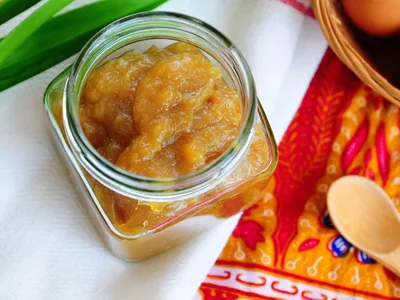
Caramel kaya is a Southeast Asian custard jam that blends creamy coconut milk with caramelized sugar and eggs into a luxurious spread. This version uses a two-stage cooking method: first making a golden caramel syrup, then folding it into a slow-cooked egg custard enriched with coconut milk and fragrant pandan leaves. The result is deep amber and silky, with subtle floral notes and a bitter-sweet caramel edge that cuts through the richness. Special because it requires patience and low heat to avoid scrambling the eggs while developing a smooth, pourable texture. Best made by home cooks comfortable with stovetop timing and temperature control. Serve as a spread on toast, layer in pastries, or dollop onto desserts. This version emphasizes the caramel element, giving it darker color and complex flavor compared to traditional versions relying solely on slow egg cooking.
No ratings yet — be the first
Ingredients
- 4 egg
- 1 cup granulated sugarpalm sugarequal weightflavor
darker color and caramel notes naturally present, slightly less sweet
Full guide → - 250 millilitre coconut milkheavy creamequal volumetexturedairyadds dairy
richer and less tropical, removes coconut flavor entirely
Full guide → - 3 pandan leaves1 teaspoon pandan paste or extract1 tsp per 3 leavesflavor
adds more concentrated flavor and removes fresh herbal notes
- ¼ cups granulated sugarpalm sugarequal weightflavor
darker color and caramel notes naturally present, slightly less sweet
Full guide → - 2 tablespoon water
Method
12 steps- 1
Crack eggs into a bowl and lightly mix with a whisk without beating.
- 2
Add granulated sugar and continue mixing until incorporated.
- 3
Add coconut milk and stir gently until all sugar dissolves.
- 4
Strain the mixture through a sieve into a bowl.
- 5
In a small pan over medium-low heat, melt the remaining sugar without stirring until golden brown.
- 6
Add water to the caramel and shake to dilute into a pourable mixture.
- 7
Pour caramel into a heat-proof bowl.
- 8
Pour the egg mixture into a nonstick pan and cook over low heat, stirring continuously until steam rises.
- 9
Gradually add the caramel while stirring constantly until the mixture thickens and becomes smooth.
- 10
Add pandan leaves and press with a ladle, stirring for about one minute.
- 11
Remove the pandan leaves and pour into a container.
- 12
Cool completely, then cover and refrigerate.
Tips
Use low heat throughout to prevent egg curdling. High temperatures cause scrambling; patience produces silky texture. Stir constantly once eggs enter the pan.
Make caramel without stirring by tilting the pan slightly if needed. Crystallization from stirring forces you to start over, so let gravity work.
Press pandan leaves firmly with the ladle to extract maximum fragrance and color in the final minute. This step is quick but crucial for authentic flavor.
Good to Know
Refrigerate in an airtight container for up to two weeks. The jam will thicken further as it cools.
Make up to five days in advance and refrigerate. Reheat gently over low heat if you prefer a looser consistency before serving.
Spread on toast, use as a filling for pastries, or serve as a condiment alongside coffee. Pairs well with buttered bread or plain crackers.
Common Mistakes
Stir the caramel sugar and risk crystallization, forcing you to discard and restart; let it melt undisturbed.
Use high heat when cooking the egg mixture and cause scrambling rather than a silky custard texture.
Omit straining the raw egg mixture and end up with a grainy, uneven final texture.
Skip pressing the pandan leaves and miss the herbal fragrance that defines authentic kaya.
Substitutions
Dairy-Free Swaps
richer and less tropical, removes coconut flavor entirely
Full guide →General Alternatives
adds more concentrated flavor and removes fresh herbal notes
darker color and caramel notes naturally present, slightly less sweet
Full guide →FAQ
Can I make kaya without pandan leaves?
Yes, omit them for a pure caramel-coconut version, but you lose the signature floral note. Alternatively, add one-quarter teaspoon vanilla extract or half a teaspoon pandan paste at the end for similar depth without fresh leaves.
What if my caramel seizes when I add water?
This happens rarely if the caramel is truly melted. Remove from heat immediately, let it cool slightly, then add water slowly while tilting the pan gently. If lumps form, discard and restart. Prevention: ensure sugar is fully golden before adding liquid.
How long does kaya keep in the fridge?
Properly stored in an airtight container, kaya lasts two weeks refrigerated. Freezing is possible for up to three months, though texture may become slightly less smooth upon thawing. Reheat gently over low heat to restore silkiness.
Can I use canned coconut milk?
Yes, canned coconut milk works perfectly. Use the full liquid portion without separating or shaking. If the can has separated, stir well before measuring. Avoid lite or reduced-fat versions, which alter the final texture and richness significantly.