Keto Crispy Fideuà with Seafood and Picada
- Prep
- 25 min
- Cook
- 55 min
- Yield
- 2 servings
- Level
- medium
- Cuisine
- Spanish
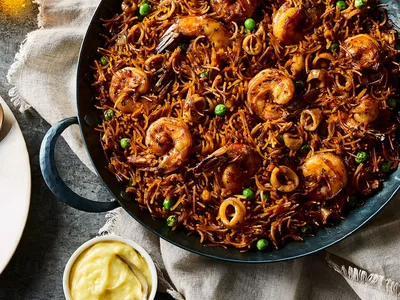
Fideuà is a Catalan cousin of paella that swaps rice for toasted noodles, creating a dish with textural contrast between crispy edges and tender centers. This version from chef Daniel Olivella combines briny seafood—monkfish, cuttlefish, squid, and shrimp—with a vibrant parsley-garlic picada and smoky sofrito. The noodles toast before cooking, then absorb fish stock while developing a coveted socarrat crust. Serve family-style at the table, stirring in creamy aioli just before eating. Perfect for special dinners or when impressing seafood lovers.
No ratings yet — be the first
Ingredients
- 4 oz fideus or vermicelli, broken into 1-inch piecesshort pasta like orzo or broken spaghetti1:1seafoodspanish
maintains texture if toasted well
- 3 ½ tbsp extra-virgin olive oil
- 5 cups store-bought fish stockvegetable stock1:1vegetarian
loses briny depth
- 1 small clove garlic, peeled
- ⅝ tsp kosher salt
- 6 tbsp curly parsley, leaves
- 1 medium Spanish onion, finely chopped
- 2 oz firm white fish such as monkfish or snapper, cut into 1-inch pieceshalibut or cod1:1seafoodwhite fishadds fish
cod is milder
- 2 oz cuttlefish or squid steaks, cut into 1/2-inch pieces
- ¼ cup squid, bodies sliced into rings and tentaclesextra shrimp0.75:1allergic to cephalopodsadds shellfish
less textural contrast
- ¼ cup store-bought sofritotomato paste plus saffron2 tbsp tomato paste plus pinch saffron in stockfoundational
homemade sofrito differs
- ½ tsp smoked paprika
- ¼ tsp freshly ground black pepper
- 4 medium shrimp 21/25 count, peeled, deveined, tails left on
- 2 tbsp frozen peas, thawed
- 2 tbsp store-bought aioli
- 4 wedges lemon
Method
13 steps- 1
Heat oven to 350°F. Break vermicelli into 1-inch pieces over a sheet pan. Toss with 1 tablespoon oil to coat evenly.
- 2
Spread noodles in a single layer. Toast in oven, shaking pan once or twice, until deep golden brown. Cool completely.
- 3
Increase oven temperature to 450°F. Bring fish stock to a gentle simmer in a medium saucepan over medium heat.
- 4
Make picada by mashing garlic and salt to a fine paste using mortar and pestle. Gradually add parsley, mashing each addition completely until a green paste forms. Stir in oil and set aside.
- 5
Heat remaining oil in a 12-inch paella pan over medium-high heat until shimmering. Cook onion, stirring occasionally, until darkened and starting to caramelize.
- 6
Increase heat to high. Add fish, cuttlefish, and squid. Cook, tossing frequently, until fish begins to shrink and turn opaque.
- 7
Stir in toasted noodles until shiny with oil. Add picada, sofrito, paprika, black pepper, and salt.
- 8
Add stock, shaking to settle and loosen noodle clusters as stock begins to boil. Shake only; do not stir to avoid stickiness.
- 9
Simmer over medium heat for about 10 minutes until some stock is absorbed. Test noodles for doneness. If noodles lack room to swim, add more stock.
- 10
Continue simmering for about 10 minutes more until only a thin layer of stock remains on top.
- 11
Bury shrimp throughout noodles. Scatter peas over top. Transfer pan to oven and roast until shrimp turn pink, all stock evaporates, and noodles crisp up.
- 12
Spoon aioli onto center of noodles. Serve at table with spoons and lemon wedges. Stir aioli into noodles only after placing on table.
- 13
Serve with lemon wedges for squeezing.
Tips
Toast the fideus or vermicelli separately before cooking to build depth and prevent gumminess. Deep golden brown noodles develop nutty flavor essential to the dish.
Shake, never stir, the noodles once stock hits the pan. Stirring breaks them down and creates a starchy, sticky texture instead of tender individual strands.
Make picada by hand using mortar and pestle rather than a food processor to control texture and release herbs' oils without turning them dark and bitter.
Good to Know
Toasted fideus keeps in an airtight container at room temperature for up to 2 days. Leftover cooked fideuà does not reheat well due to textural changes; best enjoyed fresh.
Toast the fideus up to 2 days ahead. Store in an airtight container at room temperature. Prepare picada up to 4 hours ahead; cover with plastic wrap. Peel and devein shrimp up to 8 hours ahead.
Serve family-style at the table with small spoons for guests to serve themselves. Accompany with lemon wedges and aioli stirred in only at the table. Pairs well with a crisp Albariño or Vermentino.
Common Mistakes
Stir the noodles after stock is added to avoid sticky, gummy texture; shake only to settle clusters.
Under-toast the fideus to avoid pale, soggy results; aim for deep golden brown with nutty aroma.
Add stock too quickly or too much at once to prevent boiling over and prevent even absorption.
Skip the cooling step for toasted noodles; warm noodles will overcook during simmering.
Forget to use a 12-inch paella pan; smaller pans create uneven cooking and prevent socarrat formation.
Substitutions
maintains texture if toasted well
cod is milder
less textural contrast
homemade sofrito differs
FAQ
Can I make fideuà ahead of time?
Toast the noodles up to 2 days ahead in an airtight container. The cooked dish does not reheat well due to textural loss. Prepare components separately and assemble just before serving for best results.
What if I don't have a 12-inch paella pan?
A 12-inch paella pan is designed for even heat distribution and socarrat development. A large shallow skillet works but may cook unevenly. Avoid deep pots; they trap steam and prevent crisping.
How long does fideuà keep and can I freeze it?
Eat fideuà the same day for optimal texture. Freezing breaks down noodle structure and releases excess moisture upon thawing, making it unsuitable for this dish.