Eric Wareheim's Personal Pan Pepperoni Pizza
- Prep
- 30 min
- Cook
- 12 min
- Yield
- 4 servings
- Level
- medium
- Cuisine
- American
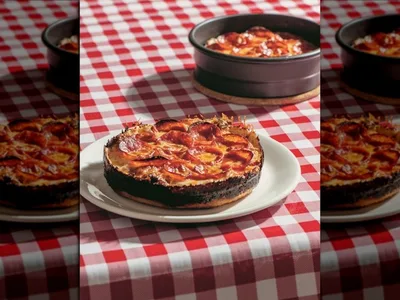
Thick, crispy-bottomed personal pizzas with a pillowy interior and lacy cheese edges. This recipe uses a long cold fermentation for complex flavor development and a two-stage bake that crisps the bottom before adding toppings, ensuring perfectly melted cheese and optimal texture in every bite. Made in individual 6-inch cake pans, this version prioritizes home baker accessibility while delivering restaurant-quality results. Ideal for casual entertaining, weeknight dinners, or when you want impressive homemade pizza without a wood-fired oven.
No ratings yet — be the first
Ingredients
- 1 ⅝ cup filtered water, 70°F
- 3 ½ cup bread flour
- 2 tablespoon extra-virgin olive oil
- 3 ½ teaspoon packed brown sugar
- ⅓ teaspoon instant dried yeastactive dry yeast0.75:1substitution
slower fermentation, similar results
- 1 tablespoon kosher salt
- 1 cup pizza sauce
- 1 ¾ cup shredded low-moisture mozzarellawhole milk mozzarella1:1flavor
lower melt quality, avoid low-moisture variants
- kosher salt, for finishing(optional)
- extra-virgin olive oil, for drizzling(optional)
- 2 ounce sliced pepperoni
- Parmesan cheese, for topping(optional)
Method
18 steps- 1
Combine water and flour in stand mixer bowl with dough hook, add olive oil and brown sugar, mix on lowest speed 3.5 minutes until incorporated, scraping sides as needed.
- 2
Rest dough 20 minutes.
- 3
Add yeast and mix 1 minute on lowest speed, add salt and mix 1 minute more, increase speed to next setting and mix 4 minutes.
- 4
Perform windowpane test by stretching small dough piece between fingers until translucent; if it tears, mix another 1-2 minutes.
- 5
Oil dough bin, transfer dough with plastic scraper, cover and rest 30 minutes.
- 6
Oil hands, grab one-third dough mass, pull up and fold over top, rotate bowl 180 degrees and repeat; complete four total folds, flip mass smooth-side up.
- 7
Cover and rest 30 minutes, repeat stretch and fold process, re-cover and refrigerate overnight minimum 8 hours.
- 8
Remove dough from refrigerator, cover and rest at room temperature 30 minutes.
- 9
Oil bottom and sides of four 6-inch cake pans generously.
- 10
Turn dough onto floured work surface, cut into four 170-gram portions.
- 11
Shape each portion by folding sides underneath, pinching seams closed, creating smooth ball with tight bottom seam, place in prepared pans.
- 12
Cover pans with plastic wrap, allow dough balls to rise until 1.5 times original size, about 3.5 hours.
- 13
Place pizza stone on oven bottom rack, preheat to 550°F.
- 14
Dimple dough with fingertips and spread to fill pans, add 1 tablespoon sauce and 1 tablespoon mozzarella to each.
- 15
Place pans directly on pizza stone, bake 7 minutes for crispness, remove from oven.
- 16
Top each pizza with 3 tablespoons sauce, 5 tablespoons mozzarella to edges and slightly under dough rim, sprinkle with salt pinch, drizzle olive oil, layer pepperoni overlapping to cover, sprinkle thin mozzarella layer over pepperoni.
- 17
Place pans on middle oven rack, bake 5-6 minutes until toppings are melty and crispy.
- 18
Remove from oven, lift pizzas from pans with spatula, sprinkle with Parmesan, serve immediately.
Tips
The windowpane test is critical for gluten development; proper fermentation ensures both flavor and texture, so resist rushing the overnight cold rest.
Baking in two stages on different racks prevents bottom burning while keeping the interior soft; the pizza stone on the bottom rack creates intense heat for crust crispness during phase one.
Overlapping pepperoni pieces and spreading toppings to pan edges creates the signature crispy cheese lace; don't skip the thin final mozzarella layer on top.
Good to Know
Shaped dough balls in cake pans covered with plastic wrap keep refrigerated up to 24 hours after shaping; bake directly from cold or allow 1-2 hours room temperature rise before baking. Baked pizzas best served fresh but keep covered at room temperature up to 2 hours, though crust quality degrades.
Prepare dough through overnight refrigeration up to 2 days ahead; remove and allow room temperature rise 30 minutes 4 hours before serving. Shape dough into balls and refrigerate in pans up to 24 hours, extending final rise time by 1-2 hours if baking from cold.
Serve immediately from oven while cheese is melty and bottom crust retains maximum crispness. Ideal for casual entertaining, weeknight family dinner, or game day snacking with cold beer or casual beverages.
Common Mistakes
Skip or shorten the windowpane test to avoid under-developed gluten resulting in dense, fragile dough that tears during shaping.
Omit the 30-minute room temperature rest before shaping to avoid cold, stiff dough that resists shaping and produces uneven rise.
Bake both stages on pizza stone to avoid scorched bottoms; use stone only for par-bake stage.
Spread toppings short of pan edges to avoid missing signature crispy cheese lace formation around pizza perimeter.
Substitutions
lower melt quality, avoid low-moisture variants
FAQ
Can I skip the overnight refrigeration?
The cold fermentation develops complex flavor and improves dough extensibility; you can bulk ferment at room temperature 4-6 hours, but flavor and texture will be noticeably diminished compared to the overnight cold rest method.
What if my oven doesn't reach 550°F?
Use the highest temperature your oven achieves; bake times may increase slightly. The par-bake stage becomes even more critical for bottom crust crispness when using lower heat, so don't skip the pizza stone stage.
How long can I keep baked pizzas?
Fresh pizzas are ideal within 30 minutes of baking while cheese remains melty and crust is crispy. Covered at room temperature they keep 2 hours; reheat briefly in a 375°F oven to restore crust texture. Refrigerate up to 3 days and reheat, though quality degrades significantly.