Four Sticky Cinnamon Rolls with Caramel Sauce
- Prep
- 20 min
- Cook
- 32 min
- Yield
- 4 servings
- Level
- medium
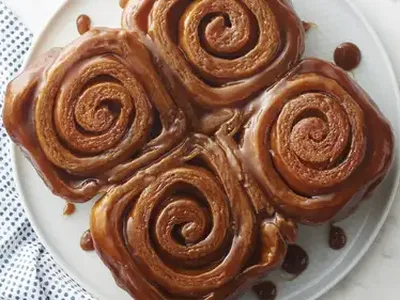
Soft, yeasted cinnamon rolls scaled for two, featuring a buttery caramel glaze that pools beneath during baking. Active dry yeast creates tender crumb with pronounced cinnamon-brown sugar swirl. The recipe uses warm milk activation and a single rise before shaping, then a second proof in the pan. Caramel is made by heating brown sugar, butter, and corn syrup to concentrate flavors without candy thermometer precision. Serve warm straight from the oven or within hours of baking; the rolls stay tender and the caramel remains soft enough to soak into the dough. Best for weekend breakfast or brunch when you have time for two rise periods. This version focuses on manageable yield and straightforward technique without specialized equipment.
No ratings yet — be the first
Method
26 steps- 1
Mix one cup flour, granulated sugar, salt, and yeast in a medium bowl.
- 2
Add warm milk, two tablespoons softened butter, and egg yolk to the bowl.
- 3
Beat on low speed one minute, scraping frequently, then on medium speed one minute.
- 4
Stir in remaining flour a quarter cup at a time until dough is easy to handle.
- 5
Knead on a lightly floured surface about five minutes until smooth and springy.
- 6
Grease a medium bowl, place dough inside, and turn to coat all sides.
- 7
Cover loosely with plastic wrap and let rise in a warm place one to one and a half hours until doubled.
- 8
Check readiness by pressing gently; dough should hold an indentation.
- 9
Spray an eight-inch square pan with cooking spray.
- 10
Heat half cup brown sugar and one quarter cup softened butter in a saucepan until boiling, stirring constantly.
- 11
Remove from heat and stir in light corn syrup, then pour into the prepared pan.
- 12
Mix one quarter cup brown sugar and cinnamon in a small bowl and set aside.
- 13
Deflate dough by gently pushing your fist into it.
- 14
Flatten dough into an eight by ten-inch rectangle on a lightly floured surface.
- 15
Spread two tablespoons softened butter over the dough and sprinkle cinnamon sugar evenly.
- 16
Roll the rectangle tightly starting from the eight-inch side.
- 17
Pinch the edge to seal and shape until even with your fingers.
- 18
Cut the roll into four two-inch slices using a serrated knife.
- 19
Place slices cut side up, slightly apart, in the caramel-lined pan.
- 20
Cover loosely with plastic wrap and let rise thirty to forty-five minutes until doubled.
- 21
Heat oven to 350 degrees Fahrenheit.
- 22
Bake twenty-eight to thirty-two minutes until golden brown.
- 23
Let stand two minutes in the pan.
- 24
Place a heatproof tray or serving plate upside down on top of the pan.
- 25
Immediately flip the pan and tray together so caramel drizzles over the rolls.
- 26
Leave the pan on top one minute, then remove and serve warm.
Tips
Proof dough in a turned-off oven with the light on, or in a proofing box; consistent warmth around 75-80 degrees Fahrenheit cuts rise time and improves texture.
Use a serrated knife dipped in water or flour to cut rolls cleanly without dragging dough; clean the blade between cuts for even slices.
If caramel hardens before rolls are placed, gently reheat the pan in the oven for one to two minutes to soften it.
Good to Know
Store cooled rolls in an airtight container at room temperature up to two days. Refrigerate for up to four days in a sealed container; reheat gently in a 300 degree Fahrenheit oven for five to ten minutes wrapped in foil to prevent drying.
Prepare dough through first rise, cover tightly, and refrigerate overnight. Shape, place in the pan with caramel, cover, and refrigerate up to twelve hours. Let come to room temperature and finish second rise before baking, adding five to ten minutes to the rise time if cold.
Serve rolls warm, within two hours of baking, while caramel is still soft. Accompany with coffee, tea, or milk. Can be served for breakfast, brunch, or as a dessert.
Common Mistakes
Use water between 110-115 degrees Fahrenheit to activate yeast; hotter water kills yeast, colder slows fermentation.
Proof dough in a genuinely warm place; a cool kitchen dramatically extends rise times and can result in dense crumb.
Do not skip the second rise in the pan; under-proofed rolls will be dense and tough.
Flip the pan immediately after baking while caramel is hot; delay causes caramel to harden and stick.
Do not over-knead; five minutes develops gluten without creating a tough, elastic dough.
Substitutions
Dairy-Free Swaps
Vegan Options
General Alternatives
FAQ
Can I make these rolls ahead and freeze them?
Yes. Bake rolls completely, cool to room temperature, wrap individually in plastic wrap and foil, then freeze up to one month. Thaw at room temperature two to three hours, or reheat gently in a 300 degree Fahrenheit oven wrapped in foil for ten to fifteen minutes.
What if my dough did not rise enough after the first or second proof?
Proofing time depends heavily on kitchen temperature. If rises are slow, choose a warmer spot or extend the time. Dough is ready when it holds an indentation when pressed gently. Over-proofing can also cause collapse, so monitor visually rather than trusting the timer alone.
How long can I keep these rolls and do they reheat well?
Rolls stay tender at room temperature in an airtight container for two days. Refrigerate up to four days. Reheat gently wrapped in foil at 300 degrees Fahrenheit for five to ten minutes; microwave reheating dries them quickly. Freezing and reheating works best.