Garden Fresh Asparagus and Broad Bean Risotto
- Prep
- 15 min
- Cook
- 25 min
- Yield
- 6 servings
- Level
- medium
- Cuisine
- Italian (Northern Italian technique with spring vegetables)
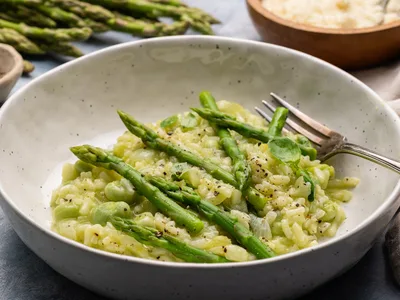
A vibrant spring risotto that celebrates tender asparagus and sweet broad beans in creamy Arborio rice. This dish showcases the bright, herbaceous flavors of fresh basil blended into a silky green puree stirred through the rice, balanced by lemon zest and finished Parmesan. The cooking method honors traditional risotto technique: toasting rice, gradual stock incorporation, and constant stirring to develop the characteristic creamy texture without cream. Asparagus tips are blanched separately and reserved for garnish, ensuring they stay tender and visually striking. The broad beans add subtle earthiness and creamy texture when cooked alongside the rice. Perfect for lunch or dinner when spring vegetables peak, this recipe works for home cooks comfortable with hands-on stovetop cooking. It's elegant enough for entertaining but approachable enough for weeknight dinners. This version distinguishes itself through the two-part asparagus preparation—infusing stock with woody ends while reserving tips for textural contrast—and the vibrant basil puree that colors and flavors the entire dish.
No ratings yet — be the first
Ingredients
- ½ pound fresh asparagus, trimmed
- 2 ½ pints vegetable or chicken stock
- 4 stalks fresh basil
- 5 tablespoons butter, divided
- 1 tablespoon olive oil
- 1 medium onion, finely chopped
- 3 cloves garlic, finely chopped
- 1 cup risotto rice (Arborio)
- 1 cup white wine
- 1 cup broad beans, frozen or freshfresh peas or green beans1:1
different texture and subtly sweeter flavor
- ⅓ cup Parmesan, grated, plus extra
- 1 lemon, zest only
- salt, to taste(optional)
- black pepper, to taste(optional)
Method
13 steps- 1
Trim woody ends from asparagus and reserve. Cut remaining stalks in half.
- 2
Add asparagus woody ends to vegetable or chicken stock in a large pan on low heat.
- 3
Bring a medium pan of water to boil and cook the middle and top asparagus sections for 2 minutes.
- 4
Transfer blanched asparagus immediately to ice water and cool for 4 to 5 minutes. Drain on kitchen towel and pat dry.
- 5
Blend the middle asparagus segments with fresh basil to form a smooth puree, loosening with water if needed.
- 6
Heat a large, deep pan to medium heat. Add butter and olive oil, then sauté the chopped onion until translucent.
- 7
Add garlic and fry for 1 to 2 minutes longer.
- 8
Add risotto rice to the pan, coat thoroughly in oil, and fry for 1 to 2 minutes.
- 9
Pour in white wine and cook until absorbed.
- 10
Begin ladling in stock from the pot with asparagus ends, stirring constantly and allowing each addition to absorb before adding more.
- 11
After 15 minutes, add broad beans and cook for 5 more minutes until rice reaches al dente.
- 12
Remove from heat and stir in remaining butter, asparagus and basil puree, Parmesan, lemon zest, salt, and pepper.
- 13
Top with reserved asparagus tips and additional Parmesan. Serve.
Tips
Toast the risotto rice for 1 to 2 minutes in butter and oil before adding wine. This seals the starches, creates a nutty flavor, and helps achieve the creamy, al dente texture that defines risotto.
Keep stock warm in a separate pot throughout cooking. Adding cool stock shocks the rice and disrupts the creamy emulsion. Stir constantly during stock addition to release starches gradually.
Blanch asparagus separately and shock in ice water to set its bright color and tender-crisp texture. This preserves visual appeal and prevents overcooking during the 20-minute risotto cooking time.
Good to Know
Risotto is best served immediately. Leftovers can be refrigerated in an airtight container for up to 2 days but will lose creaminess as rice continues absorbing liquid.
Prepare components ahead: trim asparagus, blanch and chill tips, make basil puree, measure stock. Cook risotto fresh for optimal creamy texture.
Serve as a standalone vegetarian main course. Pair with a crisp white wine, green salad with lemon vinaigrette, or crusty bread. Works as a side to grilled fish or roasted chicken.
Common Mistakes
Do not skip the ice water bath after blanching asparagus to avoid overcooked, dull-colored vegetables.
Do not add all stock at once to avoid mushy rice and loss of the creamy emulsion that defines risotto.
Do not stop stirring during stock addition to avoid uneven cooking and starchy, broken texture.
Substitutions
Dairy-Free Swaps
General Alternatives
different texture and subtly sweeter flavor
FAQ
Can I make this risotto ahead of time?
Risotto is best served immediately after cooking when it has maximum creaminess. You can prepare all ingredients and components ahead, then cook the risotto fresh when needed. Reheated risotto becomes thicker as rice absorbs more liquid.
What if I don't have fresh broad beans?
Frozen broad beans work perfectly and are convenient year-round. Thaw them before adding to the risotto, or add directly if frozen; they'll warm through in 5 minutes. Fresh or frozen peas, green beans, or spinach are suitable substitutes with slightly different flavor profiles.
Can I freeze leftover risotto?
Freezing risotto is not recommended as the rice texture becomes mushy and grainy after thawing. Refrigerate leftovers for up to 2 days in an airtight container. To reheat, add warm broth and stir gently over low heat to restore some creaminess.