Gluten-Free Bread with Psyllium Husk and Sorghum
- Prep
- 30 min
- Cook
- 1 hr 15 min
- Yield
- 1 loaf
- Level
- medium
- Cuisine
- American
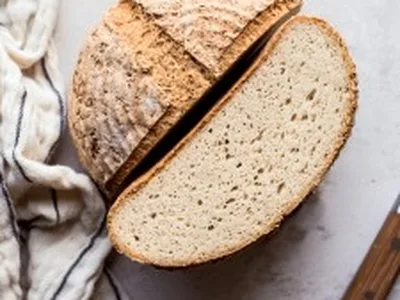
Dense, tender gluten-free loaf using psyllium husk as a binder and a blend of sorghum, brown rice, tapioca, and quinoa flours. The psyllium creates structure mimicking gluten's elasticity, while warm fermentation develops subtle flavor. Earthy undertones from sorghum balanced by mild sweetness. Serve sliced fresh or toasted for breakfast, alongside soups, or as sandwich bread. This formula prioritizes moisture retention and crumb structure through hydrophilic psyllium rather than eggs or commercial binders, yielding a naturally vegan loaf with better keeping qualities than typical gluten-free breads.
No ratings yet — be the first
Method
9 steps- 1
Combine yeast with sweetener and warm water between 100-110F in a small bowl, let activate 10-15 minutes until foamy.
- 2
Mix psyllium husk, olive oil, and water in a measuring cup, whisk to break up psyllium, let sit a few minutes until gel-like thickens.
- 3
Whisk together all flours, starches, and salt in a large bowl.
- 4
Add psyllium gel and yeast mixture to dry ingredients, mix with stand mixer and dough hook until combined and smooth, scraping sides often, or combine by hand with dough whisk then knead on counter until fully incorporated.
- 5
Knead dough by hand and shape into desired form, place in banneton seam-side up or loaf pan seam-side down for final proof.
- 6
Cover with tea towel and let rise 1 hour in warm place until doubled in size and light and puffy. Preheat oven to 425F with Dutch oven inside if using.
- 7
Score bread carefully after flipping from banneton onto parchment or silicone sling if using Dutch oven. If using loaf pan, brush top with oil for golden crust.
- 8
Bake in Dutch oven for 1 hour 15 minutes total, removing lid for final 15 minutes, until golden brown and crusty. In loaf pan, bake 1 hour 15 minutes uncovered.
- 9
Transfer to cooling rack and cool completely, ideally overnight or at least 4-5 hours before slicing.
Tips
Psyllium husk must fully hydrate before mixing into dough; a thick, gel-like consistency ensures even distribution and optimal binding without dry pockets.
Extended cooling is critical; gluten-free dough continues setting as it cools, developing structure that prevents gumminess when sliced too soon.
A Dutch oven traps steam during the first 45 minutes, creating crust development; if unavailable, spray oven walls with water every 15 minutes for first half of bake.
Good to Know
Cool completely before wrapping in paper or cloth bag to maintain crust texture; store at room temperature 3-4 days. Avoid plastic for first day as trapped moisture softens crust. Slice and freeze in airtight container up to 1 month; toast from frozen.
Prepare dough through shaping and refrigerate in banneton 8-16 hours; bring to room temperature 30-45 minutes before scoring and baking. Overnight cold fermentation may develop subtle tang and improve flavor complexity.
Slice 0.75-1 inch thick. Serve fresh at room temperature, or toast lightly to revive texture and warm crumb. Excellent with nut butters, jam, olive oil and sea salt, or as sandwich bread. Reheating in 350F oven for 10 minutes refreshes crust better than toaster.
Common Mistakes
Use warm (not hot) water for yeast; temperatures above 120F kill yeast cells and prevent rise.
Let psyllium fully gel before mixing dough; dry husk particles create crumbly texture and poor binding.
Do not cut bread until fully cooled (minimum 4-5 hours); warm crumb collapses when sliced, creating gummy interior.
If dough is too wet to knead by hand after initial mixing, resist adding flour; gluten-free dough is naturally wetter and will firm as psyllium fully hydrates.
Substitutions
sorghum adds earthy depth; swap for milder flavor
less absorptive; add 5g extra water
FAQ
Can I use all-purpose gluten-free flour blend instead of mixing individual flours?
Yes, though results vary by blend formulation. Replace the 440g total (potato starch + tapioca + sorghum + brown rice + quinoa) with 440g blend, reduce or omit extra starch, and test fermentation time as ratios differ. Blends designed for yeast baking yield best results.
What if my dough doesn't rise much in the first hour?
Gluten-free dough rises more slowly than wheat dough due to reduced gluten network. Extend proof to 1.5-2 hours in a warm spot (78-82F); a proofing box, turned-off oven with light on, or warm kitchen corner works. Yeast age and water temperature also affect speed.
How long can I keep this bread fresh, and can I freeze it?
Room temperature storage in paper bag: 3-4 days before crumbling. Wrapped airtight after 1 day: 5 days. Frozen sliced loaf (airtight container): up to 1 month. Toast from frozen for best texture. Do not freeze whole loaf as thawing causes moisture loss and density.