15-Minute Homemade Garlic Aioli with Lemon
- Prep
- 10 min
- Yield
- 8 servings
- Level
- medium
- Cuisine
- italian
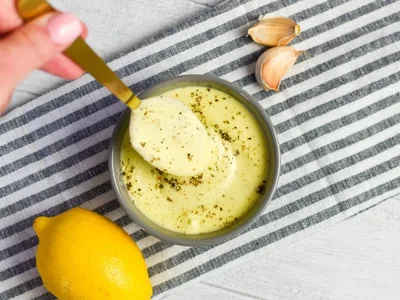
This creamy, pungent aioli is a luxurious emulsion of egg yolks, crushed garlic, and quality oils. Sharp lemon juice brightens the rich, garlicky base while maintaining the silky texture that makes aioli a perfect companion to grilled vegetables, seafood, fries, or crusty bread. Serve alongside roasted potatoes, steamed artichokes, or use as a sandwich spread. This version prioritizes hand-pasted garlic over powder for clean, fresh flavor and requires patience during oil incorporation to achieve stable emulsification.
No ratings yet — be the first
Ingredients
- 1 garlic clove, large, crushed to paste
- 1 lemon, halved for juicing
- ¼ teaspoon kosher salt
- 2 eggs, large, at room temperatureaquafaba3 tablespoons aquafaba per egg yolk + 1 whole aquafaba egg whitevegan substituteslightly less richeggs-free
low confidence
Full guide → - ½ cup grapeseed oil
- ¼ cup olive oil, extra-virgin
Method
12 steps- 1
Bring eggs to room temperature by covering with warm water in a bowl.
- 2
Crush garlic clove to a paste using a microplane, garlic press, or by mincing finely and smashing with knife.
- 3
Juice half the lemon and measure out 1 teaspoon.
- 4
Separate one egg, keeping only the yolk and discarding the white.
- 5
Combine the reserved yolk, both yolk and white of the second egg, garlic paste, salt, and 1 teaspoon lemon juice in a food processor or blender.
- 6
Pulse until ingredients are evenly blended and frothy.
- 7
Add oils to a measuring cup, then turn processor on and drizzle oil drop by drop until mixture begins to thicken and emulsify.
- 8
Once emulsification is visible and mixture is consistent, pour oil in a thin steady stream.
- 9
When all oil is incorporated, stop processor and check consistency against mayonnaise.
- 10
Adjust seasoning with additional salt or lemon juice if desired.
- 11
Let aioli rest for at least 1 hour to allow flavors to meld before serving.
- 12
Transfer to serving dish and top with freshly cracked black pepper.
Tips
Bring all eggs to room temperature before emulsifying to prevent broken aioli. Cold eggs create temperature shock that destabilizes the emulsion.
Add oil extremely slowly at first (literally drop by drop). Rushing this stage is the most common cause of breaking. Once emulsion visibly thickens, you can safely increase to a thin stream.
If aioli breaks, start fresh with a new yolk in clean processor, then slowly whisk in the broken mixture to repair it.
Good to Know
Refrigerate in an airtight container for up to 3 days. Do not freeze as emulsion will break upon thawing.
Prepare up to 3 days ahead. The resting period (1 hour minimum) actually improves flavor development, so make aioli the morning of service.
Serve at room temperature or chilled alongside grilled vegetables, steamed artichokes, roasted potatoes, seafood, or use as a sandwich spread. Dollop generously over fries or crudites.
Common Mistakes
Add oil too quickly to avoid breaking the emulsion mid-process; start with drops, not streams.
Use room-temperature eggs to avoid temperature shock that destabilizes the mixture.
Skip the resting period to avoid muted flavors; garlic and lemon need time to marry.
Substitutions
Vegan Options
low confidence
Full guide →General Alternatives
FAQ
Can I make aioli without a food processor?
Yes, use a mortar and pestle or whisk by hand in a bowl. Hand-whisking requires significantly more patience and arm strength but produces equally good results. Start with yolks in a bowl, whisk constantly, and add oil in drops.
What if my aioli breaks or separates?
Start with a fresh egg yolk in a clean processor. Slowly add the broken aioli to it while processing, essentially treating it as your oil addition. This often rescues the broken batch. Alternatively, start completely fresh.
How long can I keep finished aioli and can I freeze it?
Refrigerate in an airtight container for up to 3 days maximum. Do not freeze; the emulsion will break irreversibly upon thawing as ice crystals rupture the oil-water structure.