Homemade Rosemary Garlic Bread with Yeast
- Prep
- 30 min
- Cook
- 35 min
- Yield
- 1 loaf (32 slices)
- Level
- medium
- Cuisine
- American
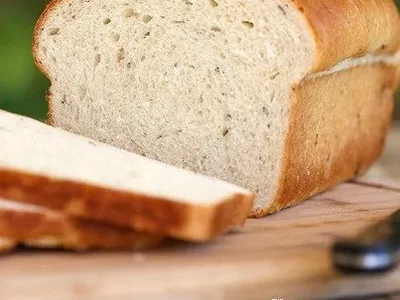
Soft, pillowy garlic-rosemary bread made with active dry yeast and fresh herbs. Melted butter brushed on warm loaves creates a tender crumb with herbaceous, savory depth. Perfect for weeknight dinners, weekend gatherings, or alongside soups and stews. This version uses a stand mixer for ease and emphasizes fresh rosemary and garlic layered into the dough itself rather than as a surface topping, delivering flavor throughout each slice.
No ratings yet — be the first
Ingredients
- 1 ½ tablespoon active dry yeast
- 2 ½ cup warm water, 110-120F
- ⅝ cup granulated sugar
- 8 tablespoon unsalted butter, divided
- 1 tablespoon kosher salt
- ¼ cup fresh rosemary, chopped
- 6 clove fresh garlic, minced
- 7 cup all-purpose flourbread floursame qtysubstitution
increases chew and structure, reduces rise time slightly
Method
12 steps- 1
Melt 1/4 cup butter in microwave, covered, in 30-second intervals.
- 2
Combine sugar and warm water in stand mixer bowl. Sprinkle yeast over top, swirl gently, and let bloom 5-10 minutes until aromatic.
- 3
Add melted butter, 4 cups flour, and salt. Mix on low with dough hook until smooth.
- 4
Stir in garlic and rosemary. Add remaining flour 1 cup at a time until soft dough forms.
- 5
Knead on medium for 5 minutes until tacky (not sticky). Add flour 1 tablespoon at a time if needed.
- 6
Turn onto floured board and knead about 10 turns by hand.
- 7
Melt 1 tablespoon butter in large microwave-safe bowl. Place dough inside, turning to coat. Cover loosely with plastic wrap and cloth.
- 8
Let rise in warm place until doubled, about 1 hour.
- 9
Punch dough down and shape into two loaves. Place in greased 9x5 inch loaf pans.
- 10
Cover and let rise until doubled, 45-60 minutes.
- 11
Preheat oven to 350F with rack centered. Bake 30-35 minutes until golden brown. Cover with foil if browning too quickly.
- 12
Brush warm loaves with remaining butter. Cool slightly before serving.
Tips
Check dough tackiness by touching it: it should not leave residue on your fingers. This texture produces optimal crumb structure and prevents dense loaves.
Use a stand mixer with dough hook to reduce hand fatigue and ensure even gluten development, especially important for consistent rise and texture.
Good to Know
Store cooled loaves in an airtight container or bread bag at room temperature up to 3 days. Wrap tightly and freeze up to 2 months. Thaw at room temperature before serving.
Prepare dough through first rise, shape into loaves, wrap, and refrigerate up to 16 hours. Let come to room temperature and complete second rise before baking, adding 10-15 minutes to rise time.
Serve warm or at room temperature, sliced, as a side to soups, stews, pasta, or alongside cheese and cured meats. Pairs well with Italian or Mediterranean mains.
Common Mistakes
Use water too hot (over 120F) to avoid killing yeast; too cold (under 110F) to avoid slow or no bloom.
Skip the tacky-dough check to avoid dense, gummy crumb; under-kneaded dough produces poor rise.
Over-fill loaf pans to avoid dough rising into oven and baking on rack; use 9x5 pans and fill halfway.
Substitutions
FAQ
Can I make this without a stand mixer?
Yes. Mix dough by hand in a large bowl using a wooden spoon. Combine water, sugar, and yeast as directed. Stir in butter, salt, and 4 cups flour until combined. Add garlic and rosemary, then add remaining flour gradually, stirring until shaggy. Knead by hand for 8-10 minutes on a floured surface until smooth and tacky.
What if my dough does not double during rising?
Dough rises slower in cool kitchens. Place it in an oven with the light on, a turned-off oven preheated and cooled slightly, or use a proofing box if available. If rising very slowly after 2 hours, it may still rise; proceed with shaping. Alternatively, increase water temperature slightly (staying under 120F) or use instant yeast instead of active dry.
How long can I keep baked bread and can I freeze it?
Cooled loaves stay fresh 3 days in an airtight container or bread bag at room temperature. Freeze wrapped loaves up to 2 months. Thaw at room temperature, unwrapped, for 2-3 hours, or reheat wrapped in foil at 325F for 15-20 minutes until warmed through.