15-Minute Lacto-Fermented Salsa
- Prep
- 15 min
- Yield
- 1 servings
- Level
- medium
- Cuisine
- Condiments
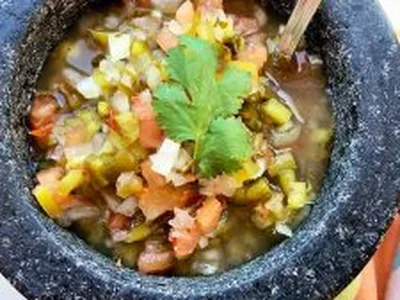
A tangy, probiotic-rich salsa made by fermenting fresh peppers, tomatoes, onion, and garlic in a brine of lacto-fermented sauerkraut or pickle juice and purified water. The fermentation process develops complex vinegary notes and natural carbonation over 1-2 weeks at room temperature. Bright cilantro adds fresh herbal contrast. Serve as a condiment with chips, tacos, or grain bowls, or alongside grilled proteins. This version leverages existing fermented brine to jumpstart the fermentation and deepen flavor depth beyond standard raw salsa.
No ratings yet — be the first
Ingredients
- 1 large jalapeno pepper, diced, seeds removed
- 1 medium green bell pepper, diced, ribs and seeds removed
- 2 cubanelle peppers, diced, ribs and seeds removedpoblano or anaheim peppers1:1heat_swap
mild increase in heat
- 4 plum tomatoes, diced
- 1 small white onion, diced
- 2 large cloves garlic, minced
- ¼ cup fresh cilantro, chopped
- 1 teaspoon sea salt
- 1 cup brine from lacto-fermented sauerkraut or pickles
- 2 cups purified water, filtered, spring, or bottled
Method
10 steps- 1
Combine jalapeno, green bell pepper, cubanelle peppers, tomatoes, onion, garlic, and cilantro in a large bowl and mix well.
- 2
Transfer mixture to a quart-size mason jar or divide among four 8-ounce jars.
- 3
Whisk salt into fermented brine until dissolved, then add purified water.
- 4
Slowly pour brine mixture over vegetables until completely submerged, leaving 1 inch headspace at the top.
- 5
Seal jar tightly and place in a dark location away from direct sunlight, such as a kitchen cabinet, at room temperature around 65-72°F.
- 6
After 24 hours, burp the jar daily or every other day to release carbon dioxide by twisting the lid until pressure releases.
- 7
Stir occasionally to keep vegetables submerged beneath the liquid surface if desired.
- 8
Taste after 2 days; fermentation should produce carbonation and vinegary flavor.
- 9
Continue fermenting 1-2 weeks, tasting daily to reach desired sourness level.
- 10
Transfer to refrigerator once fermentation reaches desired intensity to slow the process.
Tips
Burp jars consistently to prevent excess pressure buildup and avoid broken glass; even fermentation requires daily or every-other-day pressure release.
Taste salsa starting at day 2 to monitor fermentation progress; warmer kitchen temperatures speed fermentation, so timing varies by environment.
Good to Know
Transfer fermented salsa to refrigerator after reaching desired fermentation level (1-2 weeks). Store in sealed mason jars in refrigerator for up to 3-4 months. Flavor continues to develop slowly in cold storage.
Salsa can be made up to 4 weeks in advance and stored in the refrigerator. Fermentation process begins immediately after preparation and continues slowly at cold temperatures.
Serve chilled or at room temperature as a condiment with tortilla chips, alongside tacos, or as a topping for grilled fish, chicken, or beans. Pairs well with grain bowls and roasted vegetables.
Common Mistakes
Do not skip burping the jar to avoid pressure buildup that may crack or explode the container.
Do not store jar in direct sunlight to avoid light damage to beneficial bacteria and off-flavors.
Do not allow vegetables to float above brine to prevent mold growth and spoilage on exposed surfaces.
Substitutions
mild increase in heat
adds dill undertone
FAQ
Can I use fresh pickle juice instead of sauerkraut brine?
Yes, fresh dill pickle brine works well and imparts dill notes. Use at 1:1 ratio. Ensure brine is from lacto-fermented pickles, not vinegar-based, to provide live cultures that jumpstart fermentation.
What if my fermentation smells bad or shows mold?
Discard immediately if you notice fuzzy mold, pink or black patches, or a putrid smell. A vinegary or pleasantly sour aroma is normal. Ensure vegetables stay submerged and jars are clean to prevent contamination.
How long can I keep fermented salsa, and can I freeze it?
Refrigerated fermented salsa keeps 3-4 months. Freezing stops fermentation and alters texture; not recommended. For longer storage, can the finished salsa using hot water bath processing following USDA guidelines.