Make-Ahead Yeast Rolls with Cold Rise
- Prep
- 30 min
- Cook
- 12 min
- Yield
- 32 servings
- Level
- medium
- Cuisine
- American
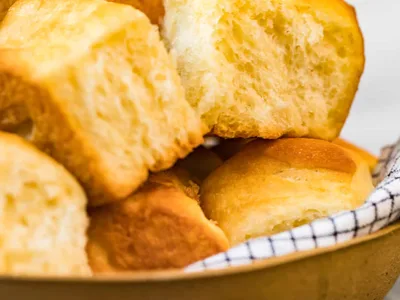
These make-ahead yeast rolls are soft, pillowy dinner rolls designed for entertaining and busy schedules. The dough rises initially, then gets refrigerated overnight, allowing you to shape and bake them fresh on serving day. This two-stage approach develops subtle flavor depth while keeping your kitchen prep flexible. The rolls feature a tender crumb from a balanced mix of eggs, shortening, and butter, with just enough salt and sugar to enhance without overwhelming. Key textures include a golden-brown exterior and a feathery interior that pulls apart easily. Perfect for holiday tables, weeknight dinners, or anyone wanting homemade rolls without same-day rush. The cold fermentation stage also makes them ideal for entertaining since most work happens ahead. Unlike quick-rise rolls, this version uses the fridge as a flavor-building tool, creating complexity you'd typically need hours to develop.
No ratings yet — be the first
Method
12 steps- 1
Combine yeast, sugar, and warm water in a measuring cup, stir to mix, and let stand 5 minutes until yeast activates, discarding and starting fresh if it doesn't foam.
- 2
In a large bowl, combine the yeast mixture, remaining warm water, flour, eggs, cooled shortening, sugar, and salt. Beat with a wooden spoon or Danish whisk for 2 minutes until combined.
- 3
Gradually stir in remaining flour until a soft dough forms that isn't too sticky.
- 4
Transfer dough to a nonstick-sprayed glass bowl, roll once to coat all sides, and cover loosely with sprayed plastic wrap or damp towel.
- 5
Let rise in a proofing oven or warm place until doubled, about 1 hour.
- 6
Punch dough down, cover tightly, and refrigerate at least 8 hours.
- 7
About 2 hours before baking, remove dough from fridge. Spray two 9-inch square pans with nonstick spray and melt the butter.
- 8
Punch dough down a second time, place on lightly floured surface, and knead 5-6 times. Divide in half, then cut each half into 16 equal portions.
- 9
Shape each portion into a 2-inch ball, dip in melted butter, and place with space between them in the prepared pans.
- 10
Cover pans loosely with sprayed plastic wrap and let rise in a warm place until doubled, about 1.5 hours.
- 11
Bake in a preheated 375°F oven for 12 minutes until golden brown, checking that internal temperature reaches 200-205°F in a middle roll.
- 12
Transfer rolls to a towel-lined cooling rack, let cool 1 minute, then turn upright. Brush with melted butter if desired and serve immediately or cool completely for freezing.
Tips
Verify yeast activation in the first 5 minutes: it should foam or bubble noticeably. Inactive yeast ruins the entire batch, so discard immediately and start fresh rather than hoping it will work.
Cold fermentation develops subtle flavor and makes shaping easier. The overnight fridge rest is not optional convenience; it's integral to the recipe's texture and taste profile.
Shape rolls uniformly so they rise and bake at the same rate. Uneven sizing causes some rolls to brown before others finish cooking through.
Good to Know
Cool completely, then wrap tightly and freeze up to 3 months. Thaw at room temperature or reheat wrapped in foil at 325°F for 10-15 minutes.
Dough can be refrigerated up to 24 hours after first rise. Shaped rolls can be frozen on pans before the second rise, then baked directly from frozen, adding 5-10 minutes to bake time.
Serve warm, ideally within 2-3 hours of baking. Reheat cooled rolls wrapped in foil at 325°F for 10 minutes.
Common Mistakes
Use water between 110-115°F to avoid killing yeast with water that is too hot or activating too slowly with water that is too cool.
Avoid opening the proofing oven or disturbing dough during rises to prevent collapse and uneven texture.
Don't skip the second punch-down before shaping; it redistributes yeast and prevents large holes in finished rolls.
Substitutions
Dairy-Free Swaps
General Alternatives
FAQ
Can I make these rolls completely ahead and freeze them after baking?
Yes. Bake, cool completely, wrap tightly in plastic wrap and foil, then freeze up to 3 months. Thaw at room temperature or reheat wrapped in foil at 325°F for 10-15 minutes until warmed through.
What if I don't have a proofing oven for the first rise?
Any warm, draft-free place works: an oven with just the light on, a turned-off oven warmed by the stovetop, a cooler with warm water, or even a sunny windowsill if temperature stays around 75-80°F. Avoid direct heat and check occasionally.
Can I shape the rolls and bake them the same day instead of refrigerating?
Not recommended. The overnight cold fermentation develops flavor and makes the dough easier to handle. If pressed for time, reduce chilling to 4-6 hours minimum, though results will be less flavorful.