Paleo Cassava Flour Tortillas Cast Iron
- Prep
- 15 min
- Cook
- 20 min
- Yield
- 14 servings
- Level
- medium
- Cuisine
- Mexican
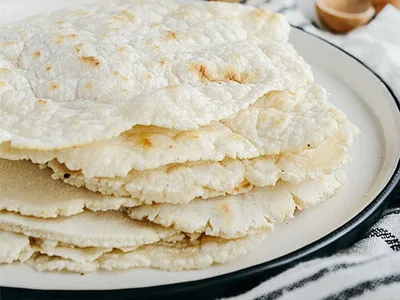
Grain-free cassava flour tortillas with a tender, pliable texture that rivals wheat versions. These naturally gluten-free wraps use simple pantry staples—cassava flour, olive oil, salt, and water—to create authentic-style tortillas suitable for paleo, keto, and allergen-conscious diets. The key to success is proper hydration during kneading and avoiding overcooking on the skillet. Serve immediately with taco fillings, use for wraps, or enjoy plain alongside soups and stews. This recipe proves that grain-free doesn't mean sacrificing texture or versatility.
No ratings yet — be the first
Ingredients
- 2 ¼ cup cassava flour
- 1 teaspoon sea salt
- 6 tablespoon extra virgin olive oil
- 1 ½ cup pure waterfiltered or bottled water1:1
chlorinated tap water may affect dough texture
Method
14 steps- 1
Combine cassava flour, sea salt, and olive oil in a large bowl.
- 2
Add 1 1/2 cups water and mix until flour and oil are evenly absorbed.
- 3
Knead dough, adding water gradually until it holds together without crumbling and water is fully incorporated into the dough mass.
- 4
Portion dough into egg-sized balls.
- 5
Place each portion between two sheets of parchment paper.
- 6
Roll out to 1/8 inch thick and diameter fitting a 10-inch cast iron skillet, smoothing ridges at edges.
- 7
Gently remove top parchment layer, rolling it back to prevent tearing.
- 8
Heat a dry cast iron skillet to medium-low.
- 9
Transfer tortilla from bottom parchment to skillet center by laying it on your palm and peeling parchment away from the thickest edge.
- 10
Watch for edge curling and bubble formation, indicating readiness to flip.
- 11
Flip when underside is browned.
- 12
Remove when second side is lightly browned, undercooking rather than overcooking for softness.
- 13
Stack tortillas between parchment layers in a zipper bag while warm to retain softness.
- 14
Adjust heat as needed during cooking to prevent burning.
Tips
Undercooking is better than overcooking. Remove tortillas when the second side reaches light brown with just a few bubbles for the softest texture.
Stack warm tortillas in a zipper bag with parchment paper between each layer or at least above and below the stack to trap steam and keep them pliable.
Good to Know
Keep tortillas in an airtight container or zipper bag at room temperature for up to 2 days. Layer with parchment paper to prevent sticking.
Prepare dough up to 4 hours ahead, cover with a damp towel, and refrigerate. Cook fresh before serving for best texture. Cooked tortillas may be frozen for up to 3 months stacked with parchment between layers.
Serve immediately while warm and soft. Use as wraps for tacos, burritos, or fajitas, or serve plain alongside soups, stews, and chilis.
Common Mistakes
Do not overcook tortillas to avoid brittleness; undercook slightly for pliability.
Do not skip the parchment paper wrapping while warm to avoid loss of moisture and softness.
Do not use excessive heat; medium-low prevents burning and ensures even cooking.
Substitutions
chlorinated tap water may affect dough texture
FAQ
Can I make tortillas ahead and freeze them?
Yes. Cool tortillas completely, stack with parchment between each, seal in a freezer bag, and freeze up to 3 months. Thaw at room temperature or reheat briefly in a skillet or oven.
What if my dough is too dry or too wet?
Dry dough crumbles when kneading; add water one tablespoon at a time until it holds together. Wet dough is sticky; sprinkle cassava flour sparingly while kneading. The dough should feel tacky but not wet.
How long do fresh tortillas stay soft?
Properly stored in an airtight container or sealed bag, tortillas remain soft for up to 2 days. Stacking with parchment paper and keeping them in a warm, humid environment extends pliability.