Viennese Bread with Tangzhong Starter
- Prep
- 10 hr
- Cook
- 30 min
- Yield
- 8 servings
- Level
- medium
- Cuisine
- Austrian
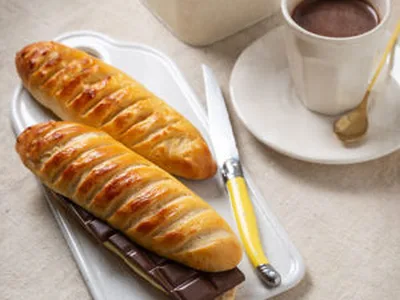
Traditional Pan de Viena with poolish (tangzhong-style starter) and extended autolyse cycles. High-hydration dough achieves fine, elastic crumb through multi-stage kneading. Shaped into scored baguettes or rolls, steam-baked until deeply golden. The volcanic stone vapor method mimics professional Viennese bakery technique in a home oven.
No ratings yet — be the first
Ingredients
- ½ cups bread flour, for starter
- 1 cups milk
- 2 ½ cups all-purpose flour
- 1 ¼ cups bread flour
- ⅛ oz instant dry yeastfresh yeast1:3 ratio (5g instant = 15g fresh)
4
- ⅓ oz salt
- ¼ cups sugar
- 2 medium eggs
- 5 tbsp butter, softened
- 1 egg, for egg wash
Method
21 steps- 1
Weigh flour and milk for the starter. Heat gently in a saucepan, stirring constantly, until thickened to paste consistency.
- 2
Cover with plastic wrap touching the surface and cool completely.
- 3
Weigh all remaining ingredients.
- 4
Add remaining bread flour, all-purpose flour, eggs, sugar, and salt to the cooled starter.
- 5
Knead by hand or machine for 1-2 minutes, rest for 10-15 minutes, repeat for 2-3 cycles total.
- 6
Incorporate butter in stages, kneading until fully integrated.
- 7
Continue alternating kneading and resting cycles until dough is fine and elastic, ideally passing the windowpane test.
- 8
Shape dough into a ball, place in a greased bowl, cover, and let it double in volume. Refrigerate overnight if dividing the process over two days.
- 9
Turn risen dough onto floured surface, gently degas by brief kneading by hand or machine, cover, and rest 10 minutes.
- 10
Divide dough with a bench scraper into 5 long loaves, 15 rolls, or 8 medium batons. Pat each piece into a rough rectangle.
- 11
Fold one long side toward the center, pressing firmly to seal. Rotate 180 degrees and repeat with opposite side.
- 12
Fold dough in half along center line, seal the edge forcefully with the heel of your hand along entire length.
- 13
Lengthen the formed piece by rolling on the counter with both hands, pushing away from each other. Allow dough to relax a few minutes if it resists stretching.
- 14
Keep remaining dough covered while shaping.
- 15
Place Vienna breads on parchment-lined trays, spaced well apart, preferably using two trays. Beat egg and brush twice with a brush.
- 16
Score with diagonal slashes using a sharp knife or blade, typical of Vienna bread style.
- 17
Let ferment; no need to cover due to egg wash protecting moisture.
- 18
When adequately proofed, uncover and carefully open the score lines wider.
- 19
Place volcanic stone in oven to preheat at 425°F. Position tray of bread on oven floor and immediately spray water onto the stone. Close oven immediately to retain steam.
- 20
Bake with heat from above and below for 12-13 minutes until deeply golden.
- 21
Cool on a wire rack.
Tips
The starter (engrudo) mimics tangzhong, gelatinizing starch to hydrate dough and improve crumb softness.
Refrigerating overnight slows fermentation, allowing you to manage production across days.
Volcanic stone generates steam similar to professional bakery equipment, improving oven spring and crust color.
Rest dough between kneading cycles to develop gluten gently without overworking.
Windowpane test: stretch a small piece until translucent without tearing; indicates optimal gluten development.
Good to Know
Wrap cooled pieces individually in plastic and freeze up to 3 months. Thaw at room temperature or reheat from frozen.
Prepare through first rise and refrigerate overnight. Shape and bake the next day after proofing.
Serve warm or at room temperature. Pairs with coffee, tea, or as sandwich base.
Common Mistakes
Do not skip the cooling step for the starter; hot starter will kill yeast in the main dough.
Do not rush the autolyse cycles; gluten develops incrementally, and over-kneading toughens the crumb.
Do not close the oven during the entire bake; you need to open carefully once to expand the scores.
Do not skip the volcanic stone or steam step if you want authentic crust; dry oven baking yields dense, pale bread.