Pan-Fried Pork Buns with Soupy Center
- Prep
- 1 hr
- Cook
- 15 min
- Yield
- 30 servings
- Level
- medium
- Cuisine
- shanghai
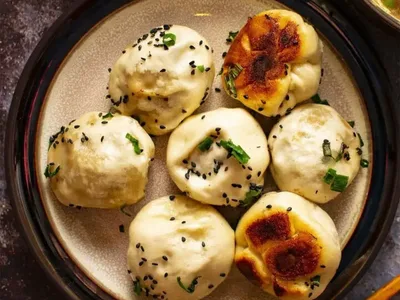
Sheng Jian Mantou are Shanghai street food icons: delicate pan-fried wheat buns with a savory pork filling and a surprise burst of gelatin-thickened broth inside. What sets this version apart is the semi-leavened dough technique using minimal yeast for a tender, slightly chewy wrapper that crisps on the bottom while staying pillowy on top. The filling combines ground pork with fermented soybean paste, Shaoxing wine, and aromatic spices like star anise and coriander, creating umami-rich complexity. The arrowroot flour transforms the meat juices into silky broth that stays contained during cooking and releases as a hot, savory center when bitten. Perfect for dim sum enthusiasts, home cooks seeking restaurant-quality results, or anyone wanting to master Chinese dumpling craftsmanship. Serve hot as a dim sum course, light lunch, or appetizer. The crispy-bottomed, soup-filled design distinguishes these from steamed buns and makes them irresistibly addictive.
No ratings yet — be the first
Ingredients
- 4 cups all-purpose flour, unbleached organic preferredbread flour or cake flour1:1wheatgluten
affects dough elasticity and final texture
- 1 cups water, for dough
- 1 tsp active dry yeast
- 0.1 cups cane sugar, organic unrefined preferred
- ⅛ tsp Himalayan pink salt
- 1 ¾ tbsp avocado oil
- 1 lb ground pork, home-ground preferredground shrimp or chicken1:1shellfishpoultryadds shellfish
changes filling flavor and brine intensity
Full guide → - 2 tbsp Shaoxing wine
- 1 tbsp soy sauce, natural or dark
- 2 tbsp light soy sauce
- 2 tsp Zhenjiang vinegar
- 1 tbsp fermented soybean paste, Da Jiangmiso paste3/4:1soywheatglutenadds soy
slightly milder umami
- 1 unit egg, cage-free or organic
- 1 tbsp arrowroot flourcornstarch or tapioca starch1:1corn
thickening power identical
- 2 tsp cane sugar, organic unrefined preferred
- ¼ tsp star anise powder
- ½ tsp coriander seeds powder, freshly ground preferred
- ½ tsp ginger powder
- 2 stalk green onions, finely chopped
- 1 tsp avocado oil
- 1 tbsp roasted sesame seeds, black or whitecrushed peanuts or fried onions1:1nutssesameadds peanuts
changes texture and flavor profile
Full guide → - 2 cup water, for steaming
- 1 stalk green onions, finely chopped for garnish(optional)
Method
18 steps- 1
Measure all ingredients by weight using a kitchen scale.
- 2
Combine flour, sugar, oil, and salt in a large bowl. Dissolve yeast in water using a whisk or chopsticks until smooth.
- 3
Add yeast mixture to dry ingredients and gradually incorporate remaining water while kneading until smooth dough forms. Use a stand mixer on low if preferred.
- 4
Cover dough with a damp towel and let rise while preparing filling.
- 5
In another bowl, combine all filling ingredients. Break down pork and fold into seasonings, then stir in one direction until paste becomes cohesive and consistent.
- 6
Knead and deflate risen dough. Divide into portions and roll each into a long cylinder.
- 7
Cut dough into pieces weighing about 25 grams each using a kitchen scale.
- 8
Roll dough portions into sheets using a rolling pin, then pass through a pasta roller on settings 1 and 2.
- 9
Cut sheets into 3.5-inch rounds using a cookie cutter. Reknead and reuse scraps.
- 10
Coat a 12-inch nonstick pan with oil. Place wrapper on your non-dominant hand, add filling to center.
- 11
Pleat and pinch edges counterclockwise to seal, then flip and gently squeeze with thumb and index finger to form a dome.
- 12
Brush top with egg white and dip upside down into sesame seeds.
- 13
Arrange buns in oiled pan until full, about 15-16 buns.
- 14
Cook on medium heat for 3 minutes until bottoms turn golden and crispy.
- 15
Pour water into pan until buns are barely covered, cover with lid, and cook for 8-10 minutes until water disappears.
- 16
Reduce heat to simmer and cook 5 more minutes.
- 17
Remove from heat, garnish with green onions, and transfer to serving plate.
- 18
Wash pan and repeat process for remaining buns.
Tips
Use a kitchen scale for all measurements, especially flour and dough portions at 25g each. Weight ensures consistent bun sizes that cook evenly and achieve the signature crispy bottom and tender center.
Stir the pork filling in one swift direction until it becomes a cohesive paste. This churning action develops texture and helps the arrowroot create a silky broth center that stays put during pan-frying.
For crispy bottoms without burning, cook on medium heat for exactly 3 minutes before adding water. Too hot risks charred bottoms; too cool leaves them pale and soft.
Good to Know
Cooked buns keep refrigerated up to 3 days in an airtight container. Reheat in a steamer basket over boiling water for 3-5 minutes to restore moisture and warmth without drying.
Prepare and wrap buns up to 2 hours before cooking; refrigerate on a parchment-lined tray. Dough and filling can be made the day prior. Do not freeze raw wrapped buns as filling-to-dough ratio affects broth texture.
Serve immediately after cooking while bottoms are crispy and interiors are steaming. Accompany with black vinegar, chili oil, or light soy sauce for dipping. Pairs well with congee, soup, or tea.
Common Mistakes
Skip the 3-minute dry pan-fry stage to avoid pale, soft bottoms. This step creates essential crispness before steaming.
Stir filling in one direction only to avoid breaking down meat fibers. Chaotic stirring creates grainy texture instead of smooth paste.
Use exact water amount (1.25 cups) to avoid soggy buns. Too much water extends cooking and waterlogs wrappers; too little leaves filling dry.
Substitutions
Gluten-Free Swaps
affects dough elasticity and final texture
General Alternatives
thickening power identical
changes filling flavor and brine intensity
Full guide →changes texture and flavor profile
Full guide →FAQ
Can I make the dough ahead and refrigerate it?
Yes. After initial rise, punch down dough, wrap tightly, and refrigerate up to 24 hours. Bring to room temperature 30 minutes before shaping. Cold dough develops deeper flavor but rises more slowly.
What if I don't have a pasta roller?
Use a rolling pin to flatten dough to 2mm thickness. Work between two sheets of parchment paper to prevent sticking. Results are acceptable but less uniform than roller-produced sheets.
How do I know when to stop cooking and the water has fully evaporated?
Listen for a gentle sizzling sound from the pan bottom indicating water is gone. Peek under the lid after 8 minutes. When liquid is gone and buns sound crispy, reduce heat to simmer for final 5 minutes.