30-Minute Poached White Fish
- Prep
- 10 min
- Cook
- 12 min
- Yield
- 4 servings
- Level
- medium
- Cuisine
- East Asian
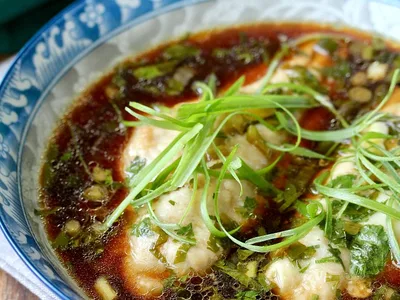
Delicate white fish fillets poached in an aromatic broth of ginger, soy sauce, and fresh herbs. This gentle cooking method keeps the fish moist and tender while infusing it with deep umami and bright, herbaceous notes. The silky poaching liquid becomes a light sauce that's salty, slightly tangy from rice vinegar, and warm from ginger. The dish balances bold Asian flavors with subtle textures—flaky fish against tender scallions and fragrant cilantro. Perfect for weeknight dinners when you want restaurant-quality results without fuss. Serve it as a complete meal in shallow bowls with the broth, making it naturally low-stress and forgiving. This version differs from stir-fried preparations by using residual heat to gently cook the fish, preserving its delicate structure while the covered pan traps steam for even cooking.
No ratings yet — be the first
Ingredients
- 2 tablespoons vegetable oil
- 1 tablespoon fresh ginger, minced
- 1 ½ pounds white fish filletshalibut, cod, or sea bass1:1seafoodadds fish
similar white fish with firm texture
- ½ cup soy sauce
- 1 ½ cups water
- ½ cup scallions, chopped
- ½ cup fresh cilantro, chopped
- 1 teaspoon rice vinegar
- scallions, shredded, for garnish
Method
6 steps- 1
Heat vegetable oil in a sauté pan over medium-high heat.
- 2
Add minced ginger and cook until fragrant and sizzling.
- 3
Add fish fillets, soy sauce, water, chopped scallions, cilantro, and rice vinegar.
- 4
Bring the mixture to a boil, then cover the pan and remove from heat.
- 5
Let sit covered for 10 minutes, or 15 minutes for larger pieces.
- 6
Transfer fish to shallow bowls, divide the broth among them, and garnish with shredded scallions.
Tips
Residual heat poaching preserves fish texture. Once the mixture boils, removing from heat prevents overcooking the delicate fillets and keeps them silky rather than dry.
Chop fresh cilantro and scallions just before cooking to maximize flavor release. These herbs wilt during cooking but maintain brightness when added raw at the end.
Use a 12-inch pan with high sides to ensure fish sits in enough liquid without crowding. Shallow, wide dishes poach unevenly; deeper pans trap steam and heat properly.
Good to Know
Refrigerate in airtight container up to 2 days. Broth keeps the fish moist. Reheat gently in a covered pan over low heat with a splash of water to restore broth consistency.
Prepare ginger and chop scallions and cilantro up to 4 hours ahead. Do not cook the dish in advance; residual heat poaching is best fresh, but leftovers reheat well.
Serve in shallow bowls with equal portions of fish and broth. Pair with steamed jasmine rice or white rice to soak up the flavorful liquid. A crisp green salad or stir-fried bok choy complements the light, savory profile.
Common Mistakes
Do not skip the cover step; uncovered poaching allows heat to escape and fish may undercook or dry out.
Do not overcook by extending the sitting time beyond 15 minutes; residual heat continues cooking the fish after removal from direct heat.
Do not use frozen fish without thawing; excess moisture will dilute the broth and extend cooking time unevenly.
Substitutions
Gluten-Free Swaps
General Alternatives
similar white fish with firm texture
FAQ
Can I make this with frozen fish fillets?
Thaw frozen fillets completely first to ensure even cooking. Frozen fish releases excess water into the broth, diluting flavor and increasing cooking time. Pat thawed fillets dry with paper towels before adding to the pan.
What if I do not have rice vinegar on hand?
White vinegar works as a substitute at the same ratio, though it tastes slightly sharper and less subtle. Apple cider vinegar adds sweetness and warmth. Alternatively, omit vinegar if unavailable; the soy sauce provides sufficient savory depth.
How long does this dish keep refrigerated?
Store in an airtight container for up to 2 days. The broth keeps the fish moist. Reheat gently in a covered pan over low heat with a splash of water to restore broth consistency and prevent the fish from drying out.