Slow-Roasted Cuban Pork with Citrus and Garlic
- Prep
- 30 min
- Cook
- 4 hr
- Level
- medium
- Cuisine
- Cuban
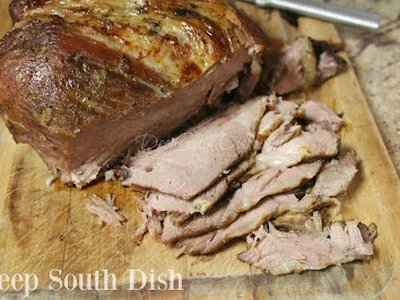
Lechon asado is Cuba's most celebrated pork dish, a showstopping roast marinated in citrus, garlic, and warm spices, then slow-cooked until fork-tender before a final high-heat sear. The magic lies in deep slits that trap an aromatic garlic-oregano paste deep inside the meat, infusing every bite, while the skin crisps to crackling in the final stage. The braising liquid becomes a silken pan sauce, bright with orange and lime, balanced by the richness of pork fat. This is a dish for serious home cooks seeking restaurant-quality results without professional equipment. Serve it for important family gatherings, holiday celebrations, or when you want to impress. Its long marination and hands-off cooking make it forgiving; its bold, complex flavor profile sets it apart from simple roasts.
No ratings yet — be the first
Ingredients
- 12 garlic cloves, crushed
- 2 tablespoon kosher salt
- ½ teaspoon dried oregano
- ½ teaspoon ground cumin
- 8 pound skin-on fresh ham, Boston butt, or pork shoulder
- 1 cup orange juice, freshly squeezedgrapefruit juice or blood orange juice1:1acidic citrus
adds brightness but less sweetness
Full guide → - ¾ cup lime juice, freshly squeezed
- ¼ cup white winedry sherry or additional orange juice1:1 or substitute wine with juiceflavor
changes depth; juice alone becomes sweeter
Full guide → - 1 medium sweet or yellow onion, sliced into rings
- 2 tablespoon cooking oilolive oil or avocado oil1:1fat for searing
adds flavor notes; avocado oil higher smoke point
Full guide →
Method
13 steps- 1
Crush garlic with salt, oregano, and cumin until nearly pulverized.
- 2
Cut deep slits into the pork roast without cutting through the fat layer. Coat the roast with the garlic mixture, working it deep into the slits.
- 3
Place roast in a non-reactive container with onions. Whisk together orange juice, lime juice, and white wine, then pour over roast.
- 4
Refrigerate for several hours to overnight, turning if possible.
- 5
Remove roast from marinade and let rest at room temperature for 30 minutes.
- 6
Preheat oven to 275 degrees F.
- 7
Transfer marinade to a saucepan, bring to a boil, and boil for 5 minutes.
- 8
Place roast in a roasting pan with onions. Pour the cooked marinade around (not over) the roast. Cover tightly and bake until meat is fork-tender and internal temperature reaches around 145 to 160 degrees F, adding water or chicken broth as needed if liquid reduces too much. Timing depends on cut and bone content.
- 9
Increase oven temperature to 400 degrees F.
- 10
Uncover pan and remove roast, reserving drippings.
- 11
Drizzle roast with oil, return to pan, and roast uncovered until browned, about 30 minutes.
- 12
Remove from oven and let stand for 30 minutes before slicing against the grain.
- 13
Skim fat from drippings and serve over sliced meat if desired.
Tips
For the brightest citrus flavor, marinate for the full overnight period and turn the roast several times. The longer soak and movement ensure the marinade penetrates the meat evenly.
Before the final high-heat sear, pat the roast completely dry with paper towels; moisture prevents browning. The 30-minute rest at room temperature before roasting also promotes even cooking.
Internal temperature varies by cut: boneless butt reaches 145-160 degrees F faster than bone-in shoulder or fresh ham. Use a meat thermometer inserted into the thickest part, away from bone.
Good to Know
Cooled roast keeps refrigerated in an airtight container for up to 4 days. Store sliced meat submerged in pan drippings to prevent drying.
Marinate roast up to 24 hours in advance. Roast can be fully cooked 1 day ahead, cooled, refrigerated, and gently reheated at 300 degrees F covered with foil until warmed through. Omit the final high-heat sear or perform it fresh before serving.
Serve with black beans and rice, fried plantains, Cuban bread for sandwiches, pickled onions, or a simple green salad with citrus vinaigrette.
Common Mistakes
Do not skip the 30-minute room-temperature rest before initial roasting to avoid uneven cooking and cold spots in the center.
Do not skip the 5-minute boil of the marinade to avoid food safety risk from raw marinated meat juices.
Do not cover during the final 400-degree F searing to avoid steaming; the roast needs dry heat to crisp the exterior.
Substitutions
adds flavor notes; avocado oil higher smoke point
Full guide →adds brightness but less sweetness
Full guide →changes depth; juice alone becomes sweeter
Full guide →FAQ
Can I make this with a boneless pork shoulder instead of a bone-in fresh ham?
Yes. Boneless cuts cook 30-60 minutes faster than bone-in versions. Start checking internal temperature around 2.5 hours at 275 degrees F. The shorter cooking time means slightly more tender meat with less rendered fat, but flavor remains excellent.
What if I don't have fresh lime juice?
Use bottled lime juice at the same ratio; flavor will be slightly less vibrant. Alternatively, substitute half the lime juice with additional orange juice or lemon juice. Avoid lime cordial, which contains added sugar and preservatives that alter the marinade balance.
Can I freeze leftover lechon asado, and how long does it keep?
Yes. Cool the roast, slice it, and freeze with pan drippings in an airtight container or freezer bags for up to 3 months. Thaw overnight in the refrigerator and reheat gently at 300 degrees F covered with foil. Whole unsliced roasts also freeze well for the same duration.