Veal and Olive Ragù With Pappardelle
- Prep
- 15 min
- Cook
- 25 min
- Yield
- 6 servings
- Level
- medium
- Cuisine
- Italian regional
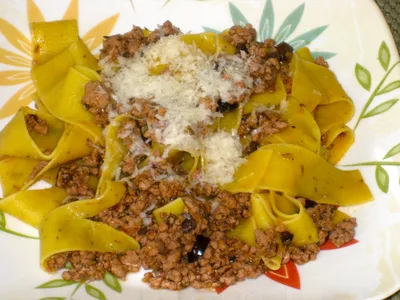
A refined Italian ragù that showcases lean ground veal simmered with briny green olives, garlic, rosemary, and white wine. Unlike traditional beef ragùs, this version celebrates the delicate flavor of veal while the olives add bold, salty complexity. Bright notes of lemon zest and fresh parsley cut through the richness of pecorino romano cheese stirred into each serving. The sauce clings beautifully to wide pappardelle ribbons, creating a restaurant-quality dish perfect for weeknight dinners or casual entertaining. This approach balances luxury ingredients with accessible technique—ideal for cooks seeking something beyond standard meat sauce but manageable on a Tuesday night. The combination of olives with veal is distinctly Mediterranean and less common than beef versions, making this a memorable alternative that feels both approachable and special.
No ratings yet — be the first
Ingredients
- salt, to taste(optional)
- 1 lb pappardelle pasta, or other wide flat pasta
- 2 tablespoons extra virgin olive oil, EVOO
- 1 tablespoon butter
- 1 ½ lbs ground vealground lamb1:1mediterranean
adds slight gaminess, changes character
- pepper, to taste(optional)
- 1 whole onion, finely chopped
- 2 cloves garlic, finely chopped
- 2 sprigs rosemary, finely chopped
- 2 tablespoons tomato paste
- 1 cup pitted large green olives, coarsely chopped
- ½ cup dry white wine
- 1 cup beef broth
- ⅓ cup flat leaf parsley, finely chopped
- 2 teaspoons lemon peel, finely grated
- ½ cup grated pecorino romano cheese, plus more
- pecorino romano cheese, for passing(optional)
Method
8 steps- 1
Bring a large pot of salted water to a boil, add pasta and cook until al dente, then drain.
- 2
While pasta cooks, heat oil in a large deep skillet over medium-high heat.
- 3
Add butter to melt, then add veal and season with salt and pepper. Break up meat with a wooden spoon, cooking until no longer pink.
- 4
Add onion and garlic, stirring occasionally, until softened.
- 5
Stir in rosemary and tomato paste and cook briefly, then add olives and heat through.
- 6
Stir in wine, scraping up browned bits, then add beef broth and parsley. Simmer gently.
- 7
Stir in lemon peel, add pasta to sauce, and stir in cheese. Serve hot with extra cheese.
- 8
Pass additional cheese at the table.
Tips
Break veal into small, even pieces as it cooks to create a fine ragù texture that clings to pappardelle. Avoid stirring constantly; let meat brown in spots for deeper flavor.
Scrape the browned fond from the skillet bottom when adding wine—this concentrated flavor layer transfers to the sauce and builds complexity.
Grate lemon peel fresh just before serving to preserve its bright oils and volatile aromatics; pre-grated zest dulls quickly.
Good to Know
Refrigerate finished ragù in airtight container up to 3 days. Pasta absorbs sauce; store separately if planning ahead.
Prepare ragù completely through the broth simmer step, cool, and refrigerate up to 2 days. Reheat gently before tossing with freshly cooked pasta.
Serve hot on a warm plate. Pass grated pecorino romano for diners to adjust cheese level. Pair with dry white wine, crusty bread, and simple green salad.
Common Mistakes
Overcook veal past al dente doneness to avoid mushy texture; simmer at bare bubble, not rolling boil.
Skip scraping fond when deglazing with wine to avoid flat, one-dimensional sauce lacking caramelized depth.
Add lemon zest early or during storage to avoid losing bright citrus bite; stir in just before serving.
Substitutions
adds slight gaminess, changes character
FAQ
Can I make this ragù ahead and freeze it?
Yes. Cool the finished ragù completely, transfer to freezer-safe containers, and freeze up to 3 months. Thaw overnight in the refrigerator and reheat gently over low heat, stirring occasionally and adding pasta water if sauce thickens. Freeze separately from pasta.
What if I don't have fresh rosemary?
Substitute 0.5 teaspoon dried rosemary, crushed between your fingers to release oils, or use 1 teaspoon fresh thyme instead. Dried rosemary intensifies when heated, so use less than the fresh amount and add it earlier to soften the flavor.
Can I use a different pasta shape?
Absolutely. Choose any wide, flat pasta like tagliatelle or fettuccine. Avoid very thin shapes—they'll disappear under the chunky ragù. Tube shapes like penne work but catch sauce less elegantly. Cook your chosen pasta to al dente for the best texture contrast.