Vegan Zahav's Creamy Tahini Hummus
- Prep
- 15 min
- Cook
- 1 hr 30 min
- Yield
- 4 servings
- Level
- medium
- Cuisine
- Middle Eastern
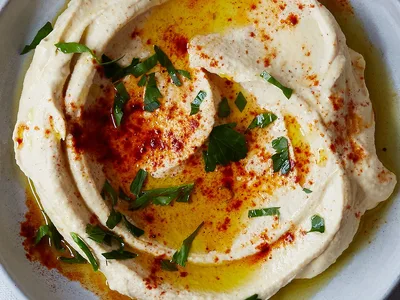
This is Zahav restaurant's signature hummus tehina, a silky-smooth chickpea dip by two critical techniques: overnight-soaked chickpeas cooked well past tender and a garlic-lemon base strained to remove solids before blending with premium tahini. The result is an impossibly creamy, pale spread with bright lemon and garlic notes balanced by nutty tahini and warm cumin. Serve at room temperature as an appetizer, side, or mezze component. This version prioritizes Chef Michael Solomonov's philosophy that overcooked chickpeas and proper emulsification are non-negotiable for restaurant-quality hummus at home.
No ratings yet — be the first
Ingredients
- 1 cup dried chickpeas
- 2 teaspoons baking soda, divided
- 4 cloves garlic, unpeeledroasted garlic4 clovesany diet
note: reduces pungency and sharpness; adds sweetness; use same qty
Full guide → - ⅓ cup fresh lemon juice, or more
- 1 teaspoon kosher salt, plus more for adjustment
- ⅝ cup tahini, excellent qualitysunflower seed butter2/3 cupveganadds dairy
note: texture slightly less creamy; adds subtle seed flavor
Full guide → - ¼ teaspoon ground cumin, or more
- olive oil, for serving
- 1 handful chopped parsley, for serving(optional)
- paprika, for serving(optional)
Method
14 steps- 1
Soak chickpeas overnight in water with 1 teaspoon baking soda in a large bowl, using ample water.
- 2
Drain and rinse chickpeas under cold water.
- 3
Place chickpeas in a large pot with remaining baking soda and cold water to cover by at least 4 inches.
- 4
Bring to boil over high heat, skimming surface scum.
- 5
Reduce heat to medium, cover, and simmer about 1 hour until completely tender, then continue simmering further until chickpeas are mushy and breaking apart.
- 6
Drain chickpeas.
- 7
Meanwhile, process garlic cloves, lemon juice, and salt in food processor until coarsely pureed.
- 8
Let garlic mixture sit 10 minutes.
- 9
Strain mixture through fine-mesh sieve into small bowl, pressing solids to extract liquid; discard solids and return liquid to food processor.
- 10
Add tahini and pulse to combine.
- 11
With motor running, add ice water by the tablespoonful and process until very smooth, pale, and thick, allowing mixture to seize initially.
- 12
Add chickpeas and cumin and puree for several minutes until smooth and creamy, then continue pureeing longer.
- 13
Taste and adjust seasoning with salt, lemon juice, and cumin.
- 14
To serve, spread hummus in shallow bowl, dust with paprika, top with parsley, drizzle generously with olive oil.
Tips
Overcooked chickpeas are essential: simmer 15-20 minutes past tender until mushy and falling apart slightly. Undercooked chickpeas will never achieve the silky, creamy texture Zahav demands.
Ice water added tablespoon-by-tablespoon with the motor running prevents seizing and creates proper emulsification. Expect the mixture to initially look broken; continued processing smooths it.
Straining the garlic-lemon mixture removes solids that would create grittiness. Don't skip this step; it's crucial for the pale, ultra-smooth final texture.
Good to Know
Refrigerate in airtight container up to 5 days. Bring to room temperature before serving; hummus thickens when cold.
Prepare through step 12 (seasoning) up to 2 days ahead. Store chilled. Serve within 1 hour of coming to room temperature for best texture. Garnish and oil just before serving.
Spread in shallow bowl at room temperature. Drizzle generously with olive oil, dust with paprika, top with fresh parsley. Serve with pita bread, vegetables, or as part of a mezze platter.
Common Mistakes
Undercooked chickpeas produce grainy, thick hummus instead of creamy; ensure 1+ hour simmering plus additional time until mushy.
Skipping the garlic-lemon straining step creates sandy texture from garlic solids.
Adding ice water too quickly or all at once causes irreversible seizing; add tablespoon by tablespoon with motor running.
Insufficient pureeing after chickpeas are added yields chunky results; continue processing several minutes longer than intuition suggests.
Substitutions
Vegan Options
note: texture slightly less creamy; adds subtle seed flavor
Full guide →General Alternatives
note: reduces pungency and sharpness; adds sweetness; use same qty
Full guide →FAQ
Can I use canned chickpeas instead of dried?
Canned chickpeas are pre-cooked and lack the starch needed for proper emulsification and creaminess. Dried chickpeas soaked and simmered long create superior texture. If using canned, cook longer in liquid with baking soda to partially break them down, but results won't match this recipe's silky finish.
What if my hummus seizes or becomes grainy during blending?
Seizing (clumping) is normal when tahini first hits the garlic-lemon liquid. Continue processing with motor running while adding ice water tablespoon by tablespoon. The mixture will smooth out. If it remains grainy after chickpeas are added, you may have undercooked chickpeas or too little water; adding a tablespoon of cold water at a time while processing can help.
How long does hummus keep, and can I freeze it?
Refrigerated hummus keeps 4-5 days in an airtight container. Freezing is possible (up to 3 months) but affects texture, making it slightly less creamy upon thawing. For best quality, make fresh or refrigerate rather than freeze.