How to Make Bechamel Sauce
Bechamel is a white sauce made from butter, flour, and milk. You cook flour in butter, then whisk in milk until smooth and thick.
Why it matters
Bechamel creates creamy layers in lasagna, gratins, and casseroles. The sauce binds ingredients without adding water like plain milk would. It coats pasta evenly and browns beautifully under a broiler. You control thickness by adjusting the flour-to-milk ratio.
What you need
Steps
Melt 4 tablespoons butter in your 2-quart saucepan over medium heat. Watch for foam. When the foam subsides and butter smells nutty, after about 2 minutes, you're ready for flour.
Add 4 tablespoons all-purpose flour all at once. Stir constantly with your wooden spoon for 2-3 minutes. The mixture will look like wet sand at first, then smooth paste. Cook until it smells like pie crust and turns pale gold.
Remove pan from heat. Pour in 1/4 cup cold milk. The mixture will seize up and look lumpy. That's normal. Whisk hard for 30 seconds until smooth.
Return to medium heat. Add remaining 1 3/4 cups milk in three additions, whisking constantly between each. After each addition, the sauce will thicken, then thin out when you add more milk.
Bring to a gentle simmer. You'll see small bubbles around the edges after 5-7 minutes. Reduce heat to low. Cook 10 minutes, whisking every 2 minutes. The sauce coats the back of a spoon when ready.
Season with 1/2 teaspoon salt and 1/4 teaspoon white pepper. Taste. Add more salt if needed. For lasagna or gratin, use immediately while hot. For later use, press plastic wrap directly on surface to prevent skin forming.
Common Mistakes
Adding all milk at once to hot roux
What happens: Lumps form that won't whisk out smoothly
Fix: Remove from heat before adding first milk portion, then add milk gradually
Cooking flour-butter mixture too long
What happens: Roux turns brown and sauce tastes nutty instead of neutral
Fix: Keep heat at medium and cook roux only 2-3 minutes until pale gold
Using high heat to speed up thickening
What happens: Sauce scorches on bottom and tastes burnt
Fix: Keep heat at medium or lower, stir frequently, use heavy-bottom pan
Not cooking sauce long enough after adding milk
What happens: Raw flour taste remains in finished sauce
Fix: Simmer gently for full 10 minutes after all milk is added
Troubleshooting
Sauce has stubborn lumps after whisking
Then: Pour through fine-mesh strainer into clean pot, push solids through with spoon back
Sauce is too thin for your recipe
Then: Simmer 5 more minutes uncovered to reduce, or whisk in 1 tablespoon flour mixed with 2 tablespoons soft butter
Skin formed on cooling sauce
Then: Whisk vigorously while reheating over low heat, add 2 tablespoons milk if needed to loosen
Related Techniques
FAQ
Can I make bechamel ahead of time?
Yes, store up to 3 days refrigerated. Press plastic wrap directly on surface. Reheat gently over low heat, whisking constantly. Add 2-3 tablespoons milk if it's too thick. The sauce may separate slightly when cold but comes back together with whisking and heat. For best results, use within 24 hours.
What's the right thickness for different uses?
For lasagna, aim for heavy cream consistency that coats a spoon but still pours. For souffles or croquettes, cook until very thick like Greek yogurt. Standard ratio is 1:1:8 (1 tablespoon each butter and flour per 1/2 cup milk). For thicker sauce, use 1:1:6 ratio. For thinner, use 1:1:10.
Why does my bechamel taste floury?
Raw flour needs 10 minutes of gentle simmering to cook out completely. Your roux also needs 2-3 minutes of cooking before adding milk. If you taste flour, return sauce to heat and simmer 5 more minutes. Next time, use a timer to ensure full cooking time.
Can I use different types of milk or non-dairy alternatives?
Whole milk works best because its 3.5% fat content prevents curdling and creates smooth texture. 2% milk works but makes thinner sauce. Heavy cream makes it too rich. For non-dairy, unsweetened soy milk works well. Almond and oat milk tend to separate. Add 1 extra tablespoon flour when using lower-fat options.
Recipes Using This Technique
Cheeseburger Mac and Cheese Bake with Beef
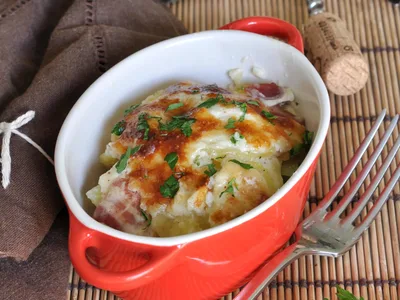
Extra Creamy Scalloped Potatoes with Nutmeg
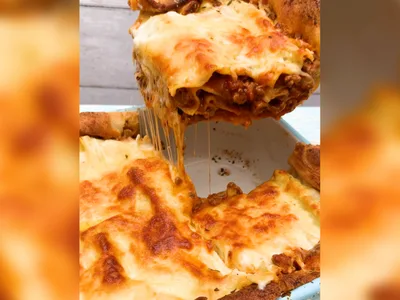
Garlic Bread Pizza Dough Lasagne Bake

Mini Croque Monsieur Sandwiches with Creamy Bechamel
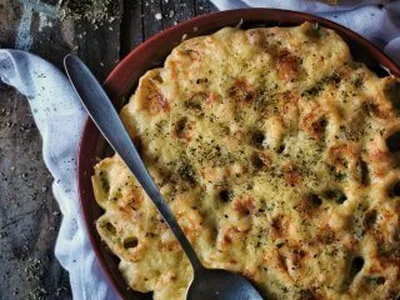
Baked Paccheri Pasta with Spinach Feta Filling