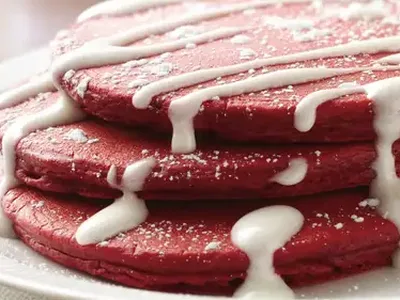
How to Make Pancakes from Scratch
Making pancakes from scratch means mixing flour, eggs, milk, and leaveners to create a batter that cooks into flat, round breakfast cakes. The technique relies on proper hydration of flour and activation of baking powder to produce light, fluffy results.
Why it matters
Scratch pancakes taste fresher than boxed mixes and let you control sweetness and texture. You can make them in 15 minutes with pantry staples. The batter holds for 30 minutes, so you can prep ahead. Homemade pancakes absorb syrup better because you control the crumb structure.
What you need
Steps
Mix 2 cups all-purpose flour, 2 tablespoons sugar, 2 teaspoons baking powder, 1 teaspoon baking soda, and 1/2 teaspoon salt in your mixing bowl. Whisk for 10 seconds until the baking powder disappears into the flour.
Make a well in the center of the dry ingredients by pushing flour to the sides, creating a 4-inch crater in the middle that exposes the bottom of the bowl.
Pour 1 3/4 cups milk, 1/4 cup melted butter, 2 large eggs, and 1 teaspoon vanilla into the well. Whisk the wet ingredients together in the center for 20 seconds until the eggs break up and the mixture turns pale yellow.
Pull flour from the edges into the wet center using your whisk, working in circles from the middle outward. Stop mixing when you see no more dry flour pockets. The batter should look lumpy like cottage cheese. Rest 5 minutes while you heat the pan.
Heat your skillet over medium heat for 3 minutes. Test readiness by flicking water drops on the surface. They should dance and evaporate in 2 seconds. Add 1 teaspoon butter and swirl to coat.
Pour 1/4 cup batter per pancake, leaving 2 inches between each. Cook for 2-3 minutes until bubbles form across the surface and pop, leaving holes that stay open. The edges should look set and dry, not wet.
Flip when the bottom is golden brown, checking by lifting an edge with your spatula. Cook another 90 seconds until the second side sounds hollow when tapped with the spatula. Transfer to a plate and repeat with remaining batter.
Common Mistakes
Overmixing the batter until smooth
What happens: Pancakes turn out flat, dense, and chewy like rubber
Fix: Mix just until flour disappears, leaving visible lumps the size of peas
Using cold ingredients straight from the fridge
What happens: Batter stays thick and pancakes cook unevenly with raw centers
Fix: Let eggs and milk sit on the counter for 20 minutes before mixing
Cooking on heat above 375F
What happens: Outsides burn while centers stay raw and gummy
Fix: Keep heat at medium or 350F on electric griddles
Flipping too early before bubbles pop
What happens: Batter spills out the sides and pancakes deflate
Fix: Wait until 75% of surface bubbles have popped and stayed open
Troubleshooting
Pancakes stick to the pan even with butter
Then: Heat pan to 350F before adding fat, then wait 30 seconds after butter melts before pouring batter
First pancake always burns or cooks wrong
Then: Consider it a test pancake, then adjust heat down by 25F if too dark or up if too pale
Batter gets thick while cooking multiple batches
Then: Add 2 tablespoons milk and stir gently every 10 minutes as flour continues absorbing liquid
Related Techniques
FAQ
Can I make the batter ahead?
Mix dry ingredients up to 3 days ahead and store covered. Complete batter lasts 30 minutes at room temperature or 24 hours refrigerated. After 30 minutes, gluten develops and pancakes get tougher. Refrigerated batter needs 5 minutes at room temperature plus 2 tablespoons extra milk since flour keeps absorbing liquid overnight.
Why add both baking powder and baking soda?
Baking powder provides lift while baking soda reacts with the buttermilk's acid for extra bubbles. Use 1 teaspoon baking powder per cup of flour as the base. Add 1/2 teaspoon baking soda when using acidic liquids like buttermilk. Without acid, skip the soda or pancakes taste metallic.
What's the best flour for pancakes?
All-purpose flour with 10-11% protein makes tender pancakes. Bread flour creates chewy results. For every cup of all-purpose, you can substitute up to 1/3 cup with whole wheat, buckwheat, or cornmeal. Beyond 33% alternative flour, add 1 extra tablespoon liquid per cup since whole grains absorb more.
How do I keep pancakes warm for serving?
Set oven to 200F and place pancakes in a single layer on a wire rack set over a baking sheet. They stay warm for 20 minutes without getting soggy. Stacking them traps steam and makes bottoms mushy in 5 minutes.
Recipes Using This Technique
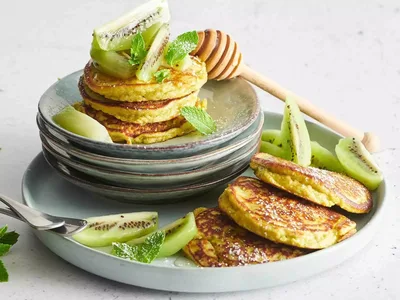
Flourless Avocado Pancakes with Kiwi
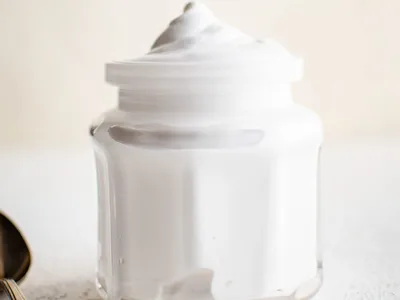
Homemade Marshmallow Fluff with Egg Whites
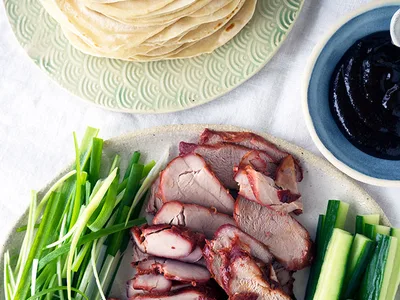
Mandarin Pancakes for Peking Duck
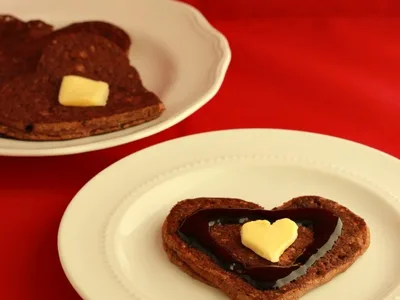
Paleo Chocolate Zucchini Hotcakes with Maple Syrup
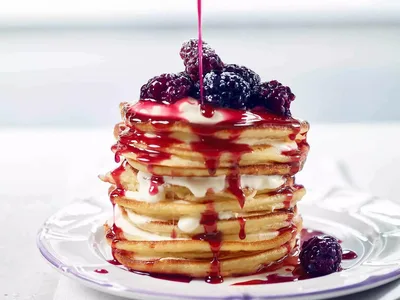
Gluten-Free Pancakes with Blackberry Compote