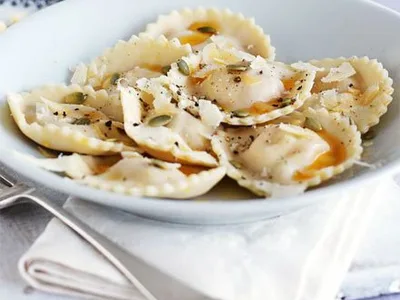
How to Make Fresh Pasta
Fresh pasta is flour and eggs kneaded into a smooth dough, rested, then rolled thin and cut into shapes. The dough cooks in 2-3 minutes instead of the 8-12 minutes dried pasta needs.
Why it matters
Fresh pasta absorbs sauce differently than dried pasta because its porous texture hasn't hardened. The eggs create a tender bite that dried pasta can't match. You control the thickness, which means you can make paper-thin sheets for ravioli or thick strands for hearty ragu. Making it takes 45 minutes total, including rest time.
What you need
Steps
Pour flour onto your work surface and make a well 6 inches wide in the center. Crack eggs into the well. Add salt. Use a fork to beat eggs while slowly incorporating flour from the inner walls of the well. Keep mixing until you have a shaggy mess that looks like scrambled eggs with flour chunks.
Gather the dough with your bench scraper into a rough ball. Knead for 8-10 minutes. Push with your palm heel, fold, rotate 90 degrees, repeat. The dough starts sticky and rough. After 5 minutes it feels smoother. Done when it bounces back slowly after you poke it and looks smooth as a baby's cheek.
Wrap dough tightly in plastic wrap. Rest 30 minutes at room temperature. The gluten needs time to relax. Skip this and your dough tears when rolling. After resting, the dough feels softer and stretches without springing back.
Cut dough into 4 pieces. Keep 3 wrapped while you work. Flatten one piece into a 1/2-inch thick disk. Dust both sides with flour.
Roll from center outward, rotating dough 90 degrees every few passes. Add flour when it sticks. Roll to 1/16-inch thickness for ravioli or 1/8-inch for fettuccine. Hold the sheet up to light. You should see your hand shadow through it. The dough feels smooth and slightly cool, like leather.
Let sheets dry 5 minutes before cutting. Surface should feel dry but not brittle. For fettuccine, fold sheet in half twice, then cut 1/4-inch strips. Unfold immediately and toss with flour. For ravioli, work quickly before edges dry out.
Cook fresh pasta in 6 quarts boiling salted water. Fettuccine takes 2-3 minutes. Filled ravioli needs 4-5 minutes. Test a piece. It should be tender with a slight firmness in the center. Fresh pasta floats when done and looks slightly translucent.
Common Mistakes
Adding too much flour during kneading
What happens: Pasta becomes tough and tastes like cardboard
Fix: Use just enough flour to prevent sticking, about 2 tablespoons total during kneading
Rolling dough when cold from the fridge
What happens: Dough tears and springs back instead of stretching
Fix: Always bring dough to room temperature, about 68-72F, before rolling
Skipping the rest period
What happens: Dough fights you when rolling and shrinks back
Fix: Rest minimum 30 minutes, up to 2 hours covered at room temperature
Making pasta sheets too thick
What happens: Pasta stays doughy inside even when outside is cooked
Fix: Roll until you see light through the sheet, about 1/16-inch for most shapes
Troubleshooting
Dough cracks and crumbles while kneading
Then: Sprinkle 1 tablespoon water over dough and knead it in. Repeat if needed until dough holds together
Pasta sticks together after cutting
Then: Toss immediately with semolina flour or lay pieces in single layer on floured baking sheet
Edges dry out before you finish shaping
Then: Cover unused portions with barely damp towel. Work faster next time or roll smaller batches
Related Techniques
FAQ
Can I make pasta without eggs?
Yes, use 1 cup water per 3 cups flour and add 2 tablespoons olive oil. Mix and knead the same way. Eggless pasta takes 5-7 minutes to cook instead of 2-3 minutes. The texture is firmer and less silky. Many southern Italian pastas like orecchiette use this method.
How long does fresh pasta last?
Fresh pasta keeps 2 days in the fridge in an airtight container with layers separated by parchment. Freeze up to 1 month on a floured baking sheet, then transfer to freezer bags. Cook frozen pasta directly in boiling water, adding 1-2 minutes to cooking time. Never thaw first or it turns mushy.
What flour works best?
All-purpose flour with 10-12% protein content works for most shapes. Italian 00 flour rolls easier because its finer grind absorbs eggs better. Bread flour at 13% protein makes chewier pasta. For every cup of all-purpose, you can substitute up to 1/3 cup whole wheat or semolina for different textures.
Why is my pasta gummy?
Gummy pasta means too much water in the pot or pasta too thick. Use 6 quarts water per pound of pasta. Roll sheets to 1/16-inch. Cook at a hard boil, not a simmer. Gummy texture also happens when pasta sits in cooking water after draining. Remove with tongs straight to the sauce instead.
Recipes Using This Technique
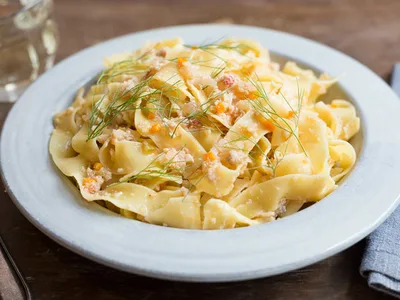
Ground Monkfish and Pork Ragù with Fennel
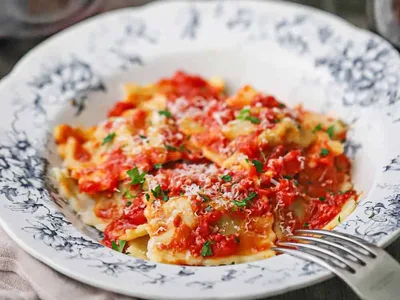
Homemade Beef Ravioli with Fresh Tomato Sauce
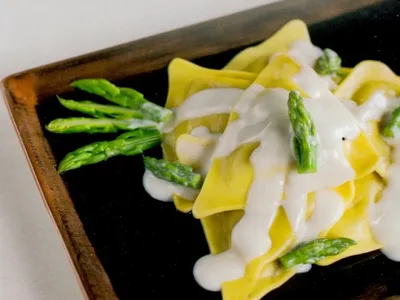
Fresh Pasta with Asparagus Cream Sauce
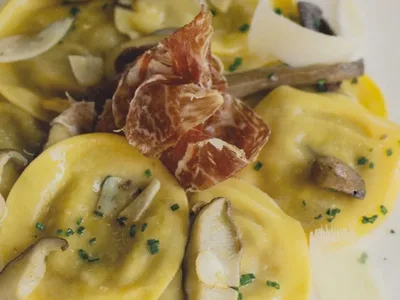
Fresh Boletus Pasta with Seasonal Mushrooms
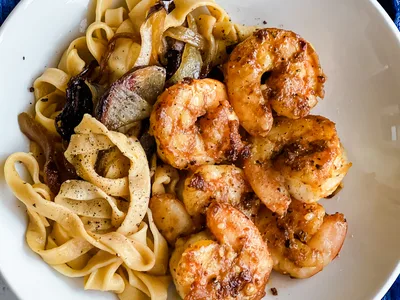
Handmade Fettuccini with Sautéed Shrimp and Mushrooms