How to Make Pizza Dough
Pizza dough is a yeast-leavened bread base made from flour, water, salt, and oil. The dough ferments for 1-24 hours to develop flavor and create a chewy, airy crust.
Why it matters
Store-bought dough costs $3-5 and tastes flat. Homemade dough costs $0.50 per pizza and develops complex flavors during fermentation. The gluten network you build through kneading creates the signature chewy texture. You control thickness, salt level, and rise time.
What you need
Steps
Heat 1.5 cups water to 105-110F. Too hot kills yeast. Sprinkle 2.25 teaspoons instant yeast over water. Wait 5 minutes until surface looks foamy with tiny bubbles. Dead yeast won't foam.
Add 500g bread flour, 2 teaspoons salt, and 2 tablespoons olive oil to your mixing bowl. Pour in the yeast water. Mix with a wooden spoon until shaggy dough forms, about 2 minutes. Dough will look rough and lumpy.
Turn dough onto clean counter. Knead 8-10 minutes. Push with heel of hand, fold over, quarter turn, repeat. Properly kneaded dough feels smooth like a baby's cheek and springs back when poked. Add flour 1 tablespoon at a time if sticky.
Place dough in oiled bowl. Turn to coat all sides. Cover with plastic wrap. Let rise in 75F room for 1-2 hours until doubled in size. Poke test: stick two fingers 1 inch deep. If indentation stays, dough is ready.
Punch dough down once in center. Divide into 2-4 portions using bench scraper. Each 250g portion makes one 12-inch pizza. Shape into tight balls by tucking edges underneath.
Rest dough balls 15-30 minutes before stretching. Room temperature dough stretches easier. Cold dough tears. Cover with damp towel to prevent drying.
Common Mistakes
Using all-purpose flour instead of bread flour
What happens: Pizza comes out floppy and won't hold toppings
Fix: Buy bread flour with 12-14% protein content for proper gluten development
Adding too much flour during kneading
What happens: Dense, tough crust that tastes like cardboard
Fix: Oil your hands instead of adding flour when dough feels sticky
Rushing the rise time
What happens: Bland flavor and tight crumb structure
Fix: Give dough minimum 1 hour at room temp or overnight in fridge
Stretching cold dough straight from fridge
What happens: Dough tears and snaps back like rubber band
Fix: Let refrigerated dough sit at room temperature 30-45 minutes before shaping
Troubleshooting
Dough won't rise after 2 hours
Then: Check yeast expiration date. Move bowl to warmer spot like on top of fridge. Fresh yeast doubles dough in 60-90 minutes at 75F.
Dough tears when stretching
Then: Let dough rest another 15 minutes. Gluten needs time to relax. Work from center outward using gravity, not pulling.
Related Techniques
FAQ
Can I freeze pizza dough?
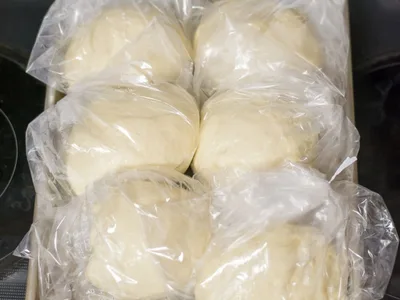
Yes, freeze for up to 3 months. After first rise, divide dough into portions. Coat each with 1 teaspoon olive oil. Wrap tightly in plastic wrap, then foil. Thaw overnight in fridge. Frozen dough takes 45-60 minutes to come to room temperature before stretching.
Why is my crust too thick and bready?
You're using too much dough per pizza. A 250g dough ball stretches to 12 inches for thin crust. For 16-inch pizzas, use 350g. Stretch thinner by working from center outward. Aim for 1/8 inch thickness in center, 1/4 inch at edges.
What's the difference between instant and active dry yeast?
Instant yeast has 25% more living cells per teaspoon. Mix it straight into flour. Active dry needs proofing in 110F water first. Use same amount of either type. Instant yeast cuts rise time by 15-20 minutes.
How long can I keep dough in the fridge?
Refrigerate up to 5 days in airtight container. Flavor improves each day as enzymes break down starches. Day 3-4 tastes best. After day 5, dough develops sour notes and gray color. Punch down once daily to release gas buildup.
Recipes Using This Technique

Chicken Bacon Ranch Pizza with Melted Cheese

Beef and Potato Stuffed Bread with Eggs

Homemade Pesto Sauce with Greens and Nuts
Make-Ahead Freezer Pizza Dough with Rapid Yeast

Pizza Dip with Garlic Knots