How to Make Vinaigrette
A vinaigrette is an emulsion of oil and acid, typically in a 3:1 ratio, whisked together until temporarily combined. The mixture coats salad greens and adds both fat and acid to balance flavors.
Why it matters
Store-bought dressings contain stabilizers and preservatives that mask fresh flavors. A proper vinaigrette takes 2 minutes to make and tastes brighter than anything from a bottle. You control the salt, the acid level, and the oil quality. The technique also teaches you emulsion basics that apply to mayonnaise and hollandaise.
What you need
Steps
Measure 1 tablespoon of vinegar or lemon juice into your mixing bowl. Add 1/2 teaspoon Dijon mustard if using. The mustard acts as an emulsifier and helps the oil and vinegar bind together for up to 30 minutes instead of separating immediately.
Add a pinch of salt (about 1/8 teaspoon) and freshly ground black pepper. Whisk these together for 10 seconds until the salt dissolves completely. You'll see no granules when you tilt the bowl.
Start whisking continuously while you drizzle in 3 tablespoons of oil in a thin, steady stream. This should take 20-30 seconds. The mixture will thicken slightly and turn from clear to cloudy as the oil incorporates.
Taste the vinaigrette with a clean lettuce leaf. Add more salt if bland, more acid if too oily, or more oil if too sharp. The balance depends on your vinegar strength and personal preference.
Use immediately or transfer to a jar. Shake vigorously for 5 seconds before each use. The vinaigrette stays emulsified for 15-30 minutes at room temperature, longer if you used mustard.
Store covered in the refrigerator for up to 1 week. Remove 30 minutes before serving to let the oil liquify. Cold olive oil turns cloudy and thick below 50°F but returns to normal at room temperature.
Common Mistakes
Adding oil too fast
What happens: The vinaigrette never emulsifies and stays separated in distinct layers
Fix: Pour oil in a stream thin as thread, taking at least 20 seconds for 3 tablespoons
Using old vinegar
What happens: Weak acid flavor that tastes flat instead of bright
Fix: Replace vinegar every 2 years, or when it loses its sharp smell
Making too much at once
What happens: Leftover dressing loses freshness after a week
Fix: Make only what you need for 2-3 days, using the 3:1 ratio to scale
Wrong bowl size
What happens: Hard to whisk properly in a large bowl with small amounts
Fix: Use a bowl just big enough for your whisk to move freely, usually 2-3 cups
Troubleshooting
If vinaigrette tastes flat despite correct ratios
Then: Add 1/4 teaspoon honey or maple syrup to balance the acid without making it sweet
If emulsion breaks while whisking
Then: Start over with 1 teaspoon mustard in a clean bowl, then slowly whisk in the broken vinaigrette
Related Techniques
FAQ
What's the best oil to use?
Extra virgin olive oil works for most vinaigrettes, but its strong flavor can overpower delicate greens. Use 75% neutral oil like grapeseed mixed with 25% olive oil for a milder taste. Avoid oils that solidify when cold like coconut. The smoke point doesn't matter since you're not heating the oil. A good olive oil costs $15-20 per liter.
Can I make vinaigrette in a blender?
Yes, a blender creates a more stable emulsion that lasts 2-3 days instead of 30 minutes. Add all ingredients except oil to the blender, blend for 5 seconds, then drizzle oil through the top while blending on low speed. The vigorous mixing creates smaller oil droplets that stay suspended longer. Stop when the mixture looks creamy and opaque.
Why does my vinaigrette separate immediately?
Without an emulsifier like mustard or egg yolk, oil and vinegar separate within 2-3 minutes. Add 1/2 teaspoon Dijon mustard per 1/4 cup of vinaigrette to extend emulsion life to 30-60 minutes. The lecithin in mustard creates a barrier between oil and water molecules. Shaking in a jar also helps re-emulsify faster than whisking.
How do I fix vinaigrette that's too acidic?
Add oil 1 teaspoon at a time until balanced, usually needing 1-2 tablespoons total. If you've already added too much oil, stir in 1/4 teaspoon honey or a pinch of sugar to round out sharp edges. The sweetness won't make it taste like dessert but neutralizes excess acid. Most people prefer a 3:1 or 4:1 oil to acid ratio.
Recipes Using This Technique
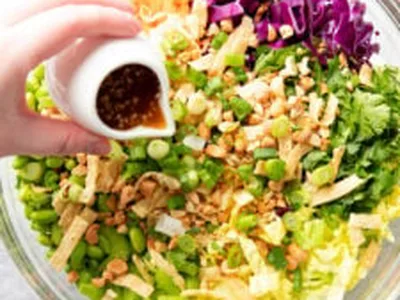
Asian Cabbage Chopped Salad with Wonton Strips and Edamame
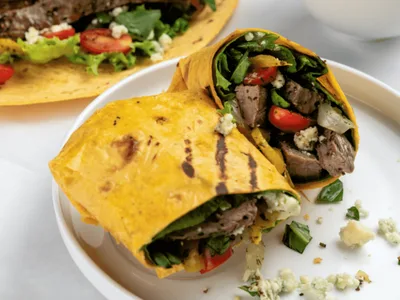
Seared Beef Flank Steak Wraps with Roasted Peppers
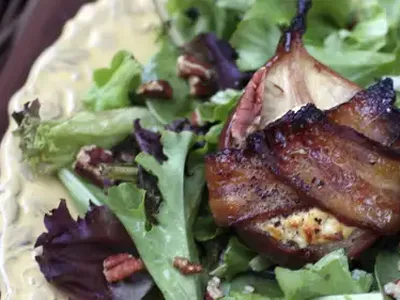
Roasted Bacon-Wrapped Pear Salad with Maple Vinaigrette
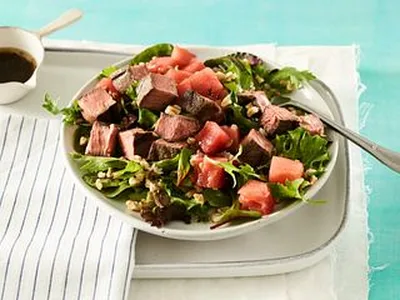
Sous Vide Top Sirloin with Farro and Compressed Watermelon
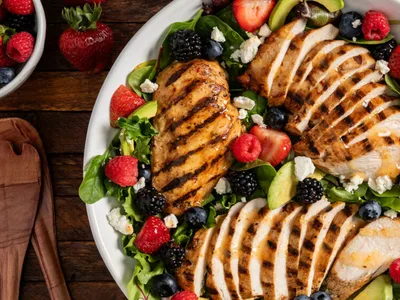
Grilled Chicken Salad with Hot Honey Vinaigrette