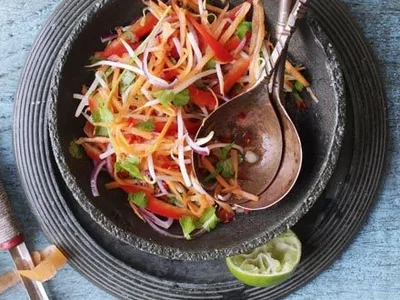
All About Lime Juice
Lime juice brings sharp acidity and bright citrus flavor to dishes across cuisines. Fresh juice contains about 6% citric acid, making it more tart than lemon juice at 5%. Beyond balancing sweetness and fat, lime juice acts as a meat tenderizer and prevents browning in cut avocados and apples. One medium lime yields 2 tablespoons of juice.
How to Select
Choose limes that feel heavy for their size with smooth, thin skin. Ripe limes give slightly when pressed. Skip hard limes or those with thick, dimpled skin. Yellow patches mean overripe fruit with less juice. Room temperature limes yield 20% more juice than cold ones.
How to Store
Fresh lime juice keeps 4 days refrigerated in a sealed glass container. Whole limes last 3-4 weeks in the crisper drawer or 1 week at room temperature. Freeze juice in ice cube trays for up to 4 months. Each cube equals 2 tablespoons. Bottled juice lacks fresh flavor but keeps 12-18 months unopened in the pantry.
How to Prep
Roll limes on the counter with your palm before cutting to break down internal membranes. Cut in half crosswise, not lengthwise. Hand-squeeze over a fine strainer to catch seeds and pulp. A citrus reamer extracts 30% more juice than squeezing alone. Zest before juicing if you need both. Microwave cold limes for 10 seconds to double juice yield.
Flavor Pairings
Lime juice cuts through rich coconut milk in Thai curries and balances honey in marinades. Salt amplifies its tartness. Cilantro and lime create the backbone of Mexican salsas. Garlic and lime define Vietnamese dipping sauces. The acid brightens earthy cumin and chili powder in taco seasonings.
Cooking Tips
Add lime juice after cooking to preserve vitamin C content, which drops 50% when heated above 160°F.
Use a 3:1 ratio of lime juice to fish sauce for authentic Thai salad dressing.
Marinate chicken in lime juice for maximum 2 hours. Longer breaks down proteins into mush.
Mix 1 tablespoon lime juice with 1/4 cup olive oil and 1/2 teaspoon salt for instant vinaigrette.
Varieties
Need a substitute? See our Best Substitutes for Lime Juice guide with tested ratios.
FAQ
Can I substitute bottled lime juice for fresh?
Bottled juice works for marinades and cooking but tastes flat in fresh applications like guacamole or cocktails. Use 25% less bottled juice than fresh since manufacturers concentrate it. Fresh juice has volatile oils that disappear during bottling. If you must substitute, add 1/4 teaspoon lime zest per 2 tablespoons bottled juice to boost flavor.
How much juice does one lime yield?
A medium Persian lime (2 inches diameter) yields 2 tablespoons juice. Key limes produce 1 tablespoon each. Juice output varies 40% based on ripeness and temperature. Buy 25% extra limes than your recipe needs to account for duds. Professional kitchens figure 12 limes per cup of juice.
Why does lime juice turn bitter in cooked dishes?
Heat above 160°F converts lime's citric acid into bitter compounds. The white pith contains limonin, which becomes 100 times more bitter when heated. Strain out all pulp before cooking. Add juice during the last 30 seconds of cooking or after removing from heat. For long-cooked dishes like carnitas, add half the juice while cooking and half fresh at serving.
How do I prevent lime juice from curdling dairy?
Lime juice curdles milk at pH 4.6 or below. Temper the acid by mixing lime juice with other ingredients first. For cream sauces, reduce heat to 140°F before adding juice. In cold preparations like key lime pie, use condensed milk (pH 6.3) instead of regular milk (pH 6.7). Add 1 teaspoon cornstarch per cup of dairy to stabilize proteins.
Recipes with Lime Juice
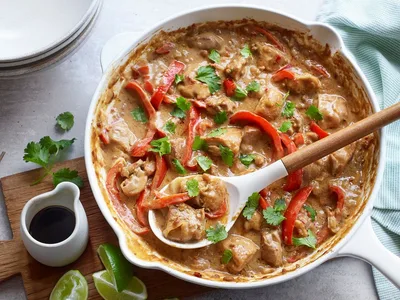
Coconut Peanut Butter Chicken Skillet

Crispy Maple Sriracha Baked Chicken Wings
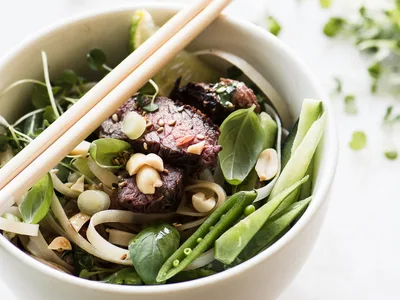
Grilled Sirloin Pad Thai Noodle Salad
Hot Cheesy Corn Dip with Fresh Pico de Gallo

Tequila Pineapple Cocktail with Orgeat