30-Minute Pan-Seared Orange Beef with Tapioca Crust
- Prep
- 15 min
- Cook
- 15 min
- Yield
- 4 servings
- Level
- medium
- Cuisine
- Chinese
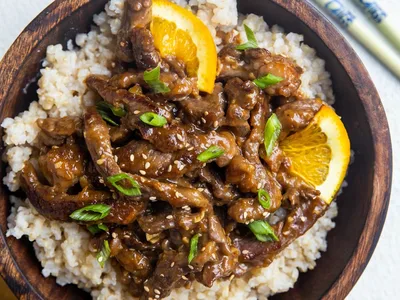
Crispy-coated beef strips tossed in a bright, tangy orange-ginger sauce with sesame and sriracha heat. This quick stir-fry balances citrus brightness with umami depth from coconut aminos or soy sauce, finished with sesame seeds and green onion. Perfect for weeknight dinners when you want restaurant-quality results without the takeout bill. The tapioca flour coating creates a delicate, shatteringly crisp exterior that holds up beautifully in the glossy sauce.
No ratings yet — be the first
Ingredients
- ⅝ cup orange juice, fresh
- 2 tsp orange zest
- ⅓ cup coconut aminos or liquid aminos or soy saucetamari1:1gluten-freegluten-freesoy-free
adds depth if using coconut aminos feels too mild
Full guide → - 1 Tbsp rice vinegar or cider vinegar
- 1 Tbsp sesame oil
- 2 tsp fresh ginger, peeled and grated
- 3 clove garlic, minced
- 2 tsp sriracha(optional)
- 1 lb steak, thinly sliced against grainchicken breast1:1poultry
reduces cook time to 1-2 min per side
- 1 egg, beaten
- ½ cup tapioca flour or gluten-free all-purpose flour
- ½ tsp black pepper
- 2 Tbsp avocado oil or coconut oil, for cooking
- 1 Tbsp sesame seeds
- 1 bunch green onion, chopped
Method
9 steps- 1
Combine orange juice, orange zest, coconut aminos, rice vinegar, sesame oil, ginger, minced garlic, and sriracha in a small bowl; set aside.
- 2
Whisk egg in a large mixing bowl until well-beaten.
- 3
Slice steak thinly against the grain; add to egg and toss to coat completely.
- 4
Sprinkle tapioca flour and black pepper over beef; toss until coated. Strips will clump together, which is normal.
- 5
Heat oil in a 12-inch non-stick skillet over high heat until shimmering, about 2 minutes.
- 6
Arrange beef in a single layer (separate clumps gently as needed; work in two batches if necessary).
- 7
Cook untouched for 2 to 3 minutes until golden-brown on bottom; flip and cook the other side 2 to 3 minutes until golden.
- 8
Pour sauce into skillet and bring to a full boil, stirring occasionally, until thickened and beef reaches desired doneness, 5 to 8 minutes.
- 9
Transfer to serving vessel; garnish with sesame seeds and chopped green onion.
Tips
Don't skip letting the skillet get fully hot before adding beef; high heat creates the crispy, golden crust that makes this dish shine. Cold pan equals soggy coating.
Keep ingredients prepped and sauce made before you start cooking; the actual cooking happens very fast once the beef hits the hot oil.
If your skillet isn't large enough for a single layer, two batches cook better than crowding; crowding steams the beef instead of searing it.
Good to Know
Cooked beef best served immediately, but leftovers keep in an airtight container refrigerated up to 3 days. Reheat gently in a skillet over medium heat with 2 tablespoons water to prevent toughening.
Prepare sauce, zest, and mince garlic and ginger up to 8 hours ahead. Slice beef no more than 2 hours before cooking to prevent oxidation and moisture loss.
Over steamed white rice, brown rice, jasmine rice, cauliflower rice, or sauteed vegetables. A crisp side salad with rice vinegar dressing complements the richness.
Common Mistakes
Add beef to cold oil to avoid steaming instead of searing; wait until oil shimmers.
Skip the single-layer arrangement to avoid steamed, chewy beef; work in batches if needed.
Overcrowd the bowl when coating beef to avoid uneven flour distribution; toss in stages if needed.
Substitutions
Gluten-Free Swaps
adds depth if using coconut aminos feels too mild
Full guide →General Alternatives
FAQ
Can I make this ahead or freeze it?
Make the sauce 1 day ahead and refrigerate. Don't cook the beef until serving time; the coating loses crispness when stored. Leftovers freeze up to 2 weeks but lose the crust texture.
What if I don't have tapioca flour?
Cornstarch works 1:1 and creates similar crispness. All-purpose flour works but yields a slightly less delicate crust. Potato starch is also acceptable.
How long does the sauce keep and can I double it?
Sauce keeps refrigerated 5 days. Double easily, but reduce cooking time to 3 to 5 minutes when reheating since it reaches the boil faster with doubled volume.