30-Minute Bibim Guksu: Korean Cold Noodles
- Prep
- 15 min
- Cook
- 10 min
- Yield
- 2 servings
- Level
- medium
- Cuisine
- Korean
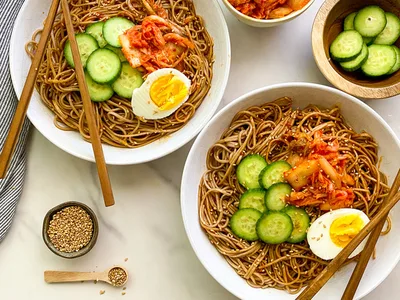
Chilled somen or soba noodles tossed with a spiced gochujang-sesame sauce, topped with cucumber, hard-boiled egg, and kimchi. Quick, refreshing, and balanced with sweet, savory, and fermented elements. Perfect for warm days.
No ratings yet — be the first
Ingredients
- 6 ounces somen or soba noodleswheat noodles or ramen1:1gluten-free if soba used
soba is naturally gluten-free; ramen adds chewiness
- 3 tablespoons gochujang sauce
- 3 cloves garlic, crushed
- 1 tablespoon sesame oil
- 1 tablespoon toasted sesame seeds
- sesame seeds, toasted, for garnish(optional)
- 2 tablespoons honey
- 2 tablespoons soy sauce
- 2 tablespoons rice vinegar
- 1 Persian cucumber, thinly slicedregular cucumber or zucchini1:1vegetable
regular cucumber may be watery; zucchini adds sweetness
Full guide → - 1 hard-boiled egg
- ¼ cup kimchipickled vegetables or radish1:1fermented
loses probiotic and umami character
Method
7 steps- 1
Cook noodles according to package instructions.
- 2
Transfer cooked noodles to a bowl of ice water and let sit for 5 minutes to stop cooking.
- 3
Drain noodles thoroughly.
- 4
In a small bowl, combine gochujang sauce, crushed garlic, sesame oil, sesame seeds, honey, soy sauce, and rice vinegar. Stir to combine.
- 5
In a large bowl, toss cooked noodles with sauce.
- 6
Top with sliced cucumber, hard-boiled egg, and kimchi.
- 7
Garnish with additional sesame seeds as desired.
Tips
Ice bath stops noodle cooking and ensures a chewy texture.
Gochujang sauce can be made ahead and refrigerated for up to 5 days.
Adjust sweetness or spice by varying honey or gochujang amounts to taste.
Good to Know
Cooked noodles and sauce keep separately in airtight containers for up to 2 days. Assemble just before serving to prevent sogginess.
Gochujang sauce can be prepared up to 5 days ahead. Hard-boil egg the night before. Slice cucumber and prepare toppings up to 4 hours ahead.
Serve immediately after assembly to maintain noodle texture and chilled temperature. Provide extra gochujang sauce and sesame seeds on the side.
Common Mistakes
Skip the ice bath to avoid overcooked, mushy noodles.
Do not refrigerate assembled dish to avoid soggy noodles; keep components separate until serving.
Substitutions
Gluten-Free Swaps
soba is naturally gluten-free; ramen adds chewiness
General Alternatives
regular cucumber may be watery; zucchini adds sweetness
loses probiotic and umami character