Crispy Sesame Balls with Peanut Filling
- Prep
- 30 min
- Cook
- 20 min
- Yield
- 10 servings
- Level
- medium
- Cuisine
- Chinese
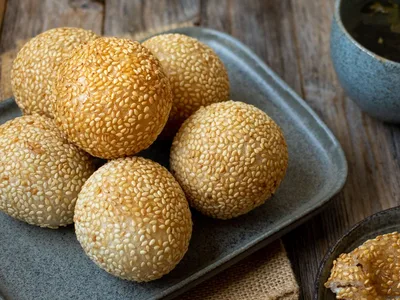
Jian dui are golden-fried glutinous rice dough balls filled with sweetened ground peanuts, coated in toasted sesame seeds. The contrast between the crispy, hollow exterior and creamy peanut center makes them a beloved Chinese dim sum favorite. Serve warm as a dessert or snack, ideally within hours of frying for maximum crispness. This version uses maple syrup for subtle depth and emphasizes proper temperature control to achieve the signature light, airy texture.
No ratings yet — be the first
Ingredients
- 1 cups glutinous rice flour, plus more as neededtapioca starch+rice flour3:1 ratiosimilar chewmore delicate
low
- 3 tablespoon granulated sugar
- 1 tablespoon neutral oil, plus more for frying
- 6 ounce roasted unsalted peanuts
- 5 tbsp unsalted creamy peanut butter
- 1 ½ tablespoon maple syrup, plus more if needed
- 1 ¼ oz raw white sesame seeds
- water, for dipping
Method
10 steps- 1
Combine flour in a bowl. Heat water and sugar in a saucepan over medium-high heat, stirring occasionally, until boiling. Boil for 30 seconds.
- 2
Slowly pour the hot syrup into the flour while stirring with chopsticks or a spatula until a shaggy dough forms with no dry patches. Cool until handleable.
- 3
Knead in the oil until the dough becomes a smooth, soft ball the consistency of an earlobe. Add more flour in small amounts if too wet. Cover with a damp cloth and rest for 15 minutes.
- 4
Grind the peanuts into a fine powder using a food processor, mortar and pestle, or rolling pin in a bag. Mix in the peanut butter and maple syrup. Add more maple syrup if too dry. Refrigerate for at least 10 minutes, then roll into 10 equal balls.
- 5
Divide the dough into 10 equal portions and roll into balls. Grease your hands with oil.
- 6
Flatten each dough ball into a 3- to 3.5-inch disk with a thicker center. Place a peanut butter ball in the middle, wrap the dough around it, and seal. Roll between your palms to create a smooth ball.
- 7
Pour sesame seeds onto a plate and fill a bowl with water. Dip each dough ball in water, shake off excess, then roll in sesame seeds, pressing gently to adhere. Roll between your palms to secure the coating.
- 8
Heat oil in a 1.5-quart saucepan to 300°F, filling halfway up the sides. Carefully drop a few balls into the hot oil, leaving space for them to nearly double. Gently move them with chopsticks to fry evenly. Cook for 5 to 7 minutes until golden brown.
- 9
Increase the temperature to 325°F and fry for another 3 to 5 minutes until deeply golden, crispy, and hollow-sounding when tapped. Transfer to a paper towel-lined plate.
- 10
Before frying the second batch, lower the oil temperature back to 300°F and skim out any loose sesame seeds. Repeat the frying process with the remaining balls. Serve warm.
Tips
The dough should feel as soft as an earlobe; too much flour causes cracks during frying, while too little syrup makes it difficult to seal. Test by squeezing a small sample before committing.
Maintain oil temperature carefully. The initial 300°F ensures even cooking and rise, while the bump to 325°F creates the crispy, golden exterior. A thermometer is essential.
Gentle stirring with chopsticks prevents the balls from sticking and ensures even browning on all sides. They should sound distinctly hollow when tapped with a spoon.
Good to Know
Store in an airtight container at room temperature for up to 6 hours. The crispy exterior will soften over time. Do not refrigerate or freeze as the texture degrades significantly.
Prepare the peanut filling and rest the dough up to 2 hours ahead. Roll both dough and filling balls no more than 30 minutes before frying to prevent drying out. All shaping and coating should occur just before frying.
Serve warm immediately after frying, ideally within 15 minutes. They are best enjoyed fresh with hot tea or as a dim sum course. Can be served at room temperature within 1-2 hours but texture suffers.
Common Mistakes
Add flour gradually to avoid cracking during frying; too much flour creates a dry dough that splits when heated
Use chopsticks to gently stir the balls continuously; prevent them from resting on the pan bottom to avoid flat spots and uneven browning
Skim sesame seeds from the oil between batches to prevent them from burning and discoloring subsequent batches
Substitutions
Nut-Free Alternatives
General Alternatives
low
FAQ
Can I make the filling ahead and freeze it?
Yes, the filling can be made up to 3 days ahead and refrigerated, or frozen for up to 1 month. Thaw in the refrigerator before rolling. The dough is best made fresh, though it can be refrigerated for up to 4 hours wrapped tightly.
What if my balls crack or deflate when frying?
Cracks indicate either too much flour in the dough or improper sealing. Ensure the dough seams are fully sealed and smooth before frying. Deflation during cooking suggests oil temperature too low; use a thermometer to maintain 300-325°F.
How long can I store cooked jian dui?
Best within 6 hours at room temperature in an airtight container. They do not freeze well due to texture loss. Reheating in a 300°F oven for 2-3 minutes can restore some crispness, but the hollow interior may collapse.