Focaccia with Sun-Blushed Tomatoes and Rosemary
- Prep
- 30 min
- Cook
- 18 min
- Yield
- 10 servings
- Level
- medium
- Cuisine
- Italian regional
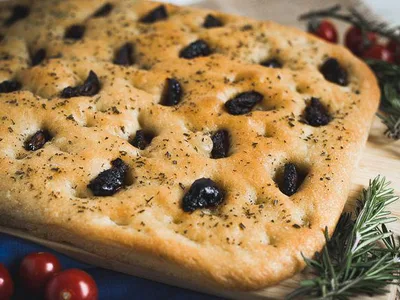
Italian focaccia is an olive oil-rich, pillowy flatbread that bridges bread and appetizer. This version features sweet, chewy sun-blushed tomatoes and fragrant rosemary pressed into dimpled dough for textural contrast. The dough relies on instant yeast and extended proofing to develop a tender crumb with a golden, slightly crisp exterior. The generous olive oil—in the dough and on top—creates richness and helps achieve that signature shallow-fried quality. Perfect for home bakers seeking impressive results with minimal shaping skill. Serve warm as part of an Italian spread, alongside soup, or as a standalone snack. What sets this apart is the dual proofing method and the strategic topping placement before baking, ensuring flavors meld without burning.
No ratings yet — be the first
Method
12 steps- 1
Preheat oven to 400°F.
- 2
Mix instant dry yeast into warm water and set aside to activate.
- 3
Combine bread flour and extra-virgin olive oil in a mixer or bowl.
- 4
Start mixing on low speed, then increase to medium.
- 5
Add remaining bread flour gradually while mixing until dough is sticky but combined.
- 6
Add salt and mix for another 1 minute.
- 7
Transfer dough to a container without flour or oil and let it prove for 90 minutes or until doubled in size.
- 8
Transfer dough to a flat baking tray, coat hands and tray generously with olive oil.
- 9
Stretch dough with your hands until just under 1 centimeter thick.
- 10
Let rest for another 30 minutes.
- 11
Press sun-blushed tomatoes and fresh rosemary into the dough.
- 12
Bake for 15 minutes for softer crumb or 20 minutes for firmer, golden-brown crust.
Tips
Use warm water between 40-45 degrees C to activate yeast properly; water that is too hot kills the yeast, while cool water slows fermentation. Test temperature on your inner wrist as you would for milk.
Oil your hands and work surface heavily during stretching to prevent sticking and to build the bread's signature tender texture. The dough will be very sticky; resist adding flour as it changes the final crumb.
For deeper flavor, reserve some rosemary oil by infusing chopped rosemary into olive oil for 2-3 hours, then drizzle over the dough before baking. This prevents herb burning while intensifying aroma.
Good to Know
Cool completely, then wrap in foil or store in an airtight container at room temperature for up to 2 days. Reheat wrapped in foil at 160 degrees C for 10 minutes to restore softness.
Prepare and shape dough up to 12 hours ahead; cover and refrigerate after second rest. Remove from fridge 30 minutes before topping and baking. Alternatively, bake fully, cool, and freeze wrapped for up to 1 month; thaw at room temperature and reheat before serving.
Serve warm or at room temperature as an appetizer, alongside minestrone or tomato soup, or as part of an Italian antipasto board with cured meats and cheeses.
Common Mistakes
Knead dough too long after adding salt to avoid developing excess gluten, which creates a tough, chewy crumb rather than the desired pillowy texture.
Do not skip the 30-minute second rest after stretching to avoid dense, gummy interior from insufficient final fermentation.
Add toppings before baking, not after, to avoid burns; last-minute additions prevent herbs and tomatoes from meld with the dough.
Substitutions
sun-dried are more concentrated; rehydrate first or use less
removes peppery finish and slight flavor complexity
FAQ
Can I use all-purpose flour instead of bread flour?
Yes, all-purpose flour works at a 1:1 ratio, though bread flour's higher protein content builds structure better. All-purpose focaccia will be slightly softer and less chewy. Mix and bake by time, not appearance, as hydration behaves differently.
What if I don't have instant yeast?
Use active dry yeast at the same weight (4 teaspoon), but allow 10-15 minutes longer for proofing. If using fresh yeast, use 8 grams (about 1.5 teaspoon). Proof times extend slightly due to slower fermentation rate compared to instant yeast.
How long does baked focaccia keep, and can I freeze it?
Stored airtight at room temperature, focaccia stays fresh for 2 days. Wrap fully cooled focaccia in foil and freeze for up to 1 month. Thaw at room temperature, then reheat wrapped in foil at 160 degrees C for 10 minutes to restore moisture and warmth.