Kimchi Sundubu Jjigae: Silken Tofu Stew
- Prep
- 45 min
- Cook
- 50 min
- Yield
- 2 servings
- Level
- medium
- Cuisine
- Korean
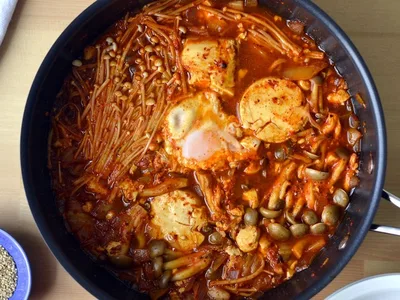
A warming Korean stew built on a deeply flavored anchovy-kelp broth, enriched with fermented kimchi, gochujang, and miso for complex umami depth. Silken tofu trembles in the spiced broth alongside tender mushrooms, creating a dish that's simultaneously comforting and bold. Serve bubbling hot in stone bowls for casual weeknight dinners or entertaining guests who appreciate bold, layered flavors. This version emphasizes proper stock-building technique and balanced seasoning to showcase the interplay between the broth's savory foundation and the kimchi's tangy heat.
No ratings yet — be the first
Ingredients
- ½ ounce dried kelp, wiped, 8x3 inches
- 10 whole dried anchovies, heads removed, innards cleaned, 3 inches long
- 4 ½ cup water
- ¼ whole large onion, chopped
- 3 clove garlic, minced
- 1 ½ teaspoon neutral oil
- 1 ½ tablespoon coarse gochugarugochujang1:1 tablespoon gochugaru = 1.5 teaspoon gochujangheat/flavor shift
gochujang is paste not powder; reduce quantity and add earlier
- ½ cup kimchi, choppedcabbage + vinegar + gochugaru1:1 cabbage + 0.5 teaspoon vinegar + 0.5 teaspoon gochugaru per cupflavor loss
freshness cannot be replicated
- 4 tablespoon kimchi juicecabbage + vinegar + gochugaru1:1 cabbage + 0.5 teaspoon vinegar + 0.5 teaspoon gochugaru per cupflavor loss
freshness cannot be replicated
- ½ tablespoon soy sauce
- 1 ½ tablespoon gochujang
- 1 tablespoon misosoy sauce1 tablespoon miso = 0.5 tablespoon soy sauceumami reductionadds gluten
loses fermented depth
- 11 ounce soon tofu, silkenfirm tofu1:1texture change
silken tofu is traditional but firmer varieties won't break apart as easily
- 3 ounce enoki mushrooms
- 3 ounce shimeji mushroomscremini or shiitake1:1flavor/texture shift
neutral swap maintains earthiness
- 1 teaspoon sesame oil
- 2 whole scallions
Method
12 steps- 1
Wipe kelp with damp cloth.
- 2
Remove anchovy heads and split bodies lengthwise to remove dark innards.
- 3
Soak kelp and anchovies in water for at least 30 minutes or up to overnight.
- 4
Boil kelp, anchovies, and soaking water on medium-high heat for 15 minutes uncovered.
- 5
Strain out kelp and anchovies, return liquid to pot and boil for another 15 minutes.
- 6
Heat oil over medium heat, fry onion and garlic until fragrant.
- 7
Sprinkle gochugaru into pan and cook for 1 minute, then add chopped kimchi and stir-fry for 1 minute.
- 8
Pour in prepared stock, kimchi juice, and soy sauce; bring to boil.
- 9
Stir gochujang and miso into broth.
- 10
Add tofu and simmer on medium-low until heated through.
- 11
Add mushrooms, cover pot and cook several minutes.
- 12
Drizzle with sesame oil and top with scallions before serving.
Tips
Don't skip cleaning anchovy innards; removing the dark matter prevents bitterness and keeps the broth clean and clear.
Simmer tofu gently on medium-low to preserve its delicate texture; vigorous boiling causes it to break apart and toughen.
Taste and adjust seasoning at the end; miso and gochujang can vary in saltiness, so balance salty, spicy, and savory to preference.
Good to Know
Refrigerate in airtight container up to 4 days. Reheat gently on stovetop over medium-low heat; do not microwave tofu as it becomes rubbery.
Prepare broth through step 5 up to 2 days ahead; refrigerate and reheat before proceeding. Assemble aromatics (onion, garlic, kimchi) in advance. Add tofu fresh just before serving.
Serve immediately in heated stone bowls (ttukbaegi) or regular bowls for authentic presentation. Offer extra gochugaru, sesame seeds, and raw garlic slices at the table for customization.
Common Mistakes
Use high heat during tofu simmer to avoid firm or broken tofu; keep heat at medium-low.
Skip the 30-minute broth infusion to avoid flat, weak stock; extended soaking develops flavor.
Overcook mushrooms to prevent mushy texture; add them in final minutes only.
Substitutions
neutral swap maintains earthiness
silken tofu is traditional but firmer varieties won't break apart as easily
Full guide →gochujang is paste not powder; reduce quantity and add earlier
Full guide →loses fermented depth
Full guide →freshness cannot be replicated
FAQ
Can I make this ahead and reheat?
Yes, the broth keeps 4 days refrigerated. Reheat gently without tofu, then add fresh tofu and mushrooms when reheating to preserve their texture. Stone bowls are traditional but not required.
What if I can't find soon tofu?
Firm or medium tofu works but yields denser texture. Silken varieties are essential for authentic sundubu jjigae's signature trembling quality. Check Korean markets or substitute with soft tofu as closest alternative.
How long does this stew keep, and can I freeze it?
Refrigerate 4 days maximum. Freezing is not recommended; tofu becomes spongy and mushrooms turn mushy upon thaw. Broth alone freezes 3 months and can be reused with fresh tofu and vegetables.