Korean Beef Japchae with Kale and Glass Noodles
- Prep
- 15 min
- Cook
- 20 min
- Yield
- 4 servings
- Level
- medium
- Cuisine
- Korean
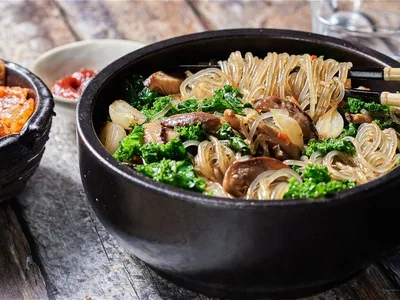
Japchae is a beloved Korean stir-fried noodle dish traditionally made with beef, vegetables, and sweet potato glass noodles bound in a savory-sweet sesame sauce. This version the classic by swapping spinach for nutrient-dense kale and adding shiitake mushrooms for umami depth. The magic lies in the balance of soy, brown sugar, sesame, and Thai chilies—creating layers of salty, sweet, and heat that coat each strand of noodle. Tender sliced sirloin and caramelized pearl onions add substance, while the glossy sauce ties everything together. Perfect for weeknight dinners when you want restaurant-quality flavor in under 30 minutes, or for meal prep that tastes even better the next day. This version punches up the traditional recipe with fresh chile kick and darker, more complex vegetables, making it both accessible and craveable.
No ratings yet — be the first
Ingredients
- 4 tablespoon soy sauce
- 2 tablespoon brown sugar
- 1 clove garlic, grated
- 2 teaspoon sesame oil
- 1 teaspoon sesame seeds
- 2 Thai chilies, finely choppedsriracha1 tablespoonheatchile
adds umami and vinegar, changes texture
- 6 ounce sweet potato glass noodleswheat noodles1:1noodle
less sweet, different texture, adds gluten
- 2 cup kale, packed, roughly torn, stems removed
- canola oil, for cooking(optional)
- 4 ounce pearl onions, halved and peeledyellow onion4 ouncesallium
faster prep, less visual appeal
- ½ pound sirloin, thinly slicedflank steak1:1beefprotein
similar tenderness if sliced thin against grain
- 4 ounce shiitake mushrooms, sliced
Method
7 steps- 1
Whisk together soy sauce, brown sugar, garlic, sesame oil, sesame seeds, and chilies until combined.
- 2
Cook noodles according to package directions until al dente. Drain and set aside.
- 3
Return water to boil and blanch kale until bright green. Transfer to ice bath, drain, and set aside.
- 4
Heat wok over medium heat. Add noodles and toss with canola oil until glossy and slightly browned. Remove and reserve.
- 5
Sauté pearl onions in wok with more oil until browned. Remove and reserve with noodles.
- 6
Add beef and mushrooms to wok with 1 tablespoon sauce. Toss and cook until beef is browned and mushrooms are glossy.
- 7
Return noodles and onions to wok. Add kale and remaining sauce. Toss well and heat through. Serve warm.
Tips
Toast sesame seeds in a dry pan before grinding or using to amplify their nutty flavor and ensure they don't clump in the sauce.
For even cooking, slice sirloin against the grain and keep pieces uniform in thickness; this ensures tender beef that won't overcook during the quick wok toss.
Make the sauce ahead and chill; its flavors meld overnight, creating deeper complexity when reheated with the stir-fried components.
Good to Know
Refrigerate in airtight container up to 3 days. Do not freeze noodles as they become mushy. Reheat gently in wok with splash of water.
Prepare sauce, slice all vegetables and beef, cook noodles, and blanch kale up to 8 hours ahead. Store separately. Final stir-fry takes 10 minutes.
Serve warm over rice as optional base. Pair with quick kimchi, pickled daikon, or light cucumber salad. Works as main or part of Korean meal spread.
Common Mistakes
Overcook noodles before stir-frying to avoid mushy final dish; cook only to al dente.
Skip the ice bath for kale to avoid mushy texture and dull color.
Add all sauce at once instead of saving some for final toss to avoid soggy noodles.
Substitutions
faster prep, less visual appeal
less sweet, different texture, adds gluten
FAQ
Can I make japchae vegetarian?
Yes. Omit beef and add extra mushrooms, bell peppers, carrots, and broccoli. Increase sesame oil to 1 tablespoon and use vegetable soy sauce or tamari for deeper umami.
What if I can't find sweet potato glass noodles?
Use regular rice noodles or wheat ramen, adjusting cook time. Glass noodles have a chewy texture and slight sweetness that's signature, but starch noodles work. Result will be less authentic but equally delicious.
How long does japchae keep and can I freeze it?
Refrigerate up to 3 days in airtight container. Do not freeze; noodles become mushy when thawed. Reheat gently in wok with water over medium heat, loosening noodles as they warm.