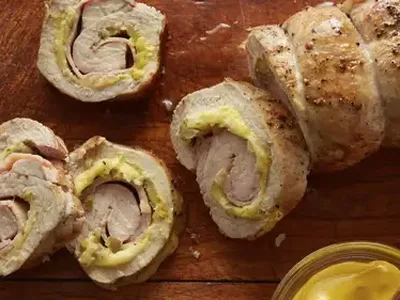
How to Butterfly Chicken
Butterflying means cutting meat almost in half horizontally, then opening it flat like a book. The technique creates an even thickness of 1 to 1.5 inches across the entire piece, which cooks faster and more evenly than a whole chicken.
Why it matters
A butterflied chicken cooks in 45 minutes instead of 90. You get crispy skin across the entire surface because all skin touches the pan or grill grates. The breast meat finishes at 165F at the same time as the thigh meat at 175F. No more dry breast or raw thighs.
What you need
Steps
Pat the 3 to 4 pound chicken completely dry with paper towels. Wet skin won't crisp. Place breast-side down on cutting board. The backbone runs down the center, feeling like a ridge of small bones under your fingers.
Cut along the right side of the backbone with kitchen shears, starting at the tail end. Cut through each rib with firm pressure. You'll hear a crunch with each snip. Keep the blade angled slightly toward the backbone, about 1/2 inch from center.
Repeat on the left side of the backbone. Remove the 6-inch backbone strip completely. Save it for stock or discard. The chicken will lay flatter but still be connected at the breastbone.
Flip the chicken breast-side up. Press down hard on the breastbone with both palms until you hear a loud crack. The wishbone and keel bone break, letting the chicken lay completely flat. The thickest part should measure 1.5 inches with a meat thermometer.
Tuck the wing tips behind the shoulders to prevent burning. Season both sides with 2 tablespoons kosher salt and 1 tablespoon black pepper. Let rest 30 minutes at room temperature or up to 24 hours in the refrigerator before cooking.
Common Mistakes
Using a knife instead of shears
What happens: The blade slips on bones, creating jagged cuts and potential injury
Fix: Buy kitchen shears for $15 to $30 that cut through bone easily
Not drying the chicken first
What happens: Wet, slippery chicken is hard to grip and won't develop crispy skin
Fix: Use 4 to 5 paper towels to pat every surface completely dry
Cutting too far from the backbone
What happens: You lose meat attached to the backbone or cut into the thigh
Fix: Stay within 1/2 inch of the backbone's center ridge
Skipping the breastbone crack
What happens: The chicken springs back into a dome shape during cooking
Fix: Press with full body weight until you hear and feel the crack
Troubleshooting
If the chicken won't lay flat after removing backbone
Then: Make 2 small cuts through the white cartilage on either side of the keel bone, then press again until it cracks
If your shears get stuck in a thick bone
Then: Rock the blades back and forth while applying steady pressure, or switch angles to cut from the other direction
If the skin tears during flattening
Then: Pin torn edges together with toothpicks before cooking, remove after skin crisps in the first 20 minutes
Related Techniques
FAQ
Can I butterfly a frozen chicken?
No. Frozen bones shatter instead of cutting cleanly. Thaw the chicken completely in the refrigerator for 24 to 36 hours first. The internal temperature should reach 38F to 40F throughout. Partially frozen meat at 28F to 32F is dangerous because your shears can slip on ice crystals between the muscles.
What size chicken works best for butterflying?
A 3.5 to 4.5 pound chicken butterflies easiest. Smaller birds under 3 pounds have thin, fragile bones that crush instead of cutting cleanly. Chickens over 5 pounds require heavy-duty poultry shears and more hand strength. The ideal butterflied thickness is 1.25 to 1.5 inches across the thickest part of the breast.
How much faster does butterflied chicken cook?
Butterflied chicken cooks in 45 to 50 minutes at 425F versus 80 to 90 minutes for a whole bird. The flat shape means heat reaches the center 40% faster. At 375F, expect 55 to 60 minutes. On a grill at medium-high heat around 400F, it takes 35 to 40 minutes total, flipping once halfway through.
Should I remove any other bones after butterflying?
Keep all remaining bones intact. The ribcage and breastbone hold the meat's shape during cooking. Removing them turns your butterfly into random pieces. The only optional removal is the wishbone at the neck end, which makes carving easier but requires practice to remove without tearing the breast meat.
Recipes Using This Technique
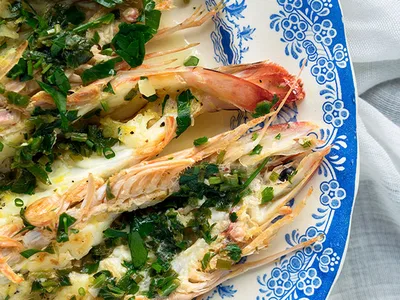
Garlic Butter Butterfly Prawns with Lemon Wine Sauce
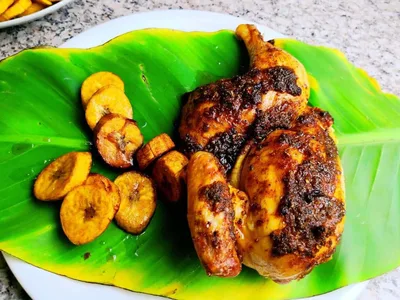
Grilled Jerk Chicken with Fried Plantain Chips
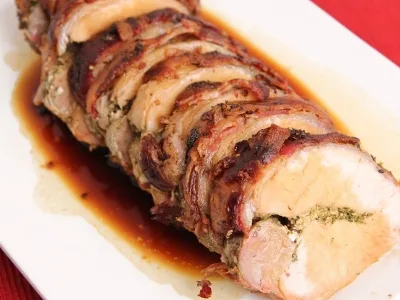
Herb-Stuffed Pork Loin with Pancetta and Wine Jus
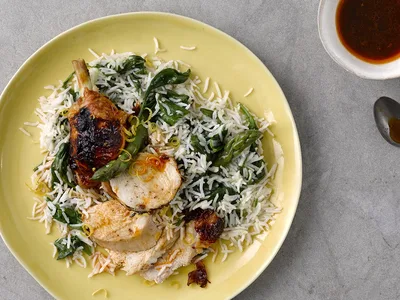
Spatchcock Lemon Chilli Chicken with Coconut Rice
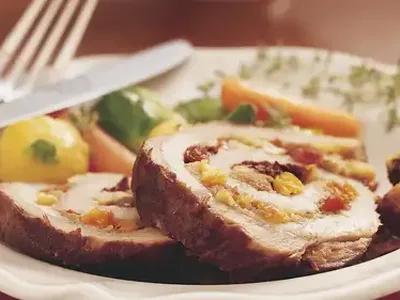
Slow-Cooker Fruit-Stuffed Pork Loin Roast with Apple Glaze