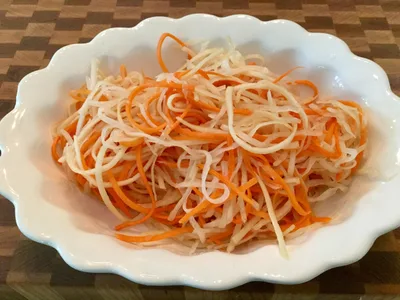
How to Julienne Vegetables
Julienne means cutting vegetables into thin matchsticks, each piece measuring 1/8 inch thick and 2 inches long. The uniform size ensures even cooking and creates a professional presentation in salads, stir-fries, and garnishes.
Why it matters
Julienned vegetables cook in 30-60 seconds instead of 5-10 minutes. The thin strips absorb marinades and dressings in 15 minutes rather than hours. Each piece has the same texture. No more raw centers next to mushy edges.
What you need
Steps
Trim your vegetable into 2-inch segments. Cut carrots into 2-inch pieces. Slice bell peppers into 2-inch wide panels. The length determines your final matchstick size.
Create one flat surface by slicing off a thin piece lengthwise. Place this flat side down on your cutting board. The vegetable should sit steady without rolling. You'll hear no wobbling sound when you press down.
Cut the vegetable into 1/8-inch thick planks. Keep your knife blade vertical. Guide with your knuckles curled inward. Each plank should bend slightly when picked up but snap cleanly when bent too far.
Stack 3-4 planks at a time. Line up the edges precisely. Too many planks and they'll slide apart. Too few wastes time.
Cut the stacked planks into 1/8-inch strips. Move your guiding hand backward after each cut. Listen for the crisp snap of the knife hitting the board. Each strip should look like a wooden matchstick.
Test one piece between your fingers. It should bend into a U-shape without breaking. Drop a few strips into a glass of water. They should sink slowly, not float immediately.
Common Mistakes
Cutting strips too thick (1/4 inch or more)
What happens: Vegetables stay crunchy in the center while edges overcook
Fix: Use a ruler to mark 1/8-inch intervals on your first vegetable as practice guides
Making uneven lengths from 1/2 inch to 3 inches
What happens: Short pieces burn while long pieces stay raw in stir-fries
Fix: Pre-cut all vegetables into exact 2-inch segments before starting
Stacking more than 5 planks at once
What happens: Planks slip sideways creating triangular pieces instead of rectangles
Fix: Stack only 3-4 planks and hold them firmly with curved fingers
Using a dull knife that crushes instead of cuts
What happens: Vegetable fibers tear, releasing excess moisture and turning brown in 10 minutes
Fix: Sharpen knife until it slices paper without tearing
Troubleshooting
Strips break when stirring in the pan
Then: Cut with the grain of the vegetable, not against it. Carrot strips should run lengthwise along the root
Some pieces cook faster than others
Then: Sort julienned pieces by thickness. Cook thicker pieces for 30 seconds before adding thinner ones
Related Techniques
FAQ
Can I use a mandoline slicer instead of a knife?
Yes, but only for the plank stage. Set the mandoline to 1/8 inch thickness. Slice your vegetable into planks. You still need a knife to cut those planks into strips. A mandoline with a julienne attachment produces strips only 1/16 inch thick, which cook too quickly and turn mushy in 15-20 seconds.
How long do julienned vegetables stay fresh?
Store julienned vegetables in an airtight container with a damp paper towel. Carrots and daikon last 5 days. Bell peppers last 3 days. Zucchini lasts 24 hours before releasing water and becoming limp. Add 1 teaspoon salt per 2 cups of julienned vegetables to extend storage by 1-2 days.
Which vegetables work best for julienne cuts?
Firm vegetables with minimal seeds work best. Carrots, daikon, jicama, and bell peppers hold their shape after cutting. Zucchini and cucumber work if you remove the seedy center first. Avoid tomatoes, eggplant, and mushrooms. These vegetables contain over 90% water and collapse within 5 minutes of cutting.
What's the fastest way to julienne 2 pounds of vegetables?
Work in batches of one vegetable type at a time. A skilled cook juliennes 1 pound of carrots in 8-10 minutes by hand. Setup takes 2 minutes. Each carrot takes 45-60 seconds. Switch vegetables only after completing each type to maintain rhythm and consistent sizing.
Recipes Using This Technique
Dhaba Style Tava Fried Chicken with Spices
Instant Pot Mutton Paya With Spiced Broth
Paneer Kathi Roll: Spiced Indian Street Food
Spicy Middle Eastern Meatball Couscous Bowl
Sesame Zucchini Noodle Salad with Tahini Dressing