How to Poach
Poaching cooks food gently in liquid at 160F to 180F. The liquid barely moves, with just a few lazy bubbles rising from the bottom.
Why it matters
Poaching keeps eggs silky, fish flaky, and chicken breast tender. The low heat prevents proteins from tightening and squeezing out moisture. You get better texture than boiling. No oil needed, so it's lighter than pan-frying.
What you need
Steps
Fill your saucepan with 3 inches of water. Add 1 tablespoon white vinegar per quart of water. Heat over medium until the thermometer reads 180F. Small bubbles will form on the bottom but won't break the surface.
Crack each egg into a small bowl first. Check for shells. The yolk should sit high and round, surrounded by thick white that clings together. Watery whites mean older eggs.
Lower heat to maintain 160F to 180F. Stir the water in a gentle circle with your spoon to create a slow whirlpool. This helps the egg white wrap around the yolk.
Tip the bowl close to the water's surface. Pour the egg into the center of the whirlpool in one smooth motion. The white will look ragged for 30 seconds, then gather into an oval shape.
Set timer for 3 minutes for runny yolks, 4 minutes for jammy, or 5 minutes for firm. Watch for the white turning from translucent to opaque white. No gray or brown edges should form.
Lift the egg with your slotted spoon. Touch the yolk gently through the white. It should feel like a water balloon for runny, like soft clay for jammy. Drain on paper towels for 10 seconds before serving.
Common Mistakes
Water too hot at 190F or above
What happens: Egg whites turn rubbery and spread into wisps
Fix: Keep thermometer in water and adjust heat to maintain 160F to 180F
Dropping eggs from 6 inches above water
What happens: Whites scatter and yolk might break on impact
Fix: Lower bowl until it touches the water surface before tipping
Using a 2-quart pot that's too small
What happens: Temperature drops below 160F when adding cold eggs
Fix: Use at least 3-quart saucepan with 3 inches of water minimum
Poaching more than 4 eggs at once
What happens: Eggs stick together and cook unevenly
Fix: Cook 2 eggs maximum per batch in a 10-inch pan
Troubleshooting
Egg whites look like floating streamers
Then: Add 1 more tablespoon vinegar per quart and use fresher eggs within 7 days of purchase date
Yolk breaks when lifting with spoon
Then: Support the entire egg from underneath and tilt spoon slowly over 3 seconds to drain
Related Techniques
FAQ
Can I poach eggs ahead of time?
Yes. After poaching, transfer eggs to ice water within 5 seconds. Store in cold water up to 24 hours in the refrigerator. Reheat by placing in 140F water for 60 seconds. The yolk stays at your original doneness level. Restaurants prep 50 to 100 eggs this way every morning.
Why add vinegar to poaching water?
Vinegar lowers water pH to 3.0, which helps egg proteins coagulate faster. This keeps whites compact instead of spreading. Use 1 tablespoon per quart for best results. White vinegar works better than apple cider because it won't tint eggs yellow. Skip vinegar only with super fresh eggs under 3 days old.
What's the best water depth for poaching?
Use 3 to 4 inches of water in your pan. Less than 3 inches makes temperature control harder. More than 4 inches takes longer to heat and makes egg retrieval tricky. A 3-quart saucepan filled to 3 inches holds the right amount.
Can I poach fish using this method?
Fish needs different timing but same 160F to 180F temperature range. A 1-inch thick salmon fillet takes 8 to 10 minutes. The fish turns from translucent to opaque and flakes when pressed. Add 2 tablespoons salt per quart instead of vinegar. Bay leaves and peppercorns add flavor.
Recipes Using This Technique

Beef Bolognese with Baked Eggs for Breakfast

Crispy Bacon Cauliflower Fried Rice with Poached Eggs
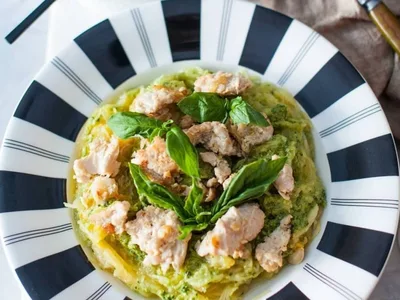
Ground Chicken Spaghetti Squash Pesto Bowls

Low-Fat Yogurt Hollandaise Eggs Benedict
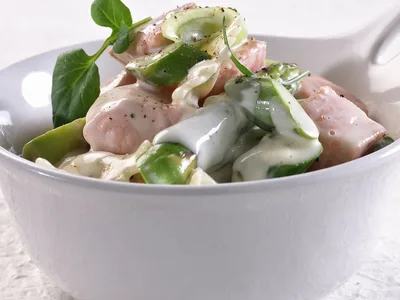
Pasta with Asparagus and Salmon Cream Sauce