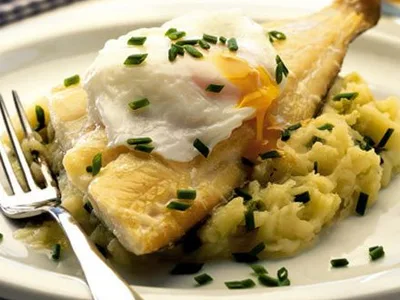
How to Poach Eggs
Poaching eggs means cooking them in 180F to 190F water until the whites set firm around liquid yolks. The eggs cook gently without oil or direct heat contact, creating tender whites and creamy centers.
Why it matters
Poaching gives you silky whites without crispy edges or rubbery textures. You get pure egg flavor since no fat masks the taste. The technique works for breakfast dishes, salads, and grain bowls. Unlike fried eggs, poached eggs won't add grease to your plate.
What you need
Steps
Fill your 3-quart saucepan with 2 inches of water. Heat to 180F to 190F over medium heat. Look for tiny bubbles forming on the bottom, not a rolling boil. The surface should barely shimmer.
Add 1 tablespoon white vinegar per quart of water. Crack each egg into its own small bowl first. Check for broken yolks or shell pieces. Fresh eggs work best because the whites stay together better than week-old eggs.
Create a gentle whirlpool with your slotted spoon, stirring in one direction for 5 seconds. Stop stirring. Lower the bowl's lip to the water surface. Tip the egg into the center of the swirl in one smooth motion.
Set your timer for 3 minutes for runny yolks, 4 minutes for jammy centers, or 5 minutes for firm yolks. Watch the whites turn from translucent to opaque white. The egg will float slightly when done.
Lift the egg with your slotted spoon, letting excess water drain for 5 seconds. The white should feel set but still jiggle slightly. Touch the yolk gently to test firmness.
Place the egg on paper towels for 10 seconds to absorb water. Transfer to your plate or toast. Trim any wispy white strands with kitchen scissors if you want a neater appearance. Season with salt and pepper.
Common Mistakes
Using boiling water at 212F
What happens: Whites spread everywhere and turn tough while yolks overcook
Fix: Keep water between 180F and 190F with small bubbles, not large ones
Cracking eggs directly into the pot
What happens: Shell pieces fall in and yolks break on impact
Fix: Always crack into a small bowl first, then slide into water
Poaching multiple eggs without spacing
What happens: Eggs merge into one mass with tangled whites
Fix: Cook maximum 2 eggs at once, on opposite sides of the pan
Using eggs older than 10 days
What happens: Whites spread thin and create wisps instead of staying compact
Fix: Check the pack date and use eggs within 7 days for best shape
Troubleshooting
If whites spread like tentacles across the pan
Then: Increase vinegar to 2 tablespoons per quart and create a stronger whirlpool for 8 seconds before adding egg
If yolk breaks when transferring to plate
Then: Support the bottom of the egg with a regular spoon while lifting with the slotted spoon
If eggs stick to pan bottom
Then: Reduce heat to maintain 180F and gently nudge with slotted spoon after 30 seconds of cooking
Related Techniques
FAQ
Can I poach eggs ahead of time?
Yes, poach eggs up to 24 hours ahead. After cooking, transfer them to a bowl of ice water within 10 seconds. Store in cold water in the refrigerator. Reheat by placing in 140F water for 60 seconds. The texture stays nearly identical to fresh-poached when you reheat below 150F.
Why add vinegar to the poaching water?
Vinegar lowers the water's pH to around 3.0, which helps egg whites coagulate faster. This keeps whites compact instead of spreading. Use 1 tablespoon per quart for mild effect or 2 tablespoons for stronger action. White vinegar works best since it won't color the eggs. Lemon juice at 2 tablespoons per quart works too.
What's the ideal water depth for poaching?
Use 2 to 3 inches of water in your pan. Less than 2 inches makes eggs touch the bottom and cook unevenly. More than 4 inches takes too long to heat and makes retrieval difficult. A 3-quart saucepan with 2.5 inches of water holds the perfect amount for 1 to 2 eggs.
How do I know when my poached egg is done?
A perfectly poached egg has opaque white all around with no translucent patches. The egg lifts easily and holds together on the spoon. For runny yolks at 3 minutes, the center jiggles like jelly when you shake the spoon. At 4 minutes, the yolk feels like a water balloon. At 5 minutes, it resists gentle pressure.
Recipes Using This Technique
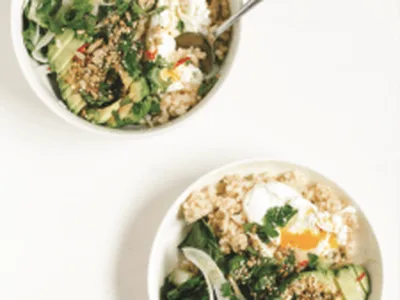
California Lunch Bowl with Poached Egg
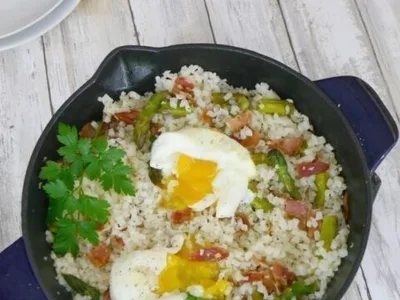
Crispy Bacon Cauliflower Fried Rice with Poached Eggs
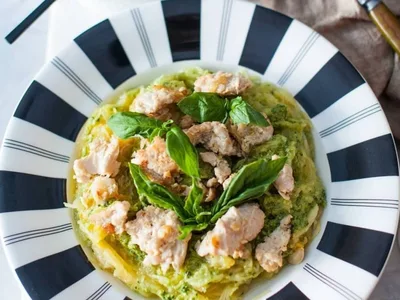
Ground Chicken Spaghetti Squash Pesto Bowls
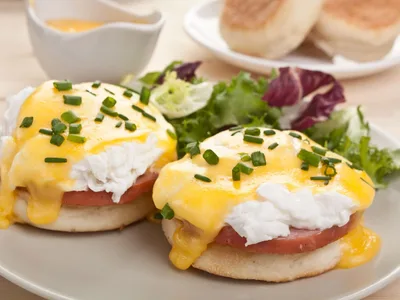
Low-Fat Yogurt Hollandaise Eggs Benedict
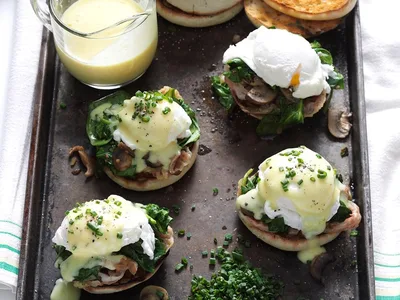
Mushroom Spinach Eggs Benedict with Crispy Pancetta