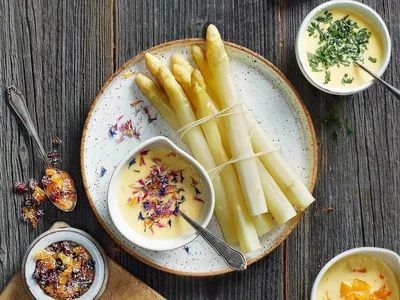
How to Make Hollandaise
Hollandaise is a warm butter sauce made by whisking egg yolks with lemon juice over gentle heat, then slowly adding melted butter until thick. The sauce coats a spoon and tastes like buttery lemon with a silky texture.
Why it matters
This sauce turns simple eggs into eggs Benedict. It makes steamed asparagus worth eating. The technique teaches you temperature control and emulsification, skills that apply to mayonnaise, béarnaise, and aioli. Master this and you understand how fat and water combine.
What you need
Steps
Fill the saucepan with 1 inch of water. Bring to a simmer at 180F to 190F. You want lazy bubbles, not a rolling boil. The bowl should not touch the water when placed on top.
Separate 3 egg yolks into the glass bowl. Add 1 tablespoon fresh lemon juice and 1/4 teaspoon kosher salt. Whisk for 30 seconds until the mixture lightens from deep orange to pale yellow.
Melt 1 stick (8 tablespoons) unsalted butter in the microwave or small pot. Let it cool to 140F. Hot butter will scramble the eggs.
Place the bowl over simmering water. Whisk the yolk mixture constantly for 2 to 3 minutes. The mixture doubles in volume and turns creamy yellow. When you lift the whisk, ribbons should fall back into the bowl. Temperature should read 140F to 145F.
Remove bowl from heat. Add butter 1 tablespoon at a time while whisking. Each addition takes 15 to 20 seconds to incorporate. The sauce thickens with each addition. After 4 tablespoons, you can pour faster.
Check consistency by dipping a spoon. The sauce should coat the back completely. Draw a line with your finger. If the line stays clear for 3 seconds, it's ready. Taste and add more lemon juice or salt.
Serve immediately or keep warm by leaving the bowl over the pot with heat off. Stir every 5 minutes. The sauce holds for 30 minutes maximum before separating.
Common Mistakes
Using cold eggs straight from the fridge
What happens: Sauce takes forever to thicken and may never emulsify properly
Fix: Put whole eggs in warm water for 5 minutes before separating
Water too hot under the bowl
What happens: Scrambled egg bits form instantly
Fix: Keep water at 180F to 190F with tiny bubbles, never boiling
Adding butter too fast
What happens: Sauce breaks into greasy puddles
Fix: First 4 tablespoons take 1 minute each, then speed up
Whisking too slowly
What happens: Eggs cook in spots creating lumps
Fix: Whisk continuously at 2 rotations per second minimum
Making sauce too far ahead
What happens: Sauce separates into butter and egg layers
Fix: Make within 30 minutes of serving
Troubleshooting
Sauce looks curdled with tiny egg bits
Then: Strain through fine mesh sieve, add 1 tablespoon hot water, whisk vigorously off heat
Sauce won't thicken after adding all butter
Then: Return to heat for 30 seconds while whisking, checking temperature stays under 160F
Sauce breaks into oil and water layers
Then: Put 1 fresh egg yolk in clean bowl, slowly whisk broken sauce into it
Related Techniques
FAQ
Can I use a blender instead of whisking?
Yes, but only for the final mixing. Put cooked egg yolks (145F) in a blender. Run on low speed. Pour hot butter (140F) through the top in a thin stream over 45 seconds. The sauce forms instantly. This method produces a lighter, foamier texture than hand whisking. Some chefs consider it inferior.
Why does my sauce taste like metal?
You used a reactive bowl or whisk. Aluminum and copper react with acid in lemon juice. Switch to stainless steel or glass bowls. Also check your butter. Some brands add copper to prevent spoilage. Use butter within 2 weeks of purchase date.
How much sauce does this recipe make?
This recipe yields 3/4 cup or 12 tablespoons. Plan 2 tablespoons per person for eggs Benedict. The sauce reduces by 20 percent from the original volume of ingredients because water evaporates during cooking. Double the recipe for 6 or more people.
Can I reheat leftover hollandaise?
Microwave in 10-second bursts at 50 percent power, whisking between each burst. Stop when sauce reaches 110F. Above 120F it will break. Add 1 teaspoon warm water if it looks thick. Most chefs toss leftovers because reheated sauce never matches fresh texture.
Recipes Using This Technique
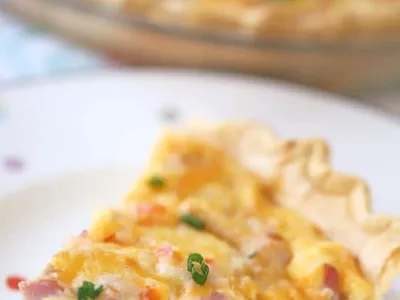
Ham and Cheese Quiche with French Bread and Hollandaise
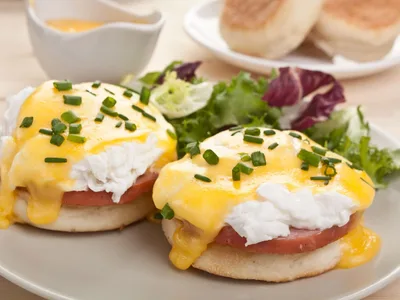
Low-Fat Yogurt Hollandaise Eggs Benedict

Make-Ahead English Muffin Eggs Benedict Casserole
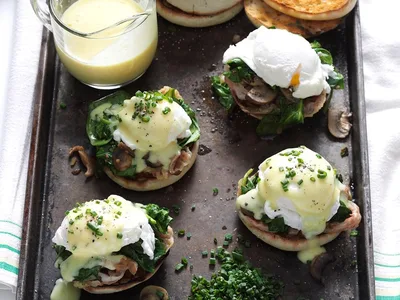
Mushroom Spinach Eggs Benedict with Crispy Pancetta
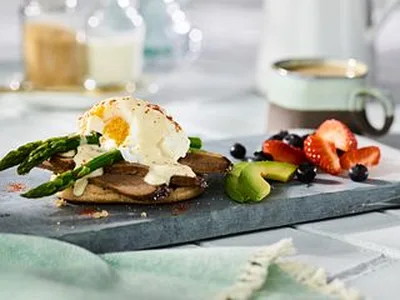
Smoked Beef Brisket Benedict with Steamed Asparagus