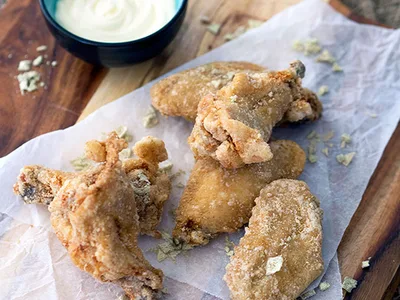
How to Tell if Oil is Hot Enough
Testing oil temperature without a thermometer means reading visual and auditory cues to know when oil reaches 350F to 375F for frying. You watch for shimmer patterns, test with water droplets or wooden spoons, and listen for specific sizzle sounds.
Why it matters
Oil at 350F cooks food crispy outside while cooking through inside. Too cold at 300F makes greasy, soggy food. Too hot at 400F burns the outside before the inside cooks. The right temperature seals the surface in 3 to 5 seconds, creating a barrier that keeps oil out.
What you need
Steps
Pour oil into your pot to a depth of 2 to 3 inches, leaving at least 3 inches of space from the rim to prevent overflow when food goes in. Turn heat to medium-high.
Watch the oil surface after 4 to 5 minutes of heating. First you see lazy ripples. Then faster movement starts. Look for consistent shimmer waves moving across the entire surface, not just spots near the pot edges.
Dip the tip of a wooden chopstick or spoon handle into the oil. At 350F, small bubbles stream steadily from the wood. Lazy bubbles mean 300F or less. Violent bubbling means over 375F.
Test with a bread cube if you have one. Drop a 1-inch cube of day-old bread into the oil. It should turn golden brown in exactly 60 seconds at 350F to 365F. Faster means too hot.
Listen to the sizzle when you add food. A steady, aggressive sizzle that starts immediately means good temperature. Gentle bubbling means too cold. Violent spattering and dark smoke means way too hot.
Adjust heat throughout cooking to maintain that steady bubble stream on your wooden tester. Oil temperature drops 25F to 50F when you add cold food, so bump heat up briefly after adding each batch.
Common Mistakes
Using the water drop test
What happens: Water in 350F oil explodes violently, spraying hot oil that can cause severe burns
Fix: Use wooden utensils or bread cubes instead, never water
Heating oil on high heat to save time
What happens: Oil overshoots target temperature, reaching 400F+ before you notice, then takes 10 minutes to cool down
Fix: Use medium-high heat and wait 5 to 7 minutes for gradual, controllable heating
Filling the pot more than halfway with oil
What happens: Oil bubbles over when food goes in, creating a grease fire hazard
Fix: Keep oil level at 1/3 of pot height maximum, leaving 3 to 4 inches of freeboard
Testing temperature once then forgetting about it
What happens: Temperature swings between 300F and 400F during cooking, making some pieces soggy and others burnt
Fix: Retest with your wooden spoon every 2 to 3 minutes and adjust heat accordingly
Troubleshooting
Oil starts smoking with white wisps
Then: Remove from heat immediately, let cool 5 minutes, then return to lower heat setting
Food turns dark brown in 30 seconds
Then: Turn heat to low, add a cup of room-temperature oil to cool the batch quickly to 350F
No bubbles appear on wooden spoon after 7 minutes
Then: Increase to high heat for 2 minutes, then reduce to medium-high and test again
Related Techniques
FAQ
What's the actual temperature when these visual cues appear?
The shimmer pattern starts at 300F but becomes uniform at 350F. Steady bubbles on wood happen at 350F to 365F. Bread browns in 60 seconds at 365F, in 45 seconds at 375F, and in 30 seconds at 385F. Smoke wisps appear at 400F for vegetable oil, 375F for olive oil. Most frying happens best between 350F and 375F.
Can I reuse oil after testing temperature this way?
Yes, strain through coffee filters after cooling to 100F or less. Properly stored oil lasts for 8 to 10 uses if you never exceeded 375F. Dark color or fishy smell after 3 uses means the oil broke down from overheating. Each reuse lowers the smoke point by about 10F, so oil that started at 450F smoke point drops to 370F after 8 uses.
Why does my oil temperature drop so much when I add food?
Cold food at 40F pulls heat from 350F oil rapidly. Each pound of food drops oil temperature by 25F to 50F depending on surface area. Frozen food drops it by 75F. Work in batches of 1/2 pound maximum to keep temperature swings under 30F. Wait 60 seconds between batches for oil to recover to 350F.
How do different oils behave when heating?
Vegetable and canola oils shimmer uniformly at 350F. Peanut oil takes 30 seconds longer to show visual cues because of higher density. Olive oil starts smoking at 374F versus 450F for vegetable oil. Coconut oil foams at 300F before settling down at 350F. Each oil needs 4 to 8 minutes to reach 350F on medium-high heat.
Recipes Using This Technique
Beer-Battered Fish and Chips with BBQ Spice
Guinness Black Pepper Braised Oxtail
Italian Sausage White Bean Kale Soup with Fire Roasted Tomatoes
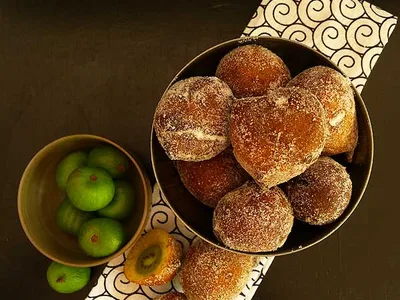
Fried KiwiBerry Doughnuts with Yeast Batter

Thai Deep Fried Whole Fish with Sweet Chili Sauce