How to Thicken a Sauce
Thickening a sauce means adding an ingredient that binds excess liquid and creates a coating consistency. The sauce goes from thin and watery to smooth and clingy, sticking to your food instead of pooling on the plate.
Why it matters
A properly thickened sauce coats the back of a spoon and stays on your food. Thin sauces run off pasta. They slide off meat. A sauce with the right thickness delivers flavor in every bite, turning a 6/10 dish into a 9/10 dish.
What you need
Steps
Heat your sauce to a gentle simmer over medium heat, about 180F to 200F. Look for lazy bubbles breaking every 2-3 seconds around the edges. Steam should rise but not billow. This temperature activates thickening agents without breaking the sauce.
Mix your thickener with cold liquid before adding. For cornstarch or flour, use a 1:2 ratio of starch to cold water. Whisk until smooth as heavy cream. For 2 cups of sauce, start with 1 tablespoon cornstarch mixed with 2 tablespoons cold water.
Pour the slurry into simmering sauce while whisking constantly. Add it in a thin stream over 10-15 seconds. The sauce turns cloudy first. Keep whisking. After 30-45 seconds, it clears and thickens.
Stir continuously for 2-3 minutes after adding thickener. Use a figure-8 motion, scraping the bottom. Raw flour tastes like wet cardboard. Cooked flour has no taste. The sauce should coat your spoon but still drip off in 2-3 seconds.
Test thickness by dipping a spoon and running your finger across the back. A clean line that stays put means it's ready. If the sauce fills in the gap immediately, simmer 2 more minutes. Add more slurry if needed, 1 teaspoon at a time.
Remove from heat once thickened. The sauce continues thickening as it cools. What looks perfect at 200F becomes gluey at 140F. Slightly undershoot your target. You can always reheat and adjust, but overthinning means starting over.
Common Mistakes
Adding thickener directly to hot liquid
What happens: Creates lumps that won't dissolve, ruining texture
Fix: Always make a slurry with cold liquid first, whisking until smooth
Using high heat to speed thickening
What happens: Sauce breaks, becomes grainy, or burns on the bottom
Fix: Keep heat at medium or medium-low, never above 212F
Not cooking flour-based thickeners long enough
What happens: Raw flour flavor dominates the sauce
Fix: Simmer flour-thickened sauces for minimum 5 minutes after thickening
Over-thickening the sauce while hot
What happens: Sauce becomes paste-like when it cools
Fix: Stop when sauce coats spoon but still flows, accounting for 20% more thickening as it cools
Troubleshooting
Sauce has lumps after thickening
Then: Pour through fine-mesh strainer, then whisk vigorously while reheating to 180F
Sauce is too thick after cooling
Then: Whisk in hot liquid 2 tablespoons at a time over low heat until it reaches proper consistency
Sauce won't thicken despite adding more slurry
Then: Check if sauce contains acid (tomatoes, wine, citrus) which weakens cornstarch. Switch to arrowroot or reduce acid first
Related Techniques
FAQ
What's the difference between cornstarch and flour for thickening?
Cornstarch creates a glossy, translucent sauce and thickens at 180F with twice the power of flour. Use 1 tablespoon cornstarch where you'd use 2 tablespoons flour. Flour makes opaque sauces with a matte finish and needs 5 minutes of cooking to lose its raw taste. Cornstarch breaks down in acidic sauces after 10 minutes. Flour stays stable in tomato sauce for hours.
Can I thicken sauce after it's cooled?
Yes, but work carefully. Reheat the sauce to 160F over medium-low heat, stirring every 30 seconds to prevent scorching. Make a fresh slurry using 1 teaspoon cornstarch per cup of sauce. Add the slurry while whisking and bring to 185F. The sauce thickens within 60 seconds. Never microwave to thicken. Uneven heating creates hot spots that break the starch bonds.
How much thickener do I need for different consistencies?
For 2 cups of liquid at medium thickness (coats spoon, drips slowly), use 2 tablespoons flour or 1 tablespoon cornstarch. Light nappé consistency needs half that amount. Heavy cream consistency requires double. Start with 75% of calculated amount since you can add more but can't remove excess. Each tablespoon of flour thickens roughly 1.5 cups of liquid to medium consistency.
Why does my cornstarch sauce get thin after sitting?
Cornstarch breaks down from acid, enzymes, or overheating. After 195F, starch molecules shatter and lose thickening power. Acidic ingredients like lemon juice or tomatoes slowly dissolve cornstarch bonds over 15-20 minutes. Switch to arrowroot for acidic sauces, which tolerates pH below 4.5. Or use flour, which withstands acid but needs longer cooking.
Recipes Using This Technique

Baked Spaghetti Squash Stuffed with Italian Sausage and Spinach
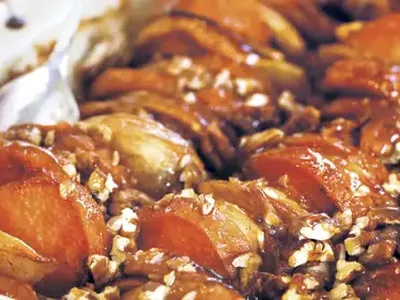
Honey-Bourbon Roasted Sweet Potatoes and Apples with Pecans

Roasted Eggplants with Feta and Tomato Sauce

Slow-Cooker French Onion Chicken with Swiss Cheese Toasts
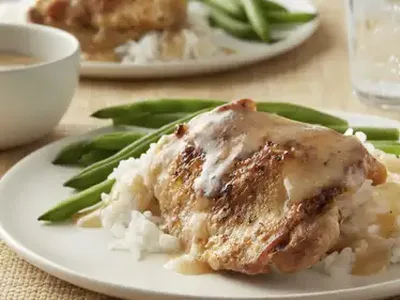
Slow Cooker Lemon Pepper Chicken with Pan-Seared Thighs