Butter Stuten: Classic German Yeast Bread
- Prep
- 20 min
- Cook
- 30 min
- Yield
- 1 loaf (4 slices)
- Level
- medium
- Cuisine
- German
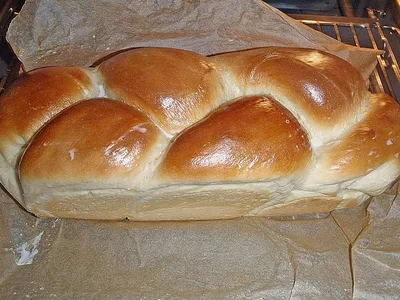
Traditional German butter-enriched yeast bread with a tender crumb and golden crust. This soft loaf uses a poolish method, allowing the dough to develop flavor during long, cool rises. The final bake produces a lightly scored top and a rich, buttery surface.
No ratings yet — be the first
Ingredients
- 8 ½ cups flour, all-purpose
- 9 tbsp butter, room temperature, plus more for finishing
- 2 cups milk, lukewarm
- 2 cubes fresh yeastinstant dry yeast0.5 tsp per cubeno-compromise
reduces hydration slightly; use same process
- 1 tablespoon salt
- 1 teaspoon sugar
- 3 tablespoon sugar
Method
10 steps- 1
Preheat oven to 122°F.
- 2
Pour flour into mixing bowl and form a well in the center. Crumble fresh yeast into the well, sprinkle with sugar, and gently mix with 3-4 tablespoons lukewarm milk.
- 3
Cover bowl and place in 122°F oven for about 20 minutes.
- 4
Add remaining ingredients to the poolish and knead with a hook attachment to a medium-firm dough, then knead by hand into a ball and return to bowl.
- 5
Cover and place in 122°F oven for 30 minutes.
- 6
Turn out dough and knead lightly by hand, then shape into loaf pan.
- 7
Preheat oven to 375°F.
- 8
Score the top of loaf diagonally about 6 times.
- 9
Bake for 35 minutes.
- 10
While still warm, brush crust lightly with butter.
Tips
A cool oven rise (50°C) develops deep flavor without over-proofing; do not skip this step.
Medium-firm dough should hold its shape but yield slightly to pressure.
Diagonal scoring allows steam to escape evenly and creates characteristic split.
Brushing with warm butter while loaf is still warm seals crust and adds richness.
Good to Know
Room temperature in airtight container for 3 days, or wrapped and frozen for 1 month.
Prepare dough through first rise the night before; shape and bake the next morning.
Slice warm or at room temperature. Serve alongside jam, honey, or savory spreads.
Common Mistakes
Exceed 50°C oven temperature during rises to avoid over-proofing and gummy crumb.
Skip kneading by hand to avoid dense, uneven texture; machine mixing alone does not develop gluten properly.
Rush the poolish step to avoid weak flavor development and poor crust color.
Apply butter to cold loaf to avoid uneven absorption; brush only while warm for proper seal.
Substitutions
Dairy-Free Swaps
General Alternatives
reduces hydration slightly; use same process
Full guide →