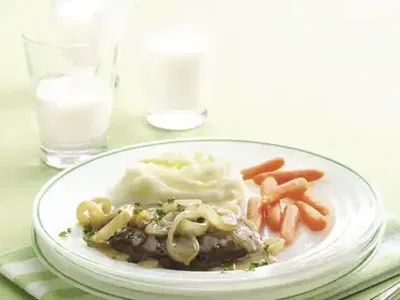
How to Make Gravy
Gravy is a sauce made from meat drippings, fat, flour, and liquid. You build it in the same pan where you cooked meat, using those brown bits stuck to the bottom for flavor.
Why it matters
Gravy captures every bit of flavor from your roast or pan-seared meat. Those brown crusty bits contain concentrated meat flavor that water alone can't extract. A proper gravy turns a dry pork chop into Sunday dinner. It turns leftover turkey into something worth eating.
What you need
Steps
Remove meat from pan. Leave 3 tablespoons of drippings in the pan. Set heat to medium. Too much fat makes greasy gravy. Too little won't coat the flour. The fat should shimmer but not smoke.
Sprinkle 3 tablespoons all-purpose flour over the hot fat. Stir constantly with wooden spoon for 2-3 minutes. The mixture will smell nutty like popcorn. Color changes from pale to light tan. This is your roux.
Pour in 2 cups of liquid slowly while whisking hard. Use chicken stock for poultry, beef stock for beef. The mixture will seize up and look lumpy at first. Keep whisking. After 30 seconds it smooths out completely.
Scrape the pan bottom with your wooden spoon to release every brown bit while the liquid heats up because these fond pieces dissolve better in warm liquid than boiling liquid and they contain the most concentrated meat flavor from the Maillard reaction that happened during cooking.
Bring to a gentle boil. Reduce heat to medium-low. Simmer 5-8 minutes. Stir every minute. The gravy thickens as it cooks. It should coat the back of a spoon like heavy cream.
Season with 1/2 teaspoon salt and 1/4 teaspoon black pepper. Taste. Add more if needed. For deeper flavor, add 1 teaspoon Worcestershire sauce or 1 tablespoon butter. The butter makes it glossy and silky.
Common Mistakes
Adding cold liquid to hot roux
What happens: Creates lumps that won't dissolve no matter how much you whisk
Fix: Heat your stock to at least 140F before adding, or add room temperature liquid very slowly
Using too high heat when making the roux
What happens: Burns the flour, creating bitter black specks throughout your gravy
Fix: Keep heat at medium and stir constantly, adjusting down if flour browns too fast
Not cooking the raw flour long enough
What happens: Gravy tastes pasty and coats your mouth unpleasantly
Fix: Cook flour in fat for full 2-3 minutes until it smells toasted
Adding flour directly to liquid
What happens: Forms stubborn flour balls that float in thin liquid
Fix: Always cook flour in fat first, or make a slurry with cold water before adding
Troubleshooting
Gravy is too thin after 10 minutes of simmering
Then: Mix 1 tablespoon cornstarch with 2 tablespoons cold water, whisk into simmering gravy, cook 2 more minutes
Gravy has lumps even after whisking
Then: Pour through fine-mesh strainer into serving boat, push solids through with spoon back, discard any remaining lumps
Gravy tastes flat and one-dimensional
Then: Add 1 tablespoon butter, 1 teaspoon Worcestershire, or 2 teaspoons Dijon mustard to build layers of flavor
Related Techniques
FAQ
Can I make gravy without meat drippings?
Yes. Melt 3 tablespoons butter in your skillet over medium heat. Add 1 diced shallot and cook 3 minutes until soft. Follow the flour and liquid steps as normal. The shallot adds savory depth. For more meaty flavor, brown 4 ounces of ground beef first, remove it, then use that fat for your roux. This mimics the fond you'd get from a roast.
How do I know when my gravy is thick enough?
Dip a spoon in the gravy and run your finger across the back. The line should stay clear for 3-4 seconds before the gravy flows back together. The consistency should match heavy cream, not pudding. Most gravies reach proper thickness after 5-8 minutes of simmering. If you reduce it past 10 minutes, it often becomes gluey.
What's the ratio of fat to flour to liquid?
The classic ratio is 1:1:8 by volume. That means 2 tablespoons fat, 2 tablespoons flour, and 1 cup liquid makes a medium-thick gravy. For thicker gravy, use 3 tablespoons each of fat and flour per 2 cups liquid. For thinner gravy, drop to 1.5 tablespoons each. These ratios work with any fat and any liquid.
Can I make gravy ahead of time?
Gravy keeps 3 days in the fridge or 3 months frozen. Store in an airtight container. When reheating, add 2-3 tablespoons of stock per cup of gravy because it thickens as it cools. Whisk over medium-low heat for 3-4 minutes until smooth. Never microwave gravy because it heats unevenly and creates hot spots that break the emulsion.
Recipes Using This Technique
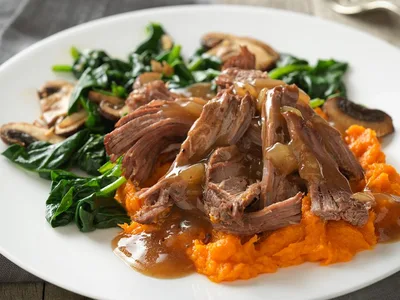
Beef Pot Roast with Cider Gravy and Maple Sweet Potatoes
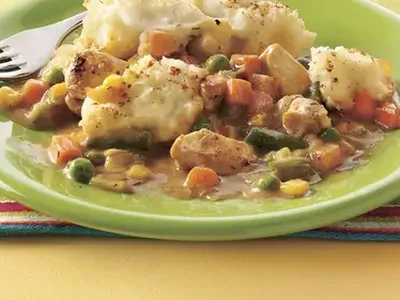
Chicken Dijon Shepherd's Pie with Instant Mashed Potatoes
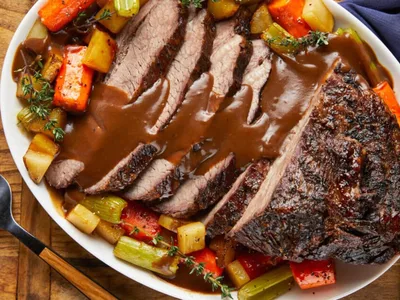
Oven-Roasted Brisket with Gravy in Roasting Bag
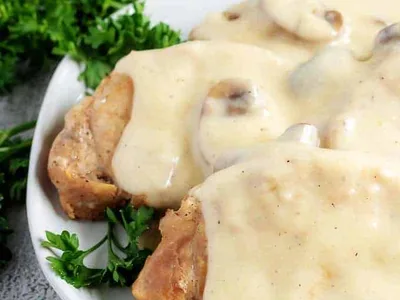
Instant Pot Pork Chops with Mushroom Gravy

One-Skillet Chicken with Vegetables and Gravy Dinner