How to Make an Omelette
An omelette is eggs beaten and cooked in butter until just set, then folded over itself. The outside stays tender while the inside remains creamy, creating a contrast between the barely golden exterior and the custard-like center.
Why it matters
A proper omelette cooks in under 60 seconds once the pan is hot. No waiting for eggs to firm up like scrambled eggs. The high heat creates a skin that holds fillings without leaking. You get a restaurant-style breakfast in 3 minutes total, start to finish.
What you need
Steps
Beat 3 large eggs with a fork in a bowl for exactly 10 seconds. Stop when you see no white streaks but before bubbles form. The mixture should look like yellow cream. Add 1/4 teaspoon kosher salt.
Heat your 8-inch nonstick skillet over medium-high heat for 2 minutes. Drop in 1 tablespoon butter. The butter should immediately sizzle and melt within 15 seconds, foaming white then turning light brown at the edges.
Pour eggs into the center of the pan the second the butter stops foaming. The eggs should sizzle on contact and start setting at the edges within 3 seconds. If they don't sizzle, your pan needs 30 more seconds of heating.
Hold the pan handle with your left hand and tilt it away from you at a 20-degree angle. Use the spatula in your right hand to pull the set edges toward the center while liquid egg flows underneath. Work around the pan like a clock face. Takes 15-20 seconds total.
When the bottom is set but the top still looks wet like pudding (about 30 seconds from when you poured), remove from heat. The residual heat will finish cooking the top. You should see no liquid movement when you gently shake the pan.
Add fillings to one half only, using no more than 1/4 cup total. Tilt the pan at 45 degrees over your plate and use the spatula to fold the empty half over the filled half as it slides out. The omelette should land seam-side down.
Common Mistakes
Using a 10 or 12-inch pan
What happens: Eggs spread too thin and cook like a crepe instead of staying fluffy
Fix: Always use an 8-inch pan for a 3-egg omelette
Cooking on medium or low heat
What happens: Eggs turn rubbery and dry before the center sets
Fix: Use medium-high heat and work fast
Adding milk or cream to eggs
What happens: Creates steam pockets that make the texture spongy
Fix: Use only eggs and salt for the smoothest texture
Overbeating the eggs
What happens: Too much air makes a puffy omelette that deflates
Fix: Beat just until no white streaks remain, about 10 seconds
Troubleshooting
if the omelette sticks when folding
Then: Your pan isn't hot enough or needs more butter. Next time wait until butter browns slightly before adding eggs
if the center is still liquid after folding
Then: Let it sit on the plate for 30 seconds. The residual heat will finish cooking it
if the bottom burns before the top sets
Then: Your heat is too high. Reduce to medium and tilt the pan more aggressively to redistribute liquid egg
Related Techniques
FAQ
Can I make an omelette without a nonstick pan?
Yes, but you need 2 tablespoons of butter instead of 1 tablespoon. Heat a stainless steel or cast iron pan for 3 minutes on medium-high. The butter should sizzle violently when added. Keep the heat high so eggs don't stick. A well-seasoned cast iron pan works best after nonstick.
How many eggs should I use?
Use 3 large eggs for an 8-inch pan, which serves one person. For 2 people, make two separate omelettes rather than one large one. A 4-egg omelette needs a 10-inch pan but takes 90 seconds to cook instead of 60 seconds. The texture suffers because the outside overcooks before the center sets.
What's the best cheese for an omelette?
Grate cheese yourself for fastest melting. Pre-shredded cheese has anti-caking agents that slow melting. Use 2 tablespoons of any cheese that melts within 30 seconds: cheddar, gruyere, fontina, or fresh mozzarella. Hard cheeses like parmesan need mixing with softer cheeses. Place cheese on the eggs 20 seconds before folding so it melts from residual heat.
Why does my omelette turn brown?
Brown spots mean your heat is too high or you cooked it too long. An omelette should stay pale yellow with maybe a hint of gold on the bottom. The total cooking time from when eggs hit the pan is 45-60 seconds. If you see any browning after 30 seconds, remove from heat immediately and let residual heat finish the job.
Recipes Using This Technique

Pan-Fried Cheese and Tomato Breakfast Omelette

Chinese Restaurant Tomato Soup with Egg Ribbons

Denver-Style Omelet with Ham and Cheddar

Cottage Cheese Omelet with Paprika and Tomatoes
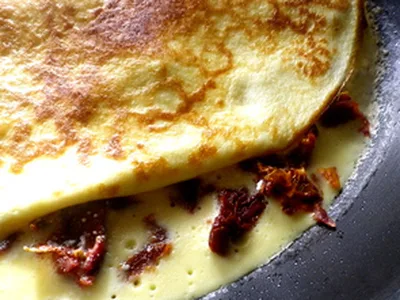
Feta and Semi-Dried Tomato Omelette